Greek salad, or Horiatiki, is one of those dishes that instantly takes you to the Mediterranean. It’s simple, fresh, and packed with flavors that dance in your mouth with every bite. You might picture yourself sitting on a sun-drenched terrace, the waves of the Aegean crashing nearby, a chilled glass of rosé in hand, and the scent of tomatoes, olives, and oregano wafting through the air. While that may sound like the ultimate dream, the beauty of a Greek salad is that you can bring a slice of that Mediterranean lifestyle into your own kitchen, no passport required.
Now, let me say this upfront: Greek salad is one of the most straightforward and delicious dishes to whip up, but it packs a punch in flavor. This vegetarian version is perfect for warm summer days, as a side dish at your next dinner party, or even as a light lunch when you’re craving something fresh and healthy. The cool crunch of cucumbers, the sweet and juicy tomatoes, and the creamy richness of feta come together to create a symphony of textures. But it’s not just the ingredients-it’s the way those ingredients work together to create a balanced experience for your senses.
I first discovered Greek salad while backpacking through Greece in my early twenties. My friends and I had taken a ferry from Athens to the island of Mykonos, and one day, after exploring the narrow, cobblestone streets, we sat down at a little taverna by the water. I ordered my first Greek salad there-only it wasn’t a salad as I knew it. It was a mountain of vibrantly colored vegetables topped with a huge slab of feta. No lettuce, no fancy dressings, just pure, simple ingredients. The combination of the saltiness of the feta with the juicy tomatoes and the burst of fresh herbs made me a lifelong fan.
So today, I want to share a vegetarian version of this iconic dish, which I think stays true to the traditional Greek flavors while being easy enough for anyone to prepare. Let’s dive in.
Vegetarian Greek Salad Recipe
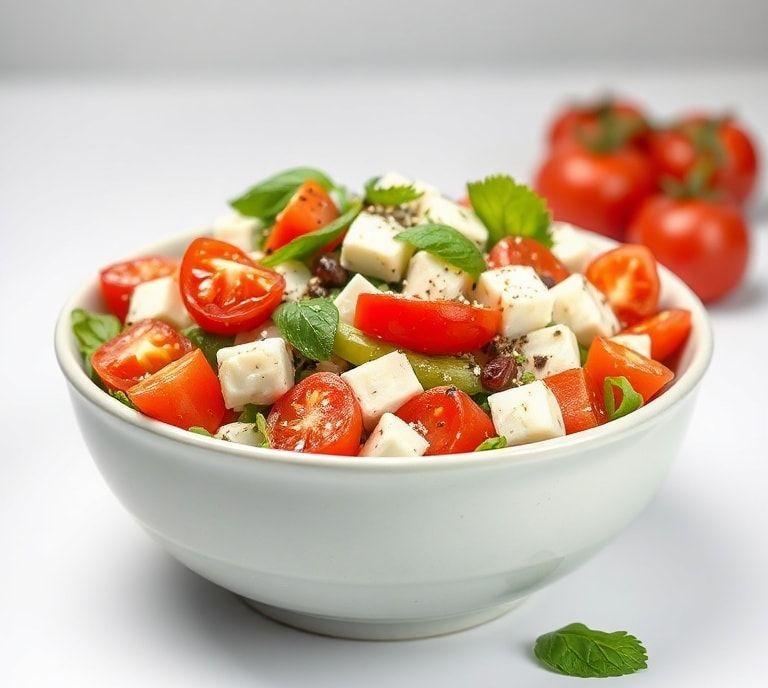
This vegetarian Greek salad takes all the components of the classic Horiatiki but simplifies it to something even more accessible without compromising on taste. It’s the perfect blend of savory, tangy, and fresh-and as you’ll see, it requires almost no cooking, just a little bit of chopping. Let’s get started!
Ingredients Needed
Here’s what you’ll need for a classic Greek salad:
- Tomatoes (2-3 large ripe ones): The star of the salad. You want them sweet and juicy, so make sure they’re in season. I often buy heirloom tomatoes when they’re available-they add beautiful color and extra depth of flavor.
- Cucumber (1 large): I like using English cucumbers for their sweetness and the fact that they have fewer seeds. You don’t need to peel them, just give them a good rinse and slice them into thick rounds.
- Red Onion (½ a medium one): Thinly sliced to add a little bite. Red onions have a mild sweetness that balances the acidity of the tomatoes.
- Kalamata Olives (1 cup): These are essential. They bring a briny, umami punch that makes the whole salad come alive.
- Feta Cheese (½ cup, crumbled or in blocks): This is what ties it all together. Greek feta is traditionally made from sheep’s milk, and it has a tangy, rich flavor that works wonders in this salad.
- Olive Oil (¼ cup): Choose the best quality olive oil you can find-extra virgin, of course. It’s the base of the dressing and adds a luscious richness to the salad.
- Red Wine Vinegar (1 tablespoon): This adds the perfect amount of acidity to balance the richness of the feta and the oil.
- Dried Oregano (1 teaspoon): This is a quintessential herb in Greek cooking. A sprinkle goes a long way in flavor.
- Salt & Pepper (to taste): For seasoning.
Cooking Instructions
Now, here’s the beauty of this recipe: there’s no cooking involved. Just a little chopping, mixing, and tossing, and you’re good to go.
- Prepare the Vegetables: Start by slicing your tomatoes into thick wedges-about 6 to 8 slices per tomato. You want them hearty because they’re the backbone of the salad. Next, cut the cucumber into thick rounds-don’t go too thin. The chunks will give the salad a satisfying crunch. For the red onion, thinly slice it, and if you find red onion too pungent, soak it in a little cold water for 5 minutes before adding it to the salad to tone down its sharpness.
- Toss the Veggies: In a large mixing bowl, combine the sliced tomatoes, cucumber, red onion, and Kalamata olives. Toss them together gently-just enough to mix but not to crush the tomatoes. You want them to remain intact and bright.
- Add the Feta: Here’s where you have two options. You can either crumble the feta over the top of the salad for that signature, salty burst in every bite, or you can place a block of feta right in the center of the salad and cut it as you serve. The latter gives the salad a rustic, authentic feel.
- Dress the Salad: Drizzle the olive oil and red wine vinegar over the vegetables and feta. Then sprinkle the oregano over the top, along with a pinch of salt and freshly cracked black pepper. Toss gently one last time.
- Serve: You can serve it right away, but I always think it tastes better after letting it sit for about 10 minutes. This gives the flavors a chance to meld together. If you’re not serving it immediately, just cover it and refrigerate, but try to eat it within a few hours to maintain that freshness.
Ingredient Science Spotlight
Now, let’s dig a little deeper into why these ingredients work so well together.
- Tomatoes: These juicy fruits (yes, they’re technically fruits) are a powerhouse of vitamins, particularly vitamin C and lycopene. Lycopene is an antioxidant that has been linked to a lower risk of heart disease and cancer. When combined with the olive oil in the salad, the body can absorb more lycopene, which is a cool little bonus.
- Olives: Olive oil and olives both contain monounsaturated fats, which are heart-healthy fats. These fats also help absorb fat-soluble vitamins like A and E, which are abundant in the veggies and feta.
- Feta Cheese: The tangy, creamy feta is made from sheep’s milk, and this dairy has a higher fat content than cow’s milk, giving it that rich flavor. It’s also packed with calcium, which is great for bone health, and probiotics, which are fantastic for gut health.
- Red Onion: Red onions are rich in antioxidants, particularly anthocyanins, which give them their purple-red color. These antioxidants may help reduce inflammation in the body. Plus, they add a sharp flavor that contrasts beautifully with the creamy feta and rich olives.
- Oregano: This herb isn’t just for flavor-it also has antimicrobial properties. In fact, research has shown that oregano can help fight bacterial infections. That little sprinkle is doing more than just seasoning your salad!
Expert Tips
- Quality Ingredients: The beauty of Greek salad lies in the simplicity of the ingredients. So, the better the ingredients, the better the salad will taste. Spend a little extra on ripe tomatoes, good feta, and quality olive oil.
- Chill the Salad: For the best flavor, chill the salad before serving. Not for too long-just enough to let the flavors meld and for the salad to be refreshing.
- Make It Ahead: If you’re making this for a dinner party, prep everything in advance (except for the dressing) and toss everything together right before serving. This will save you time and prevent the salad from getting soggy.
- Vinegar Variations: You can experiment with different vinegars-balsamic can give a nice depth, or you could use white wine vinegar for a more delicate touch.
Recipe Variations
Although the classic Greek salad is great as is, there’s always room to make it your own. Here are a few variations to try:
- Add Avocado: For a creamy twist, add chunks of ripe avocado. It’ll bring a buttery richness that pairs perfectly with the tangy feta.
- Grilled Vegetables: If you want to take things up a notch, try grilling some of the vegetables first-zucchini, eggplant, or bell peppers are perfect for grilling. The smoky flavor adds a whole new dimension to the salad.
- Add Chickpeas: For a bit of protein, toss in some chickpeas. They’re a great way to make the salad more filling, turning it into a main course rather than a side.
Final Words
Greek salad is timeless. There’s something about those vibrant colors, the bold flavors, and the simplicity of it all that makes it irresistible. I love how each bite feels like a celebration of fresh ingredients, and it’s such a satisfying dish whether you’re serving it at a summer barbecue or enjoying it on a quiet afternoon.
FAQs
Can I Make A Vegetarian Greek Salad Without Feta Cheese?
Yes. Although feta is traditional, you can replace it with plant-based feta alternatives, firm tofu marinated in lemon and herbs, or simply omit it for a lighter, fully vegan version. The core flavors of cucumber, tomatoes, olives, red onion, and oregano remain intact.
What Type Of Dressing Is Used In A Vegetarian Greek Salad?
The classic dressing is a simple vinaigrette made with extra-virgin olive oil, red wine vinegar, dried oregano, salt, and black pepper. For added depth, some variations include a small amount of lemon juice or minced garlic.
How Can I Prepare The Salad In Advance Without It Becoming Soggy?
Chop the vegetables and store them separately from the dressing. Combine the cucumbers, tomatoes, red onion, and olives in one container, keep the feta or vegan alternative in a separate container, and refrigerate the dressing in a small jar. Mix everything just before serving to maintain freshness and texture.