If you’ve ever found yourself rummaging through your kitchen, craving a savory, protein-packed snack that isn’t the usual bag of chips or handful of nuts, vegetarian jerky could be your answer. There’s something deeply satisfying about jerky – its chewy texture, its rich flavor – that makes it a timeless go-to for when you need a quick snack. But if you’re a vegetarian or just looking for something that doesn’t involve animal products, store-bought alternatives can be either expensive or a little too processed for comfort.
That’s where making your own jerky comes in. Imagine the satisfaction of biting into a piece of homemade vegetarian jerky – the perfect balance of smoky, savory, and slightly sweet. Making your own jerky is surprisingly easy, and it’s not just about flavor; it’s about customizing it to your tastes. You control what goes into it, and with a few simple ingredients, you can create a snack that’ll have you wondering why you didn’t try it sooner.
In this post, we’ll walk through an easy vegetarian jerky recipe that you can adapt to fit your own preferences. Whether you’re a fan of sweet and tangy or smoky and spicy, this recipe has room for your creativity. Let’s dive in.
Vegetarian Jerky Recipe
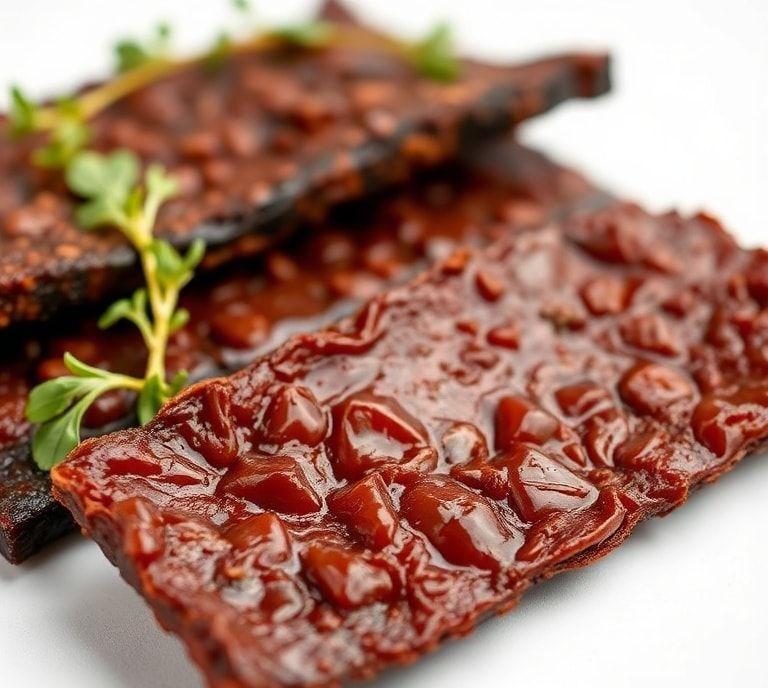
When I first tried making vegetarian jerky at home, I was skeptical. I thought it would either end up too bland or not have that satisfying chew. But after a little experimentation, I found the perfect balance of flavors and texture. It’s a bit like playing mad scientist in the kitchen, where you can tweak every element. The best part? Once you’ve got the basic technique down, you can change the marinade to suit whatever flavor profile you’re in the mood for. You’ll see how simple it is, and maybe like me, you’ll start making it all the time.
Ingredients Needed
For a basic vegetarian jerky, you don’t need a laundry list of ingredients. In fact, you’ll find that many of the items are pantry staples or things you probably already have in your fridge. Here’s what you’ll need:
- Mushrooms (portobello or shiitake work well) – These are the backbone of your jerky’s texture. They mimic the chewy nature of traditional jerky beautifully. Mushrooms also absorb marinades like a sponge, meaning they’ll take on whatever flavor you choose.
- Soy sauce or tamari – This brings in that salty, umami flavor that we crave in jerky. Tamari is a great option for those avoiding gluten.
- Apple cider vinegar – This adds a slight tanginess that cuts through the richness of the soy sauce and helps balance the flavors.
- Maple syrup or agave – A touch of sweetness helps to round out the flavors. Maple syrup also contributes to a nice caramelized finish when it’s dried.
- Liquid smoke – It’s the secret weapon for that smoky, outdoor-grilled flavor that makes jerky so irresistible.
- Garlic powder and onion powder – These spices are non-negotiable for a savory, aromatic depth.
- Paprika – Adds a mild smokiness and a beautiful color to the jerky.
- Black pepper and cayenne – These add a kick. You can adjust the heat level depending on your preference.
- Olive oil – A little oil helps the mushrooms soften and absorb the marinade, making them more tender.
Cooking Instructions
Now, let’s walk through how to turn these humble ingredients into delicious jerky:
- Prepare the mushrooms: Start by cleaning and slicing your mushrooms. Aim for slices that are about ¼ inch thick – too thick, and they’ll take forever to dry out; too thin, and they might burn. Portobello mushrooms tend to have a meatier texture, so they’re my go-to for jerky, but any hearty mushroom will do.
- Make the marinade: In a bowl, combine the soy sauce, apple cider vinegar, maple syrup, liquid smoke, garlic powder, onion powder, paprika, black pepper, and cayenne. Whisk everything together until it’s well mixed. Taste it! This is where you can get creative. You might want to add a bit more sweetness or heat, or perhaps a little more vinegar if you like a sharper flavor.
- Marinate the mushrooms: Place the mushroom slices into the marinade. Make sure they’re all coated evenly. I like to leave them in the marinade for at least 30 minutes, but the longer they soak, the more flavor they’ll absorb. If you have time, let them marinate in the fridge for up to 8 hours.
- Dry the jerky: Once your mushrooms have soaked up all that deliciousness, it’s time to dry them. If you have a dehydrator, it’s a game-changer. Set it to 135°F (57°C) and let it run for about 6-8 hours. If you don’t have a dehydrator, no worries – your oven will work just fine. Preheat it to the lowest setting, typically around 170°F (77°C), and place the mushrooms on a baking sheet lined with parchment paper. Prop the oven door open a crack to allow moisture to escape. This will take around 4-6 hours, but you’ll want to check every hour or so to see how they’re doing.
- Store the jerky: Once your jerky has reached that perfect chewy but not rubbery texture, let it cool completely before storing it in an airtight container. It should keep for up to two weeks, though it’s likely to be devoured much faster.
Ingredient Science Spotlight
Now, let’s take a moment to appreciate the science behind some of these ingredients. Mushrooms, as we know, are the perfect plant-based substitute for meat in this recipe. They’re high in fiber, low in calories, and contain plenty of antioxidants, making them not just a flavor powerhouse but also a nutritious addition to your diet.
The soy sauce and apple cider vinegar are what bring the savory and tangy notes to the dish, while the maple syrup adds a touch of sweetness. Liquid smoke is what gives your jerky that unmistakable smoky flavor, which we typically associate with meat jerky – but without the need for an actual smoker.
Expert Tips
- Texture is key: Mushroom jerky can sometimes turn out too soft or too tough. The secret to getting it right is in the slicing and drying process. You want uniform slices and a low and slow drying method, allowing the jerky to retain its texture without turning into a brittle mess.
- Experiment with flavors: The beauty of making your own jerky is that you can personalize it to your liking. If you love spicy food, go heavy on the cayenne or try adding sriracha to the marinade. If you prefer sweeter jerky, boost the maple syrup or try adding some brown sugar.
- Dehydrating tip: If you don’t have a dehydrator, you can also use a slow cooker on its lowest setting, leaving the lid slightly ajar for air circulation. This method takes a while but works wonders.
- Patience is everything: If you’re rushing the drying process, you won’t get the right chewiness. Give it the time it needs. You’ll be rewarded with jerky that’s chewy but still tender.
Recipe Variations
While the basic recipe is a great place to start, feel free to play with different ingredients to suit your taste:
- BBQ Jerky: Add a tablespoon of BBQ sauce to the marinade for a smoky, tangy twist.
- Teriyaki Jerky: Use teriyaki sauce in place of soy sauce, and toss in a bit of grated ginger for extra flavor.
- Herbaceous Jerky: If you love fresh herbs, try adding a little dried rosemary, thyme, or oregano to your marinade for an aromatic touch.
- Lemon Pepper Jerky: For a zesty kick, add lemon zest and a generous amount of black pepper to the marinade. You’ll get a refreshing burst of flavor with each bite.
Final Words
Making your own vegetarian jerky at home is not only satisfying but also surprisingly simple. With just a few ingredients and a little patience, you can have a healthy, flavorful snack that’s customizable to your taste. Whether you prefer something spicy, smoky, or sweet, there’s no wrong way to make jerky – it’s all about finding the flavor balance that works for you.
FAQs
What Ingredients Are Typically Used In A Vegetarian Jerky Recipe?
Vegetarian jerky is typically made from plant-based ingredients such as soy protein, mushrooms, jackfruit, tempeh, or seitan. The base is often marinated in a mixture of soy sauce, liquid smoke, maple syrup, vinegar, and various spices like garlic, onion, smoked paprika, and cayenne pepper. The texture is achieved by dehydrating or baking the ingredients until they are firm and chewy.
Can I Use Different Types Of Mushrooms For Making Vegetarian Jerky?
Yes, you can use a variety of mushrooms to make vegetarian jerky. Popular choices include portobello, shiitake, and oyster mushrooms, as they all have a meaty texture that holds up well to the dehydrating process. The flavor can vary slightly depending on the type of mushroom, but all of them work well with the savory, smoky marinade commonly used for jerky.
How Do I Properly Store Homemade Vegetarian Jerky?
Homemade vegetarian jerky should be stored in an airtight container to maintain its chewy texture and prevent it from becoming stale. For optimal freshness, you can store it at room temperature for up to a week. If you want to preserve it longer, consider refrigerating or freezing the jerky. When freezing, be sure to place it in a resealable bag or vacuum-sealed packaging to avoid freezer burn.