There’s something magical about a simple, home-cooked meal that transports you back to those comforting, laid-back moments. Maybe it’s the fragrant sizzle of vegetables in a hot pan or the playful mix of flavors dancing together in harmony. This vegetarian pineapple fried rice recipe is one of those dishes-effortless yet bursting with flavor, and it has a little personal history behind it too.
I remember the first time I tried pineapple fried rice-one of those dishes you find on nearly every Thai menu. I was at a small, cozy restaurant, and as soon as the dish hit the table, the aroma of fried rice, sweet pineapple, and savory soy sauce instantly drew me in. It was one of those moments where I thought, ’Why haven”t I made this myself sooner”? The sweetness of pineapple, the crispness of veggies, and the nutty depth from the rice-it was a revelation. So, after a few tries, I came up with this vegetarian version that uses what I love most about the dish while keeping things light and fresh. It’s a dish that celebrates simplicity but packs a punch.
This recipe is perfect for any night when you want something that’s easy to throw together but still feels like a treat. Plus, it’s incredibly versatile. Whether you’re craving something with a bit of zing or you’re looking to showcase the delicate sweetness of pineapple, this fried rice will adapt to whatever mood you’re in.
Vegetarian Pineapple Fried Rice Recipe
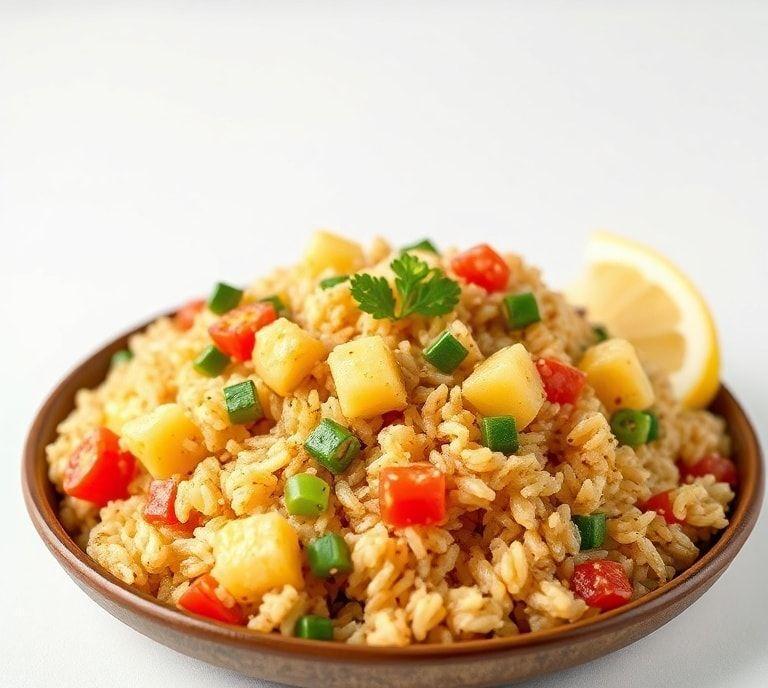
When you combine the natural sweetness of pineapple with savory stir-fried veggies and crispy rice, you get a bowl of magic. This vegetarian version skips the usual meat options, opting for the wholesome flavors of fresh vegetables and pineapple, making it perfect for both meat-eaters and vegetarians alike. The beauty of this recipe is how easy it is to prepare-whether you’re cooking for one or feeding a group, you’ll find it’s a reliable go-to that never disappoints.
Ingredients Needed
The ingredients list for this pineapple fried rice recipe is wonderfully simple, and you might already have a lot of them in your pantry. Here’s what you’ll need:
- 2 cups cooked jasmine rice (preferably cold, day-old rice works best for fried rice)
- 1 medium pineapple (peeled and chopped into small chunks)
- 1 tablespoon vegetable oil (or any oil you prefer, like coconut or sesame oil)
- 1 medium onion, diced
- 1 bell pepper (red, green, or yellow-whatever you have), diced
- 1 cup frozen peas (or fresh peas, if you’ve got them)
- 2 garlic cloves, minced
- 2 tablespoons soy sauce (for that savory umami kick)
- 1 tablespoon hoisin sauce (adds a touch of sweetness and depth)
- 1 tablespoon sesame oil (optional, but adds richness)
- 1 teaspoon ginger, freshly grated
- 2 green onions, chopped for garnish
- A handful of cashews or peanuts (optional, but they add a delightful crunch)
- Salt and pepper to taste
These are the basic ingredients that will give you a base for this dish. But the beauty of fried rice is that it’s flexible-don’t hesitate to toss in any veggies you have on hand or play around with your sauces.
Cooking Instructions
Once you’ve gathered your ingredients, the cooking process is pretty straightforward and quick, making it perfect for a busy weeknight dinner.
- Prepare the rice: If you don’t have leftover rice, cook your rice according to the package instructions and let it cool. Cold rice is best because it helps achieve that perfect crispy texture.
- Sauté the veggies: Heat the vegetable oil in a large wok or skillet over medium-high heat. Once the oil is hot, add your diced onion and bell pepper. Stir-fry for about 2-3 minutes until they start to soften and become fragrant. Add the garlic and ginger and cook for another minute-this is when your kitchen will smell absolutely incredible.
- Add the pineapple: Toss in the pineapple chunks and sauté for another 3-4 minutes until they begin to caramelize slightly. This caramelization is key-it brings out the deep, rich sweetness of the pineapple and helps balance the savory elements.
- Fry the rice: Push the veggies and pineapple to one side of the pan. Add a little more oil if needed, then add the cold rice to the pan. Press the rice down gently with a spatula to break up any clumps, and stir-fry for 4-5 minutes until the rice is heated through and starts to crisp up on the edges.
- Add sauces and seasonings: Drizzle in the soy sauce, hoisin sauce, and sesame oil. Stir everything together, making sure the rice is evenly coated in the sauce. Add the peas and cook for another 2-3 minutes until they’re heated through.
- Finish and garnish: Season with salt and pepper to taste. If you’re adding cashews or peanuts, toss them in now. Top with chopped green onions for a fresh, vibrant touch.
And that’s it! You’ve got yourself a quick, flavorful dish ready to enjoy.
Ingredient Science Spotlight
Now, let’s talk about some of the science behind a few key ingredients in this dish. It’s not just about flavor-there’s an interplay of textures and chemistry that makes this dish work so well.
- Jasmine Rice: This type of rice is perfect for fried rice because of its fragrance and its slightly sticky texture when cooked. The key to achieving great fried rice lies in how the rice is cooled. When rice cools, the starches firm up, which gives the rice those crispy bits when stir-fried. If you use fresh rice, it can end up soggy, but day-old rice has the perfect consistency for frying.
- Pineapple: Pineapple brings a combination of natural sugars and acidity to the dish. The acids help break down the fibers of the rice and the vegetables, creating a more balanced texture. Plus, the caramelization of the pineapple when fried adds a layer of complexity to the dish-it’s that sweet-salty marriage of flavors that really brings everything together.
- Sesame Oil: This oil is prized for its rich, nutty flavor. It’s used more for flavoring than for cooking because of its low smoke point. When added at the end of cooking, it provides a distinct, toasty aroma that elevates the entire dish.
Expert Tips
- Use cold rice: This is essential for achieving that crispy, not-clumpy texture. If you don’t have leftover rice, spread freshly cooked rice on a baking sheet and let it cool down for a few minutes before using.
- Don’t overcrowd the pan: If you’re making a large batch, cook the fried rice in batches. Overcrowding will cause the rice to steam rather than fry, and you’ll lose that delicious crispy texture.
- Get the heat right: Fried rice is best cooked on high heat, so make sure your pan or wok is hot before adding the rice. The high heat helps to sear the rice and veggies, giving them a slightly smoky flavor.
- Customize with protein: If you want to add some protein to the dish, tofu, tempeh, or even a fried egg on top works wonderfully.
Recipe Variations
The great thing about this recipe is how adaptable it is. Here are a few variations to try:
- Add tofu or tempeh: For a protein boost, pan-fry cubes of tofu or tempeh and toss them in with the rice. Both take on the flavors of the dish beautifully.
- Spicy twist: If you like a bit of heat, throw in a diced red chili or a teaspoon of chili flakes with the garlic and ginger. You could also add a drizzle of sriracha or a sprinkle of chili powder for that spicy kick.
- Swap the pineapple: If you’re not into pineapple, you can swap it out for mango for a similar sweet, tropical flavor. Or try adding roasted sweet potatoes for a hearty alternative.
- Nuts: Cashews are great in this dish, but you can also try peanuts or even almonds for a different texture.
Final Words
This vegetarian pineapple fried rice is a perfect balance of sweet, savory, and crispy. It’s the kind of dish that makes you feel good about eating it-not too heavy, yet filling and satisfying. Plus, it’s incredibly versatile, so it can easily be adapted to what you have on hand or your flavor preferences.
The next time you’re looking for something easy, flavorful, and fun, give this pineapple fried rice a shot. It’s one of those recipes that’ll quickly find a place in your regular dinner rotation.
FAQs
Can I Make Vegetarian Pineapple Fried Rice Ahead Of Time?
Yes, you can prepare vegetarian pineapple fried rice in advance. Cook the rice and let it cool completely before storing it in an airtight container in the refrigerator for up to 2 days. When ready to serve, reheat the rice in a wok or skillet over medium heat, adding a small amount of oil to prevent sticking. This helps maintain the texture and prevents the rice from becoming mushy.
What Are The Best Vegetables To Include In Vegetarian Pineapple Fried Rice?
Common vegetables that complement the flavors of pineapple fried rice include bell peppers, carrots, peas, green beans, and corn. You can also add onions, scallions, or baby corn for additional texture and taste. It’s important to chop vegetables into small, uniform pieces to ensure even cooking and to maintain the balance of flavors in the dish.
How Can I Make Vegetarian Pineapple Fried Rice Healthier Without Losing Flavor?
To make the dish healthier, use brown rice or a mix of brown and white rice for added fiber and nutrients. Reduce the amount of oil used for frying and opt for heart-healthy oils like olive or avocado oil. Include a variety of colorful vegetables for vitamins and minerals, and season with low-sodium soy sauce or tamari to control sodium intake. Fresh pineapple provides natural sweetness, allowing you to minimize added sugar.