I’ve always found something comforting about porridge-it’s one of those dishes that takes me back to a simpler time, a warm embrace on a chilly morning, or a quiet Sunday afternoon. The smell of oats cooking gently on the stove, the creamy texture, and the sheer versatility of the dish make it one of my all-time favorites. And when you take it a step further, like with a vegetarian version, it becomes an even more satisfying experience. A bowl of warm porridge, rich in nutrients, and fully plant-based, is one of those meals that not only nourishes your body but also gives your spirit a little lift. Plus, it’s incredibly easy to make and customizable based on what you’ve got lying around in your pantry.
For me, porridge has always been a kind of “blank canvas”. I grew up with my mom making it for me when I wasn’t feeling well or when I needed a bit of comfort. Now, I make it for my own mornings, throwing in various ingredients depending on my mood or what’s in season. You don’t need to be a master chef to whip up a delicious vegetarian porridge-it’s about playing with flavors and textures. Let me walk you through how you can create a vegetarian porridge that will become a staple in your kitchen.
Vegetarian Porridge Recipe
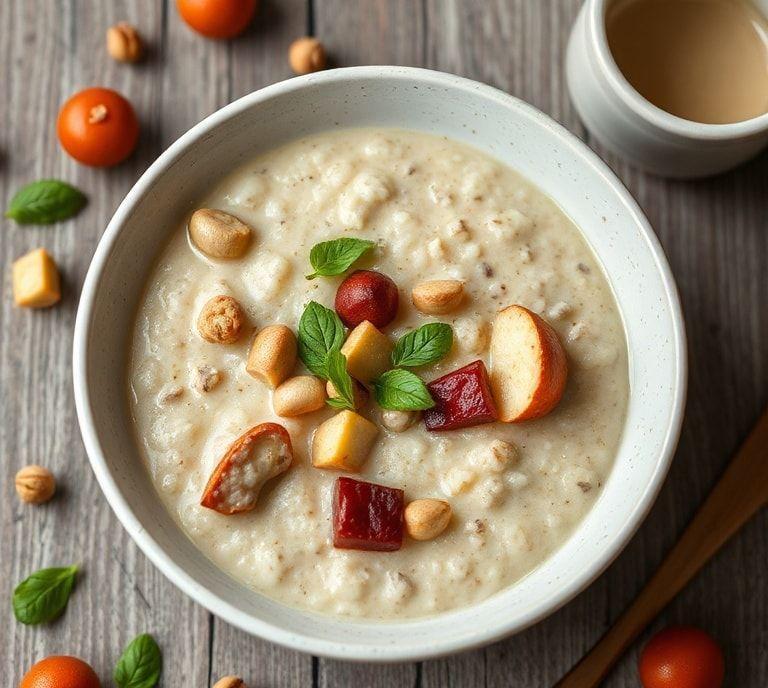
Alright, so let’s dive into the recipe. Imagine waking up, and the first thing you’re greeted with is the smell of a warm, creamy bowl of porridge, rich with the natural sweetness of fruit and the warmth of your favorite spices. That’s exactly what this recipe promises.
Ingredients Needed
- 1 cup rolled oats (or steel-cut oats for a heartier texture)
- 2 cups plant-based milk (almond, oat, coconut, or soy-choose what you love)
- 1 tablespoon chia seeds (optional, for added texture and omega-3s)
- 1 tablespoon maple syrup (or your favorite sweetener, like agave or coconut sugar)
- 1 teaspoon cinnamon (for that cozy warmth)
- 1/2 teaspoon vanilla extract (adds depth)
- Fresh or dried fruit (like berries, bananas, or apples)
- A handful of nuts or seeds (almonds, walnuts, or sunflower seeds for crunch)
- Pinch of salt (balances the sweetness)
This combination gives you that creamy, comforting texture, with a bit of crunch and natural sweetness. Feel free to experiment with the fruit or the nuts based on what’s available to you-it’s a dish that works with whatever you have on hand.
Cooking Instructions
- Combine the oats and milk: Start by adding your oats to a medium saucepan. Pour in your plant-based milk and bring the mixture to a simmer over medium heat. If you’re using steel-cut oats, you might want to let them simmer a little longer-about 20 minutes-but rolled oats will only take about 5-10 minutes to cook.
- Add the flavoring: Once your oats start to soften and absorb the milk, stir in your cinnamon, salt, and vanilla extract. If you’re adding chia seeds, toss them in now. They’ll absorb liquid and expand, making the porridge extra creamy.
- Simmer gently: Keep the heat on low and let the oats cook until the mixture thickens to your desired consistency. Stir it occasionally, and don’t be afraid to add more milk if it gets too thick.
- Sweeten it up: When the oats are cooked, stir in your maple syrup or sweetener of choice. Give it a taste and adjust the sweetness to your liking.
- Top it off: Once your porridge is ready, spoon it into bowls and top with fresh fruit, nuts, or seeds. You can even drizzle a little extra maple syrup on top for some added sweetness. I sometimes toss in some dried cranberries or raisins, depending on my mood, for a little extra zing.
Ingredient Science Spotlight
Let’s dive into why this vegetarian porridge is more than just delicious-it’s a nutrition powerhouse.
- Oats: The star of the show, oats are packed with soluble fiber, which helps lower cholesterol and improves heart health. They also contain beta-glucan, a type of fiber that can boost your immune system. Oats are naturally gluten-free, but if you’re highly sensitive, just make sure to look for certified gluten-free oats.
- Chia Seeds: These tiny little seeds are like nutritional gold. They’re loaded with omega-3 fatty acids, which are great for brain health and reducing inflammation. Plus, chia seeds are an excellent source of fiber, protein, and antioxidants. They absorb water and expand, making your porridge even creamier and more filling.
- Plant-Based Milk: Choosing a plant-based milk gives you all sorts of options for different flavors and textures. Almond milk is light and slightly nutty, while oat milk adds a natural sweetness. Coconut milk offers a creamy, tropical flair, and soy milk is rich in protein. Each type of milk brings something different to the table, so don’t be afraid to try different ones depending on your taste preferences.
- Nuts and Seeds: Adding nuts like almonds or walnuts isn’t just for crunch-it’s also about health. These add healthy fats, protein, and fiber to your porridge, and also a variety of vitamins and minerals. Walnuts, for example, are great for brain health because they are rich in omega-3s.
- Maple Syrup: Maple syrup is a natural sweetener and a great alternative to processed sugars. It contains antioxidants and some minerals like zinc and manganese, which support the immune system. Just be mindful to use it in moderation.
Expert Tips
I’ve learned a few tricks along the way that can take your vegetarian porridge to the next level.
- Double the batch: Make a larger batch and refrigerate the leftovers. Porridge keeps well in the fridge and reheats beautifully-just add a splash of milk or water to loosen it up.
- Spices make a difference: While cinnamon is the go-to spice for porridge, don’t be afraid to experiment with others. Nutmeg, cardamom, or even a dash of turmeric can add warmth and complexity. If you want something a little fresher, a sprinkle of lemon zest can brighten the whole bowl.
- Frozen fruit for texture: If fresh fruit isn’t available, frozen fruit works great too. Berries, in particular, thaw beautifully and release their juices into the porridge, making it extra flavorful. Plus, they’re often more affordable, especially in the off-season.
- Don’t skip the pinch of salt: It might seem counterintuitive, but a pinch of salt really helps bring out the natural sweetness in your porridge. It balances the flavors and makes the dish more satisfying.
Recipe Variations
The best thing about porridge is how flexible it is. Here are a few variations you might want to try, depending on your mood or what ingredients are on hand:
- Tropical Porridge: Use coconut milk as your base and top with fresh pineapple, mango, and shredded coconut for a tropical twist.
- Spiced Apple & Cinnamon: Add diced apples and extra cinnamon while the oats cook. Top with toasted walnuts or pecans for added texture.
- Chocolate Almond: Stir in a spoonful of cocoa powder into the oats while they cook, and top with sliced almonds and a drizzle of almond butter for a decadent breakfast.
- Berry-Lavender: Add a touch of dried lavender while cooking the oats for a floral note, then top with fresh mixed berries and a dollop of dairy-free yogurt.
Final Words
Vegetarian porridge isn’t just a meal; it’s a journey. A journey through comfort, creativity, and nourishment. Whether you’re sitting down to a hearty bowl on a cold winter morning or enjoying a lighter version on a sunny day, it’s the kind of food that offers both warmth and satisfaction in every bite. And because it’s so customizable, you can make it as simple or as extravagant as you like.
FAQs
What Ingredients Are Needed To Make A Basic Vegetarian Porridge?
A basic vegetarian porridge typically requires whole grains such as oats, rice, or millet; a plant-based milk like almond, soy, or oat milk; water; and optional flavorings such as a pinch of salt, cinnamon, or vanilla extract. Sweeteners like maple syrup, agave, or dates can be added, along with toppings such as fresh fruits, nuts, or seeds.
How Can I Make My Vegetarian Porridge More Nutritious?
To enhance the nutritional value of vegetarian porridge, consider adding sources of protein such as chia seeds, flaxseeds, hemp seeds, or plant-based protein powder. Incorporating a variety of fruits and vegetables, like mashed pumpkin, grated carrots, or berries, increases fiber and antioxidant content. Using fortified plant-based milk can provide additional vitamins and minerals, particularly calcium and vitamin B12.
What Are Some Tips To Prevent Vegetarian Porridge From Becoming Too Thick Or Too Watery?
To achieve the right consistency, gradually add liquid while cooking and stir frequently to prevent lumps. Adjust the ratio of grains to liquid depending on the type of grain used; for example, oats absorb less liquid than rice. If the porridge becomes too thick, add a little more plant-based milk or water and continue stirring. If it is too watery, continue cooking on low heat to allow excess liquid to evaporate and thicken naturally.