When I first decided to give vegetarianism a try, I was definitely skeptical about finding substitutes that actually hit the mark. I’d grown up with a pretty heavy diet of classic roast beef sandwiches and hearty stews, so the thought of losing that rich, savory taste was a bit daunting. But then something incredible happened: I discovered that it wasn’t about simply replacing flavors, but about reinterpreting them in a whole new way.
That’s when I stumbled upon the idea of a vegetarian roast beef. It sounded a bit out there at first-who could ever mimic the depth and juiciness of roast beef without, well, beef? But with a few clever tricks, a combination of plant-based ingredients, and a lot of experimentation, I found myself creating something that actually satisfied those nostalgic cravings for that umami-packed bite.
Today, I’m sharing this recipe not only because it’s delicious but because it’s a fun, rewarding challenge to make something familiar yet entirely plant-based. Whether you’re a seasoned vegetarian or someone simply looking to explore more plant-based meals, this vegetarian roast beef will have you second-guessing what you thought you knew about meat alternatives.
Vegetarian Roast Beef Recipe
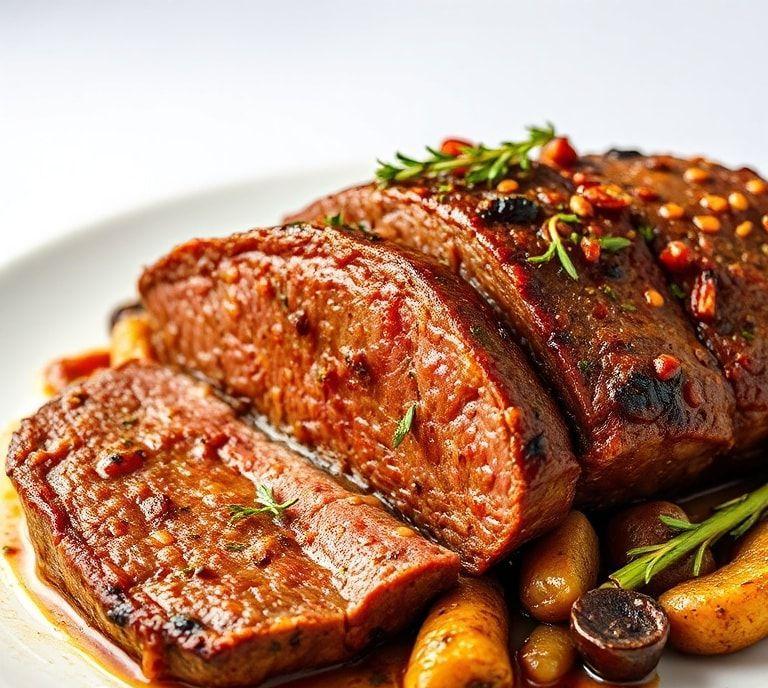
The beauty of this vegetarian roast beef lies in the texture. It’s dense and hearty, with just the right amount of chew, making it perfect for sandwiches, a dinner centerpiece, or even a flavorful addition to salads. The key here is a blend of mushrooms, vital wheat gluten (the magic ingredient behind seitan), and a few other ingredients that work together to mimic the richness of traditional roast beef.
The recipe can be a little more time-consuming than some, but the end result is so satisfying. Plus, it’s the kind of dish that gets better with time, making it perfect for meal prep.
Ingredients Needed
- 2 cups mushrooms (cremini or button work well, but you can experiment with portobellos for a deeper flavor)
- 1 ½ cups vital wheat gluten (this is the base for seitan, the protein-packed, meat-like substance that gives the roast its texture)
- 1/4 cup nutritional yeast (adds a cheesy, savory depth)
- 1 tablespoon soy sauce (or tamari for gluten-free)
- 2 teaspoons smoked paprika (for that signature ’roast’ flavor)
- 1 tablespoon tomato paste
- 2 teaspoons garlic powder
- 1 teaspoon onion powder
- 1 teaspoon ground black pepper
- 1 teaspoon dried thyme (or fresh if you have it)
- 1 cup vegetable broth (you may need a little more depending on the dough’s consistency)
- 1 tablespoon olive oil (for moisture and richness)
- 1 tablespoon apple cider vinegar (adds a subtle tanginess that mimics beef’s flavor profile)
Cooking Instructions
- Prepare the Mushrooms: Start by finely chopping your mushrooms. You can either do this by hand or pulse them in a food processor until they’re almost minced. This will help release their moisture and create a dense, meaty texture.
- Sauté the Mushrooms: Heat a tablespoon of olive oil in a pan over medium heat. Add the chopped mushrooms and cook until the moisture evaporates, and the mushrooms begin to caramelize. This step is crucial to concentrate their flavor.
- Mix Dry Ingredients: While the mushrooms are cooking, combine your vital wheat gluten, nutritional yeast, garlic powder, onion powder, smoked paprika, thyme, black pepper, and salt in a large mixing bowl.
- Combine Wet Ingredients: In a separate bowl, mix your vegetable broth, soy sauce, tomato paste, and apple cider vinegar. Whisk them together until smooth.
- Make the Dough: Once the mushrooms have cooled slightly, add them to the dry ingredients. Pour the wet mixture into the bowl and stir until the dough starts to come together. You’ll need to knead it for about 5 minutes until it forms a dense, elastic dough. If it’s too dry, add a little more broth.
- Shape and Wrap: Shape the dough into a log or loaf shape, depending on how you plan to serve it. Wrap it tightly in foil, making sure to create a compact, even roll. This will help it keep that ’roast’ shape when it cooks.
- Cook the Roast: Preheat your oven to 350°F (175°C). Place the wrapped loaf on a baking sheet and bake for about 60 minutes. After 30 minutes, flip it to ensure even cooking.
- Finishing Touches: When the roast is done, remove it from the oven and let it rest for about 10 minutes before unwrapping. Slice it thinly or thick, depending on your preference.
Ingredient Science Spotlight
The magic behind vegetarian roast beef lies in the combination of mushrooms and vital wheat gluten (the protein extracted from wheat). While mushrooms provide depth and a rich, umami-packed flavor, it’s the vital wheat gluten that’s the real hero. When mixed with water and kneaded, it forms a dense, chewy dough that mimics the texture of meat. This process is what gives seitan its meaty feel-without any animal products.
Nutritional yeast plays a critical role here as well. It’s not just for cheesy flavor, but it brings a savory, umami-like depth that helps replace the natural meaty notes found in beef. Smoked paprika, soy sauce, and apple cider vinegar all add layers of complexity that replicate the smoky, tangy, and slightly acidic flavors in a traditional roast beef.
Expert Tips
- Get the Right Consistency: One of the most important things when making seitan is to get the dough’s consistency just right. If it’s too wet, it won’t hold together; too dry, and it’ll be tough. Play around with the liquid amounts to achieve a smooth, elastic dough.
- Let It Rest: After baking, let the roast rest for a bit before slicing. This helps the flavors settle and gives the texture time to firm up a little more.
- Low and Slow Cooking: For the most tender roast, cook it at a lower temperature for a longer period. This will help retain moisture and keep the texture soft.
- Add a Marinade: If you’re feeling adventurous, try marinating the roast before baking. A mix of soy sauce, garlic, and herbs can elevate the flavor even further.
- Seitan Makes Great Leftovers: One of the best things about this vegetarian roast beef is how well it keeps. It’s perfect for meal prep or sandwiches later in the week.
Recipe Variations
While the basic vegetarian roast beef is delicious on its own, you can absolutely experiment with variations to suit your taste:
- Herb-Crusted Roast: For a more rustic, herby flavor, roll the dough in a mixture of dried rosemary, thyme, and sage before baking.
- BBQ Roast: After baking, brush the roast with a tangy BBQ sauce and return it to the oven for 10 more minutes for a smoky, sweet crust.
- Spicy Kick: Add a teaspoon of chili powder or crushed red pepper flakes to the dough for a spicy version of your vegetarian roast.
- Stuffed Roast: Before shaping the dough, stuff it with sautéed vegetables, spinach, or even vegan cheese for a filling surprise when you slice into it.
Final Words
As I worked through this recipe, it struck me how much cooking can be like an art form. The simple act of transforming familiar ingredients into something new-something that can stand in place of a traditional roast beef-felt incredibly satisfying. You don’t have to give up the hearty meals you love when you switch to a plant-based diet; you just need to approach them with creativity and an open mind.
FAQs
What Ingredients Are Typically Used To Make A Vegetarian Roast Beef?
A vegetarian roast beef usually relies on plant-based ingredients that provide texture and umami flavor. Common choices include seitan (wheat gluten), tofu, or tempeh as the protein base. Mushrooms, soy sauce, nutritional yeast, liquid smoke, and a combination of spices such as garlic powder, onion powder, smoked paprika, and black pepper are often added to mimic the savory and roasted flavor of traditional beef. Some recipes also include beet juice or red wine for color and depth of flavor.
How Do I Cook A Vegetarian Roast Beef To Achieve A Meaty Texture?
To achieve a meaty texture, it is important to properly prepare and cook the protein base. Seitan is kneaded to develop a firm, chewy texture, while tofu or tempeh can be pressed to remove excess moisture. Slow roasting or baking in the oven at a moderate temperature allows the exterior to brown while keeping the interior tender. Marinating the protein beforehand in a savory, umami-rich liquid can enhance flavor and simulate the taste of roasted beef. Some recipes also use a final broil or sear to create a crust similar to traditional roast beef.
Can Vegetarian Roast Beef Be Used In Sandwiches Or Main Dishes?
Yes, vegetarian roast beef is versatile and can be used in many dishes traditionally made with beef. It works well in sandwiches, wraps, and subs, often paired with mustard, vegan cheese, lettuce, or pickles. It can also be sliced and served as a main dish with roasted vegetables, mashed potatoes, and gravy. Its firm texture allows it to hold up well to slicing and reheating, making it a practical option for meal prep or special occasions.