I have always found that the simplest dishes often end up being the most satisfying. There’s something special about a vibrant salad that feels fresh and fulfilling, especially when paired with a dressing that hits all the right notes. I remember the first time I made a homemade vegetarian salad dressing. I was a little nervous, but it turned out to be so much better than anything I could have bought at the store. Since then, I’ve been experimenting with different flavors and ingredients, always aiming to balance tanginess, creaminess, and depth of flavor in a way that brings out the best in whatever salad I’m making.
Homemade dressings have a certain magic to them-they can transform the most basic mix of lettuce into a savory, aromatic experience. I think what I love most about making my own dressings is that it gives me the freedom to adjust and tweak flavors until it’s exactly what I want. Plus, it’s one of those things that feels like a little secret-you know, something you can whip up in a few minutes and impress people with. It’s a gesture that says, “I care about the details”, and let’s be honest, the details are where the magic happens.
In this post, I’ll share one of my favorite vegetarian salad dressing recipes that’s both simple and incredibly versatile. Whether you’re looking for something to drizzle over a leafy green salad, or a creamy addition to roasted veggies, this dressing will quickly become a staple in your kitchen.
Vegetarian Salad Dressing Recipe
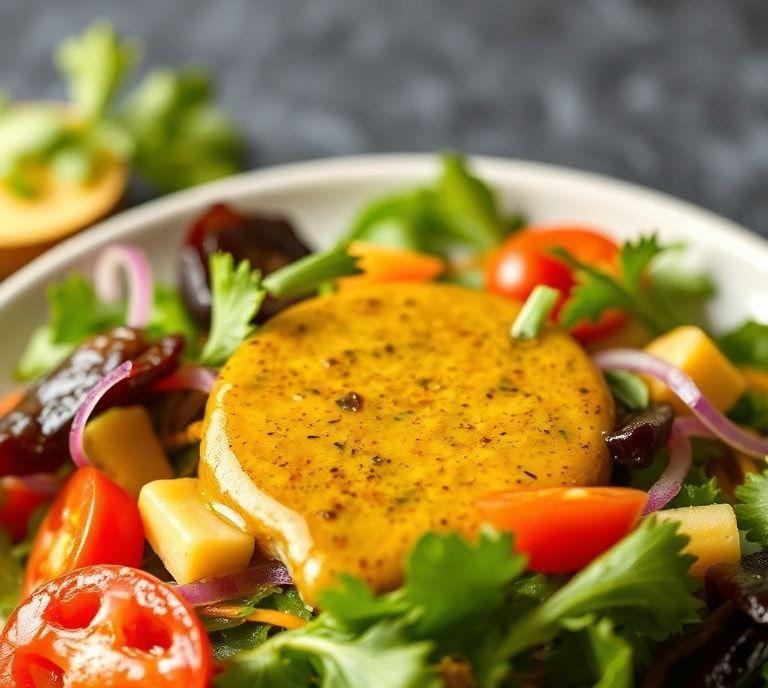
There’s something about this dressing that’s just the right balance of creamy, tangy, and savory. It pairs so well with everything from crispy greens to hearty grain salads. It’s vegetarian by default, but it’s also easy to adjust to suit different dietary needs. Plus, it’s incredibly quick to make, meaning you’ll never need to reach for a bottle of store-bought dressing again.
Ingredients Needed
To keep things simple but full of flavor, you’ll need:
- 1/2 cup extra virgin olive oil: A good quality olive oil is essential here. It’s the base of the dressing, so it’s worth splurging a little.
- 1/4 cup apple cider vinegar: The tanginess from the vinegar cuts through the richness of the oil and gives the dressing that sharp kick.
- 1 tablespoon Dijon mustard: This adds a nice little bite to the dressing, and it also helps to emulsify the mixture, giving it a smooth consistency.
- 1 teaspoon maple syrup or honey: A touch of sweetness balances out the acidity and makes the flavors pop.
- 1 garlic clove, minced: Fresh garlic gives the dressing a savory depth, but if you’re not a fan of raw garlic, a small pinch of garlic powder will work too.
- 1 teaspoon salt: To taste-this really brings everything together.
- 1/2 teaspoon black pepper: Freshly ground, of course. The pepper adds a little warmth and complexity to the dressing.
- 1 tablespoon fresh lemon juice (optional): If you’re craving extra acidity, lemon juice can bring an additional burst of freshness.
You might also want to throw in a handful of fresh herbs, like parsley, basil, or thyme, depending on the salad you’re serving. The herbs are completely optional but can give the dressing a personal twist that matches your mood or the season.
Cooking Instructions
Making this dressing is embarrassingly easy, but I promise the payoff is huge. Here’s how I do it:
- Start with the base: In a small bowl or jar, add the apple cider vinegar, Dijon mustard, maple syrup (or honey), and minced garlic. Whisk everything together until it’s well combined. I like to get the mustard and vinegar to mix thoroughly first, because it helps with the texture later on.
- Emulsify the dressing: Slowly stream in the olive oil while continuously whisking. The idea is to slowly incorporate the oil into the vinegar mixture, which helps create that creamy, smooth texture. If you’re using a jar, you can just seal it up and shake it vigorously instead of whisking.
- Season to taste: Add the salt, pepper, and lemon juice (if using). Taste it and see if you want to adjust anything-more sweetness, salt, or acidity. I always end up adjusting my seasonings a little, because I love a dressing that’s perfectly balanced.
- Chill (optional): If you have time, let the dressing sit in the fridge for about 30 minutes before serving. This gives the flavors time to meld, but you can definitely use it right away if you’re in a rush.
Ingredient Science Spotlight
What makes this dressing so effective is the science behind each ingredient. The olive oil acts as the fat that carries all the flavor-without it, the acidity from the vinegar would be too harsh. Oil also helps create that smooth texture that coats your salad, making each bite more satisfying.
The Dijon mustard plays a dual role here: it brings sharpness and depth, but more importantly, it helps to emulsify the oil and vinegar. Emulsification is the process of combining two ingredients that don’t naturally mix (like oil and water-based vinegar). Mustard contains compounds that help the oil and vinegar come together to form a stable dressing. Without it, you’d end up with a separated, watery mess.
Apple cider vinegar adds a bright acidity, but it’s a bit milder than white vinegar, making it perfect for dressings. Vinegar can help balance the richness of oils and other fats, which is why it’s so essential in vinaigrettes.
Finally, the touch of maple syrup or honey adds just enough sweetness to mellow out the sharp vinegar, making the overall dressing feel harmonious.
Expert Tips
- Use a good-quality olive oil: Olive oil isn’t just for flavor; it’s also the base of your dressing. A higher-quality oil will make a huge difference in the final taste. If you can, pick one that’s cold-pressed and extra virgin for the best flavor.
- Adjust the sweetness: Depending on your salad’s components, you might want to increase or decrease the sweetness. A sweeter dressing works wonderfully with bitter greens like arugula or endive, while a less sweet version can pair well with more neutral ingredients like romaine lettuce.
- Herb it up: Fresh herbs make a big difference in this dressing. Try adding a tablespoon of finely chopped parsley or basil for a fresh, vibrant twist. If you want a Mediterranean vibe, try adding some oregano or thyme.
- Make a larger batch: This dressing keeps really well in the fridge for up to a week. I often make a double batch to have on hand for easy lunches or dinners.
Recipe Variations
One of the things I love most about this dressing is how easily you can change it up depending on your mood or what you have in your pantry. Here are a few variations that I’ve tried over the years:
- Creamy Vegan Version: Add a tablespoon of tahini to the dressing to give it a creamy texture without any dairy. The tahini adds a rich, nutty flavor that balances out the tang of the vinegar.
- Spicy Kick: If you like a little heat, try adding a pinch of cayenne pepper or a few dashes of hot sauce to the dressing. It’ll give it a lovely zing that pairs especially well with a crunchy salad.
- Asian-Inspired: Swap the olive oil for sesame oil and the apple cider vinegar for rice vinegar. Add a teaspoon of soy sauce and a small pinch of ginger, and you’ve got an Asian-inspired dressing that’s perfect for a cabbage slaw or a noodle salad.
- Smoky Flavor: A teaspoon of smoked paprika or chipotle powder can add a subtle smoky depth to the dressing, making it perfect for roasted vegetables or hearty grain salads.
Final Words
This dressing is one of those recipes that you’ll find yourself coming back to time and time again. It’s quick, customizable, and gives any salad a rich, homemade touch. I’ve made it for weeknight dinners, for potlucks, and even for special occasions-it’s just that versatile. Plus, once you make it, you’ll never want to go back to bottled dressings again. It’s just one of those little kitchen victories that feel satisfying every time.
FAQs
What Are Some Common Ingredients In A Vegetarian Salad Dressing?
Common ingredients in a vegetarian salad dressing include olive oil, vinegar (such as balsamic, apple cider, or white wine vinegar), mustard, lemon juice, maple syrup or honey (for sweetness), garlic, herbs (such as oregano, basil, or dill), salt, and pepper. These ingredients provide a balance of acidity, sweetness, and savory flavors, making the dressing versatile and compatible with various salad types.
Is It Possible To Make A Creamy Vegetarian Salad Dressing Without Dairy?
Yes, it is possible to make a creamy vegetarian salad dressing without dairy. Non-dairy options include using plant-based ingredients such as cashews, avocado, tahini, or vegan mayonnaise as the base. For example, blending soaked cashews with lemon juice, garlic, and a little water can create a smooth, creamy dressing. Avocado can also add creaminess while providing a rich texture and flavor.
Can I Make A Vegetarian Salad Dressing In Advance?
Yes, you can make a vegetarian salad dressing in advance. Most salad dressings can be stored in the refrigerator for up to a week. It’s recommended to keep the dressing in an airtight container and shake well before using, as some ingredients may separate over time. For creamy dressings, stirring or blending may be necessary to restore their consistency.