There’s something uniquely satisfying about preparing a simple yet vibrant vegetarian salad. Whether it’s a mid-week lunch or a centerpiece for a weekend gathering, a salad has this magical ability to bring a burst of freshness to the table. But the best part? It’s one of those dishes that you can make entirely your own, based on what’s in season or what your taste buds are craving. I can still remember the first time I made a salad from scratch, beyond just tossing some lettuce and dressing together. It felt like an act of creativity, a kind of culinary painting where each ingredient added a different color and texture to the plate. The result was far more than just a meal-it became a celebration of flavors and textures.
So, if you’re looking to elevate your salad game, I’ve got a fantastic vegetarian recipe that’s not only full of vibrant, nutritious ingredients but also offers flexibility to tailor it exactly to your liking. This isn’t your run-of-the-mill leafy salad; it’s a medley of fresh, hearty vegetables, beans, grains, and a tangy dressing that brings everything together in the best way.
Vegetarian Salad Recipe
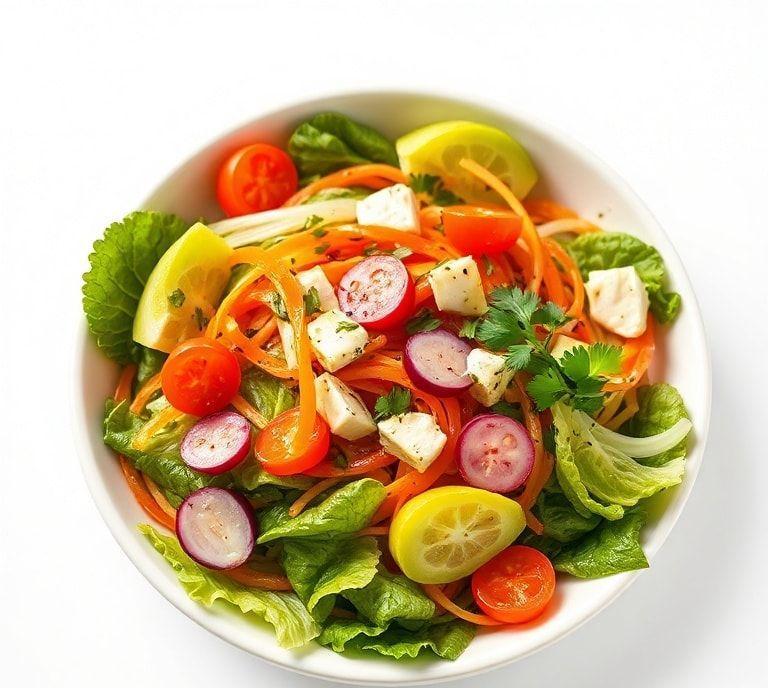
This salad is designed to be a nutritious powerhouse. With the crispness of fresh veggies, the heartiness of grains like quinoa, and the rich creaminess of avocado, it’s perfect as a main dish or a side. The dressing is zesty with a little kick, but not overwhelming-it’s the perfect complement to the vibrant ingredients.
Ingredients Needed
Here’s what you’ll need to put this beautiful salad together:
For The Salad
- 1 cup quinoa (cooked)
- 1 cup cherry tomatoes (halved)
- 1 cucumber (diced)
- 1 red bell pepper (diced)
- 1 avocado (sliced)
- 1 cup chickpeas (cooked or canned)
- ½ red onion (thinly sliced)
- 1 cup mixed greens (arugula, spinach, or baby kale work wonderfully)
- 1 tablespoon sunflower seeds (or pumpkin seeds, for a little crunch)
For The Dressing
- 3 tablespoons olive oil (extra virgin)
- 1 tablespoon balsamic vinegar
- 1 tablespoon Dijon mustard
- 1 teaspoon honey or maple syrup (for a touch of sweetness)
- Salt and pepper, to taste
Cooking Instructions
- Cook the Quinoa: Start by cooking the quinoa. For 1 cup of quinoa, use 2 cups of water or vegetable broth for more flavor. Bring it to a boil, then reduce to a simmer and cover. It should take about 15 minutes for the quinoa to absorb all the liquid and become tender. Once cooked, let it sit, covered, for 5 minutes before fluffing with a fork.
- Prepare the Veggies: While the quinoa cooks, slice your cherry tomatoes, cucumber, bell pepper, red onion, and avocado. I like to keep everything uniform in size to make sure each bite has a nice balance of flavors.
- Assemble the Salad: In a large bowl, combine the cooked quinoa, chickpeas, tomatoes, cucumber, bell pepper, avocado, and red onion. Add the mixed greens just before serving to keep them from wilting.
- Make the Dressing: In a small bowl or jar, whisk together the olive oil, balsamic vinegar, Dijon mustard, honey, salt, and pepper. You want to get a nice emulsion going, where the oil and vinegar combine into a smooth dressing.
- Toss and Serve: Drizzle the dressing over the salad and toss everything gently to combine. Top with sunflower seeds for some extra crunch.
Ingredient Science Spotlight
One of the things I love about a salad like this is the way the ingredients complement each other-not just in taste, but in nutrition. Take quinoa, for instance. It’s technically a seed, but it’s treated as a grain in cooking. It’s a complete protein, which means it contains all nine essential amino acids. For vegetarians, this makes quinoa a stellar choice for boosting protein intake without needing to rely on animal products.
The chickpeas are another nutritional powerhouse, rich in fiber and plant-based protein. They’re great for keeping you full longer, making the salad satisfying as a meal. Then there’s the avocado-packed with healthy monounsaturated fats, which are known to support heart health. It also has a generous dose of fiber and a ton of vitamins like potassium, which helps balance sodium levels in the body.
And we can’t forget about the vegetables. The bell pepper provides a hit of vitamin C, while the cucumbers bring hydration and crunch. Tomatoes are full of antioxidants like lycopene, which has been linked to heart health, and the red onion has a surprising amount of quercetin, an antioxidant that has anti-inflammatory properties.
Expert Tips
- Make It Ahead: If you’re prepping for a busy week, you can cook the quinoa and chickpeas in advance, store them separately, and assemble the salad when you’re ready to eat. This can make for a quick, nutritious meal when time is tight.
- Chill the Ingredients: For a refreshing salad, chill your vegetables in the fridge before assembling. This helps enhance their crunch and makes the salad feel even more refreshing.
- Avocado Tip: If you’re making the salad ahead of time, consider adding the avocado last minute. It can brown quickly, and you want it to stay bright and fresh.
- Flavor Boost: For an extra flavor kick, toss in some feta cheese or crumbled goat cheese, or even a sprinkle of nutritional yeast if you’re vegan. It adds creaminess and a tangy punch that really enhances the salad.
- Vegan Option: If you’re avoiding dairy, the salad is already vegan, but the dressing can be made even creamier by adding a spoonful of tahini. Just whisk it in with the other dressing ingredients for a velvety texture.
Recipe Variations
The beauty of a salad like this is its adaptability. Want to switch it up? Here are a few variations to try:
- Add Roasted Veggies: Try roasting some of the veggies like sweet potatoes or Brussels sprouts for a deeper, caramelized flavor. Roasting veggies also adds a warm element that makes this salad a perfect dish for cooler months.
- Switch the Greens: Not a fan of mixed greens? Try adding kale (massaged with a little olive oil to soften it) or even arugula for a peppery bite. You can also use iceberg lettuce for a crispier, crunchier base.
- Add Nuts or Seeds: If you’re looking for a different kind of crunch, swap the sunflower seeds for almonds, walnuts, or even a few slivers of toasted coconut. Walnuts would also bring in healthy omega-3 fatty acids.
- Spicy Kick: Spice things up with a pinch of chili flakes in the dressing, or add a few slices of jalapeño or hot pepper to the salad itself. A squeeze of fresh lime juice would also add a zesty, citrusy element to balance the heat.
- Grains Swap: If quinoa isn’t your thing, try farro, couscous, or even rice. Each of these brings its own unique texture and flavor to the salad, keeping it interesting.
Final Words
Salads are one of those dishes where the possibilities are endless, and you can get as creative as you want. This vegetarian salad recipe is simple yet flavorful, and it’s packed with nutrients that will leave you feeling energized and satisfied. Best of all, you can tweak it to suit your personal tastes, making it a recipe you’ll keep coming back to time and time again.
FAQs
What Are The Basic Ingredients For A Vegetarian Salad?
The basic ingredients for a vegetarian salad typically include a variety of fresh vegetables such as lettuce, spinach, tomatoes, cucumbers, carrots, and bell peppers. You can also add legumes like chickpeas or beans for protein, along with nuts, seeds, and a dressing made from olive oil, vinegar, lemon juice, and seasonings. To enhance the flavor, you may include herbs like parsley, basil, or cilantro.
Can I Make A Vegetarian Salad More Filling?
Yes, you can make a vegetarian salad more filling by incorporating protein-rich ingredients such as tofu, tempeh, beans, quinoa, or lentils. You can also add healthy fats through avocado, nuts, and seeds. Whole grains like farro, bulgur, or brown rice can contribute to making the salad more substantial. Adding a hearty dressing with olive oil and tahini will also help to make the salad more satisfying.
What Are Some Tips For Making A Vegetarian Salad Recipe More Flavorful?
To make a vegetarian salad more flavorful, focus on adding a balance of textures and flavors. Include a mix of crunchy ingredients like nuts, seeds, and raw vegetables, and pair them with softer components like ripe tomatoes or roasted vegetables. A tangy dressing can elevate the taste-try a combination of olive oil, balsamic vinegar, mustard, and honey. Fresh herbs and spices like garlic, cumin, or paprika can further boost the flavor profile.