Sisig is one of those Filipino dishes that tells a story in every bite. It’s an explosion of textures, flavors, and contrasts that somehow all come together in perfect harmony. If you’ve never had it, you might be scratching your head, wondering what it could possibly be. Is it spicy? Crunchy? Tender? Yes, it’s all of those things. Traditionally, sisig is made with pork-pork cheeks, ears, and sometimes even snouts, slowly simmered and then chopped into little bits, served sizzling hot. But here’s the twist: I’m going to walk you through a vegetarian version of this dish that not only keeps the flavor, but also makes it accessible to anyone who doesn’t eat meat.
Now, I’ve made this vegetarian sisig countless times, experimenting with ingredients and flavor profiles, and I’m so excited to share this version with you. Trust me, it’s everything you love about the original-savory, smoky, tangy, and just a little bit crispy. But without the pork. It’s almost like finding a secret treasure chest of flavors, and who doesn’t love a good twist on an old favorite?
Vegetarian Sisig Recipe
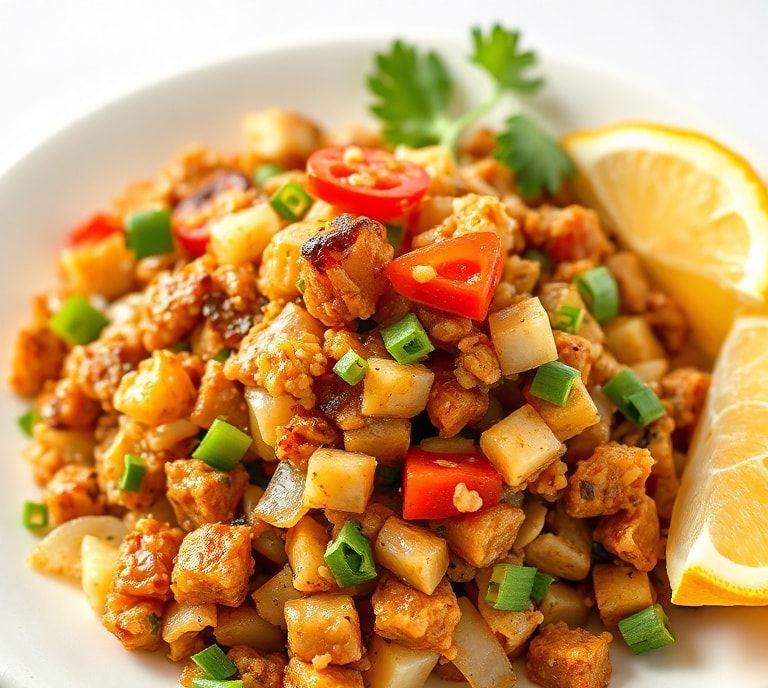
This vegetarian sisig is all about capturing the umami-rich essence of the original, while swapping out the meat for hearty, flavorful vegetables that can hold their own in the sizzling hot pan. The secret ingredient? King oyster mushrooms. They mimic the texture of pork so well, and when cooked right, they soak up all the right seasonings. But more on that later.
Here’s the recipe that’s going to turn your kitchen into the hottest food spot in town:
Ingredients Needed
-
King oyster mushrooms – 2 cups, finely chopped
These mushrooms are the MVP of this recipe. Their firm texture mimics pork and when sautéed, they absorb flavors beautifully.
-
Tofu – 1 block, pressed and crumbled
This adds a bit of creaminess to balance the crunch of the mushrooms.
-
Onions – 1 large, finely chopped
A must for that signature sisig flavor. They’ll caramelize a little and bring sweetness to the dish.
-
Garlic – 4 cloves, minced
Because garlic makes everything better, especially when it’s sautéed to a golden brown.
-
Red chili pepper – 2, finely chopped
A kick of spice. Adjust the number depending on how much heat you can handle.
-
Soy sauce – 3 tablespoons
A rich umami flavor that’s essential in Filipino cooking.
-
Vinegar – 2 tablespoons
For that tangy punch that cuts through the richness.
-
Calamansi or lemon juice – 2 tablespoons
If you can get your hands on calamansi, it’s ideal, but lemon works as a good substitute. It brightens everything up.
-
Sugar – 1 teaspoon
A touch of sweetness to balance the acidity of the vinegar.
-
Vegetable oil – 2 tablespoons
For sautéing.
-
Mayonnaise – 2 tablespoons
This is the creamy element that ties everything together.
-
Salt and pepper – to taste
Simple, but necessary to bring everything into balance.
-
Crispy garlic chips (optional)
To garnish, if you want that extra crunch and a little more garlic flavor.
Cooking Instructions
- Prepare your mushrooms and tofu: Start by cleaning and chopping the king oyster mushrooms. You want them to be finely chopped to mimic the texture of finely minced pork. After that, press the tofu to remove excess moisture, then crumble it up with your hands. Set both aside.
- Sauté the aromatics: In a large skillet or wok, heat the vegetable oil over medium-high heat. Add the chopped onions and garlic. Sauté them until they become fragrant and golden brown, about 2-3 minutes. Add the red chili peppers and continue sautéing for another minute. You’ll start to smell that savory, garlicky aroma wafting through the air-it’s the best.
- Cook the mushrooms: Add the chopped mushrooms to the pan. Let them cook down for about 5 minutes, stirring occasionally. The mushrooms will release moisture and then begin to crisp up on the edges, which is exactly what you want. It gives the dish a little bit of that ’meaty’ texture.
- Add the tofu: Stir in the crumbled tofu and let it cook for about 3 minutes. The tofu will pick up the flavors of the garlic, onions, and mushrooms.
- Season: Pour in the soy sauce, vinegar, and a dash of sugar. Stir everything well and let it simmer for 2-3 minutes. The vinegar will cook off a little, leaving behind that perfect tangy balance.
- Finish with calamansi/lemon and mayonnaise: Just before you take the pan off the heat, add the fresh calamansi or lemon juice, and stir in the mayonnaise. This adds a creamy texture that makes the sisig rich and comforting without the need for meat.
- Serve hot: Transfer the sisig to a hot, sizzling plate if you have one. It should sizzle as soon as it hits the hot surface. Top with crispy garlic chips for that extra layer of crunch and flavor.
Ingredient Science Spotlight
You might be wondering, "What makes king oyster mushrooms the star of this dish?" Well, it’s all about their texture. When cooked, these mushrooms don’t shrivel up or become rubbery like other mushrooms. Instead, they hold their shape and provide that meaty, fibrous texture that is so essential in recreating the ’feel’ of the traditional pork-based sisig. They also have a slightly nutty flavor, which enhances the richness of the dish.
Tofu, while not a traditional ingredient in sisig, helps add a smooth creaminess, especially once it’s crumbled into the dish. It takes on the flavor of the sauce, making every bite a little softer and richer without overshadowing the mushrooms.
The combination of vinegar and soy sauce creates a balance of savory and tangy notes that are signature to sisig. This is important because the vinegar cuts through the richness, providing that perfect contrast.
Expert Tips
- Get the right texture: For mushrooms, you really want them to be finely chopped. The more they resemble the texture of finely minced pork, the better your dish will turn out. But don’t overcook them-let them crisp up on the edges, but don’t let them burn.
- Make it sizzle: If you have a sizzling plate (the kind that crackles when you put hot food on it), use it. The hot surface helps give that extra sizzle, which is a key part of the sisig experience.
- Customize your heat level: The number of chili peppers you use is totally up to you. If you’re a fan of spicy food, feel free to add more. You can also add a dash of chili flakes when serving if you like extra heat.
- Play with textures: If you miss that pork fat texture, you can add a little bit of coconut oil when sautéing the mushrooms. This can bring some richness without using animal fat.
Recipe Variations
- Mushroom Mix: While king oyster mushrooms are the best substitute, you could also mix in shiitake or maitake mushrooms for added depth and flavor.
- Vegan Mayo Option: If you’re going fully plant-based, use vegan mayonnaise instead of regular mayo. It’s just as creamy and won’t compromise the texture.
- Tropical Twist: For a more tropical twist, toss in a bit of grilled pineapple at the end. The sweetness balances out the tangy vinegar and adds a fresh element.
- Spicy Version: For those who love spice, try adding a bit of sambal oelek or even some pickled jalapeños for a deeper, more complex heat.
Final Words
Making vegetarian sisig is about more than just swapping meat for mushrooms. It’s about rethinking what makes a dish flavorful and satisfying. This vegetarian sisig does all of that-it’s savory, spicy, tangy, and creamy, with enough texture to keep it interesting. I love how it has the same depth of flavor as the traditional version, and the mushrooms really shine as the star of the show.
FAQs
What Ingredients Are Typically Used In A Vegetarian Sisig Recipe?
A vegetarian sisig recipe usually substitutes the traditional pork with plant-based alternatives such as mushrooms, tofu, tempeh, or seitan. Common additional ingredients include onions, garlic, bell peppers, chili peppers, soy sauce or tamari, vinegar, calamansi or lemon juice, and sometimes vegan mayonnaise or coconut cream for a creamy texture. Fresh herbs and seasonings can be added to enhance flavor.
How Can I Make A Vegetarian Sisig Recipe Taste Authentic?
To achieve an authentic flavor, focus on balancing tangy, salty, and spicy elements. Sauté the main ingredients until they develop a slightly caramelized texture. Use a combination of soy sauce, vinegar, and citrus juice for acidity and umami. Adding smoked or charred vegetables, mushrooms, or a dash of liquid smoke can mimic the grilled or sizzling flavor of traditional sisig. Finishing with a touch of vegan butter or mayonnaise enhances richness.
Can Vegetarian Sisig Be Served Hot On A Sizzling Plate Like The Traditional Version?
Yes, vegetarian sisig can be served on a sizzling plate for the classic presentation. Preheat the plate and lightly oil it to prevent sticking. Cook the vegetarian ingredients until they are slightly crisp, then transfer to the hot plate. The residual heat will continue to cook the dish slightly while producing the signature sizzle and aroma, giving it a similar experience to traditional pork sisig.