There’s something undeniably joyful about cooking over an open flame-whether it’s the crackling sound of the fire, the smell of sizzling ingredients, or the way everything seems to come together in a moment of pure, delicious magic. When I think of meals that capture this essence of simplicity and satisfaction, vegetable skewers come to mind every time. They’re more than just a dish; they’re an experience. Each skewer is like a little adventure on a stick, full of flavor, color, and texture.
I first got hooked on vegetarian skewers during a summer barbecue with friends. It was one of those rare, sunny afternoons where everything felt perfect: the breeze was just right, the grill was smoking gently, and everyone was gathered around, laughing and chatting. I wasn’t a full-time vegetarian at the time, but there was something about the charred, caramelized vegetables, the fresh herbs, and the smoky undertones that made me forget I was missing out on anything else. Since then, I’ve been perfecting my vegetarian skewer game. Whether you’re hosting a gathering or just looking for a quick dinner that’s light yet satisfying, these skewers never disappoint.
Vegetarian Skewers Recipe
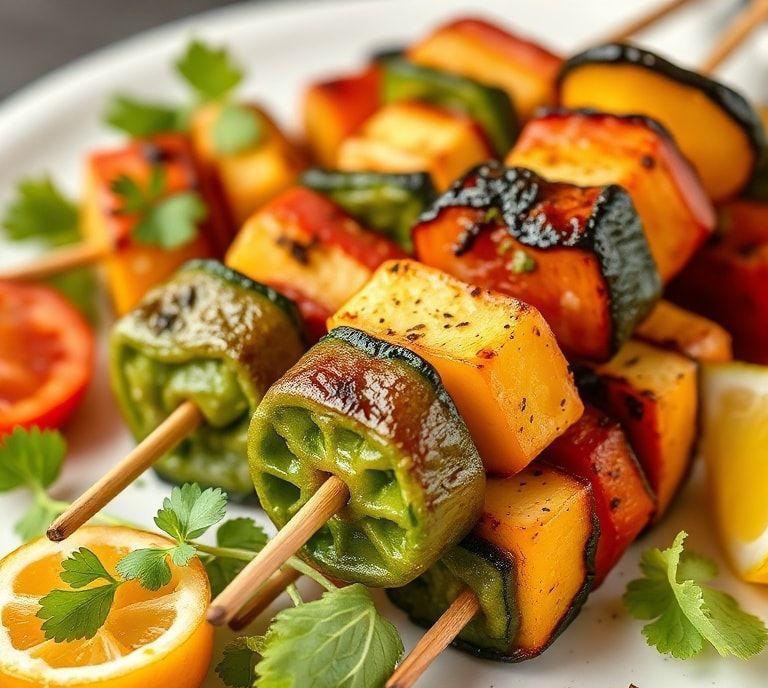
Now, let’s get into the heart of the matter-how to make these perfect vegetarian skewers. What’s fantastic about this recipe is its versatility. It’s easily customizable to suit any vegetables you like or have on hand. The key is balancing the flavors and making sure everything cooks evenly, without becoming mushy or underdone.
Ingredients Needed
- Vegetables: The foundation of any great skewer. Choose colorful veggies that will stand up to grilling. My go-to list includes zucchini, bell peppers (red, yellow, or green), mushrooms, cherry tomatoes, and red onions. You can mix and match based on what’s in season or what you like best.
- Olive oil: To help everything crisp up nicely and add a touch of richness.
- Fresh herbs: Fresh thyme and rosemary are favorites of mine. They lend such a bright, fragrant touch when grilled. You can also throw in a handful of fresh basil or parsley for garnish.
- Garlic: A little minced garlic brings the whole thing together with its aromatic punch.
- Lemon: For that zesty lift at the end, lemon zest and juice will do wonders.
- Salt & Pepper: These are essential for seasoning, but feel free to go beyond the basics with a pinch of smoked paprika or cayenne for a touch of heat.
- Skewers: Wooden or metal, but if you go with wooden skewers, make sure to soak them for about 30 minutes before grilling to prevent them from burning.
Cooking Instructions
- Prep the Veggies: First things first, cut your veggies into even, bite-sized pieces. You want them all roughly the same size so they cook evenly. Zucchini and bell peppers should be cut into thick slices, mushrooms halved or quartered, and onions sliced into wedges. Cherry tomatoes stay whole.
- Marinate: In a large bowl, toss the cut veggies with olive oil, garlic, lemon juice, and a sprinkle of salt and pepper. I love to let them sit for at least 20 minutes-longer if you have the time. This gives the veggies time to soak up the flavors.
- Assemble the Skewers: Start threading your veggies onto the skewers, alternating colors and textures for maximum visual appeal. Keep it fun and random; this isn’t a perfect science, just a way to create something that looks beautiful and tastes amazing.
- Grill: Preheat your grill to medium heat. Place the skewers on the grill and cook for about 10-15 minutes, turning them every 3-4 minutes so they cook evenly on all sides. You want that beautiful char, but not too much-just enough to get the smoky flavor and caramelization without burning the veggies.
- Finish with Herbs: Once the skewers are done, I like to sprinkle them with fresh thyme, rosemary, or basil to add a little fresh pop of flavor.
- Serve: Don’t forget a squeeze of lemon over the top right before serving. That acidity brightens everything up and adds a lovely final touch.
Ingredient Science Spotlight
There’s a fascinating bit of science behind the vegetables you choose for skewers. Take zucchini, for instance. When grilled, zucchini releases moisture, which can cause it to become soggy if not handled right. That’s why it’s so important to slice it thick enough-around half an inch thick works best. The thickness helps keep it from becoming mushy while still allowing the inside to cook through and become tender.
Mushrooms, on the other hand, are fascinating in their own right. When you grill mushrooms, they exude water. But with the heat of the grill, the moisture evaporates, intensifying their earthy, umami flavor. The process of caramelization that happens on the surface of the mushrooms adds a depth of flavor that makes them irresistible.
Tomatoes are another vegetable that benefits from the grill. Heat intensifies their sweetness while slightly charring the skin. That balance between juicy interior and smoky, caramelized skin is one of the reasons why tomatoes are so great on skewers-they bring an added dimension of sweetness that balances out the savory notes of the other veggies.
Expert Tips
- Even Sizing: When prepping your vegetables, make sure they’re all about the same size. If one piece is bigger than the others, it will cook at a different rate, and you might end up with some veggies undercooked while others are overdone.
- Soak Wooden Skewers: If you’re using wooden skewers, don’t skip this step. Soak them in water for at least 30 minutes before skewering the veggies. This helps prevent them from catching fire on the grill.
- Grill Marks Matter: Don’t be afraid of a little charring. Those grill marks bring so much flavor, and they’re the hallmark of a perfectly grilled vegetable.
- Don’t Overcrowd the Skewer: You want the veggies to have enough space between them so that the heat can circulate. Overcrowding will cause the vegetables to steam instead of grill, which means you’ll miss out on that smoky, charred flavor.
- Use a Grill Basket: If you find that your skewers are hard to turn, you can use a grill basket for easy flipping. It’s especially handy for delicate vegetables that might fall off the skewer if not carefully handled.
Recipe Variations
One of the best parts about vegetable skewers is their adaptability. Here are some ways to make this recipe uniquely yours:
- Add Protein: Tofu, tempeh, or even halloumi cheese can be a fantastic addition. Marinate them just like the veggies, and they’ll absorb all those smoky, garlicky flavors.
- Spices: Play around with different spice blends. I love a Mediterranean touch with some oregano, garlic powder, and a drizzle of balsamic glaze. Or, take a Middle Eastern route with cumin, coriander, and a squeeze of lemon.
- Fruit Skewers: For a fun twist, add fruit like pineapple or peaches to your skewers. The sugar in the fruit caramelizes beautifully on the grill, giving a lovely contrast to the savory veggies.
- Gravy or Sauce: For an extra burst of flavor, serve the skewers with a side of yogurt dip, tahini sauce, or a spicy harissa.
Final Words
The beauty of these skewers isn’t just in their taste-it’s in the way they bring people together. Whether you’re grilling alone for a quiet night in or having friends over for a fun, interactive meal, veggie skewers always deliver. It’s a reminder that simple ingredients, when treated with care and the right seasoning, can be transformed into something extraordinary.
FAQs
What Vegetables Are Best For Making Vegetarian Skewers?
The best vegetables for vegetarian skewers are those that hold up well on the grill and have a good balance of flavor and texture. Some popular choices include bell peppers, zucchini, cherry tomatoes, mushrooms, onions, and eggplant. Root vegetables like sweet potatoes can also work well if pre-cooked slightly. Ensure that the vegetables are cut into uniform pieces for even cooking.
How Can I Add Flavor To My Vegetarian Skewers?
To add flavor to vegetarian skewers, marinate the vegetables before grilling. A simple marinade could include olive oil, lemon juice, garlic, herbs (like rosemary or thyme), and spices (such as paprika or cumin). You can also brush the skewers with sauces such as BBQ sauce, teriyaki sauce, or tahini for added flavor. Allow the vegetables to marinate for at least 30 minutes to absorb the flavors.
Can I Make Vegetarian Skewers Ahead Of Time?
Yes, you can prepare vegetarian skewers ahead of time. Assemble the skewers with your choice of vegetables and store them in an airtight container or cover them with plastic wrap in the fridge. This will help save time when you’re ready to grill. You can also pre-marinate the vegetables before assembling them on skewers to enhance the flavor. Just be sure to avoid letting them sit for too long as some vegetables, like tomatoes, can become mushy if marinated for too long.