For as long as I can remember, spaghetti bolognese has been the classic comfort food. It’s the kind of meal that instantly evokes memories of gathering around the dinner table, the smell of simmering sauce filling the house, and everyone diving into a plate of hearty goodness. But here’s the twist – this version ditches the meat, replacing it with vegetables that mimic the rich depth of a traditional bolognese sauce. It’s a vegetarian spaghetti bolognese that doesn’t skimp on flavor or satisfaction.
I first tried this recipe a few years ago when a friend who had recently switched to a vegetarian diet invited me over for dinner. I’ll admit, I was skeptical. How could something without meat stand up to the robust, meaty bolognese I had grown up with? But after one bite, I was hooked. The layers of flavor were just as rich, if not more so, and I realized there was so much potential in using vegetables to create that signature hearty texture.
If you’re thinking about trying out this vegetarian spaghetti bolognese, I promise you-it’s more than just a ’meatless’ alternative. It’s an entirely new take on an old favorite. Let’s dive into the recipe, step by step.
Vegetarian Spaghetti Bolognese Recipe
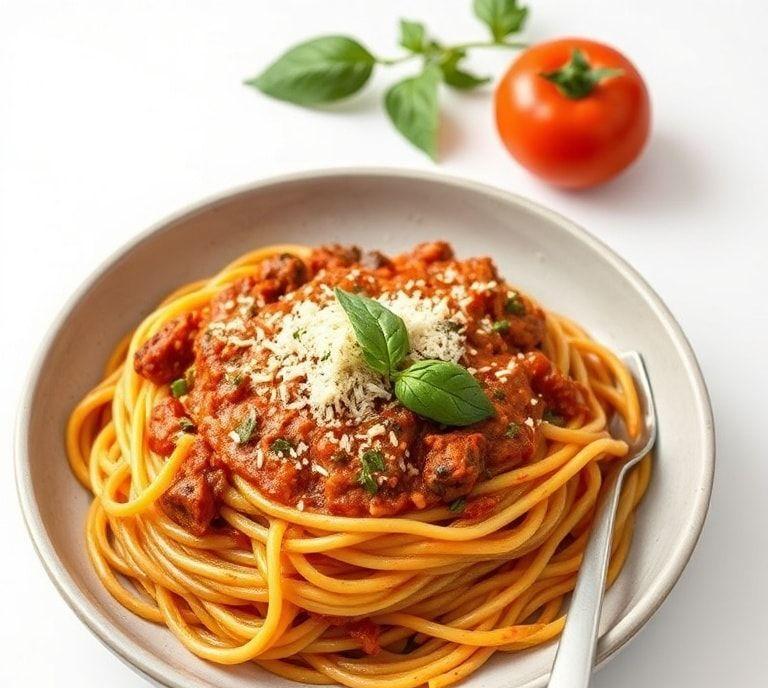
Let’s talk about how you can create this vegetarian masterpiece. You don’t need anything fancy here-just a few fresh ingredients and a little bit of patience to let the sauce simmer and develop all those delicious flavors.
Ingredients Needed
Here’s what you’ll need to pull this off:
- Olive oil – This is the base of our flavor. I always go for extra virgin because it brings an earthy richness to the sauce.
- Carrots (2 medium) – They add natural sweetness to balance the acidity of the tomatoes.
- Celery (2 sticks) – Celery gives the sauce an aromatic depth and a slight crunch. It’s an unsung hero in many sauces.
- Onion (1 large) – A classic, of course. It provides that savory undertone.
- Garlic (3 cloves) – Because, honestly, garlic is the secret to everything.
- Lentils (1 cup) – These are your stand-in for ground meat. They absorb all the flavors and give the sauce body.
- Canned tomatoes (2 cans, 14 oz each) – You’ll want good-quality tomatoes here. San Marzano is a great choice.
- Tomato paste (2 tablespoons) – Adds that concentrated tomato punch.
- Red wine (1 cup) – For richness. If you don’t drink, vegetable broth works, but the wine does elevate the flavors.
- Herbs – A mix of dried oregano, basil, and thyme. Fresh herbs would work too, but dried have a more intense flavor.
- Vegetable broth (2 cups) – To bring it all together.
- Bay leaves (2) – These infuse the sauce with a subtle, earthy flavor.
- Soy sauce (1 tablespoon) – This is a little trick I learned to add that meaty umami flavor without the meat.
- Salt & pepper – To taste.
- Spaghetti – I love using whole wheat for an extra bite, but whatever pasta you have on hand works just fine.
Cooking Instructions
Now, let’s get down to the fun part: cooking. This is one of those dishes that gets better the longer it simmers, so take your time.
- Prepare the Veggies: Start by finely chopping the onion, carrots, and celery. This doesn’t have to be perfect, but the smaller the pieces, the better the sauce will blend together. Mince the garlic, too.
- Sauté the Veggies: Heat a few tablespoons of olive oil in a large pan over medium heat. Once it’s hot, add the onion, carrots, and celery. Sauté them for about 10 minutes until they’ve softened and started to caramelize a bit. Add the garlic and cook for another minute until it’s fragrant.
- Cook the Lentils: Add the lentils into the mix and stir for a couple of minutes to coat them in all those lovely vegetable flavors.
- Add the Tomatoes & Wine: Pour in the canned tomatoes (with juice), tomato paste, and the red wine. Stir everything together, scraping up any bits stuck to the bottom of the pan. Then add the vegetable broth, soy sauce, oregano, basil, thyme, bay leaves, and a good pinch of salt and pepper.
- Simmer the Sauce: Let the sauce simmer on low for about 40-45 minutes, stirring occasionally. You want the lentils to cook through and the sauce to thicken. If it gets too dry, you can add a bit more broth or water to keep it from burning.
- Cook the Pasta: While the sauce is simmering, bring a pot of salted water to a boil and cook your spaghetti according to the package instructions. Drain the pasta and set aside.
- Assemble the Dish: Once the sauce has thickened and the flavors have melded together, taste it and adjust the seasoning. Serve the sauce over the cooked spaghetti, sprinkle with Parmesan (or vegan cheese, if you prefer), and enjoy!
Ingredient Science Spotlight
One of the most interesting parts of this dish is how the vegetables and lentils come together to recreate the meaty texture and deep flavor of a traditional bolognese sauce.
- Lentils: These are a powerhouse ingredient. Not only do they mimic the texture of ground beef, but they also absorb all the flavors of the sauce. They are high in protein and fiber, making them a great substitute for meat. Plus, their earthy flavor makes them perfect for savory dishes like this one.
- Tomatoes and Tomato Paste: The tomatoes form the base of the sauce, and tomato paste intensifies the flavor. Tomatoes contain lycopene, a powerful antioxidant that gives them their deep red color and helps reduce inflammation in the body.
- Soy Sauce: A simple addition that provides a meaty umami flavor. Soy sauce contains glutamates, which are the compounds responsible for that savory, ’rich’ flavor that you typically associate with meat.
- Olive Oil: Extra virgin olive oil isn’t just for salads-its healthy fats add flavor and richness to this dish, while also helping to release the fat-soluble vitamins from the vegetables.
Expert Tips
- Let It Simmer: Don’t rush this dish. The longer you let it cook, the better the flavors meld together. If you have time, try making it the night before. The sauce always tastes better the next day.
- Adjust the Texture: If you want the sauce to be smoother, you can blend part of it with an immersion blender. If you prefer a chunkier sauce, leave it as-is.
- Boost the Flavor: Try adding a tablespoon of balsamic vinegar or a splash of Worcestershire sauce (vegetarian version) to deepen the umami flavors in the sauce.
- Add Heat: If you like a bit of heat, throw in some red pepper flakes when you add the garlic.
Recipe Variations
If you’re feeling adventurous, here are a few variations you can try:
- Mushrooms: Add a cup of finely chopped mushrooms to the mix for extra depth. Mushrooms are a fantastic meat alternative because they have that umami flavor and can provide a chewy texture.
- Zucchini or Eggplant: Grated zucchini or chopped eggplant would be great additions. Both are mild in flavor but absorb the sauce beautifully.
- Vegan Version: For a fully plant-based recipe, skip the Parmesan and top with nutritional yeast for a cheesy, nutty flavor.
- Add Some Greens: For extra nutrition, stir in some spinach or kale just before serving. They’ll wilt down into the sauce and blend in seamlessly.
Final Words
This vegetarian spaghetti bolognese is a fantastic example of how you don’t need meat to create something that’s comforting and hearty. The combination of lentils, vegetables, and spices creates a sauce that’s just as satisfying as the original, but with a lighter, fresher feel. It’s the kind of meal you can make in big batches and enjoy for days, and it’s a perfect recipe for meal prepping, too.
FAQs
What Can I Use Instead Of Meat In A Vegetarian Spaghetti Bolognese Recipe?
In a vegetarian spaghetti bolognese, you can substitute meat with plant-based ingredients like lentils, mushrooms, tempeh, tofu, or plant-based meat alternatives. Lentils are especially popular as they provide a hearty texture similar to ground beef. Mushrooms, when finely chopped, mimic the meaty texture of traditional bolognese sauce.
Can I Make A Vegetarian Spaghetti Bolognese Gluten-free?
Yes, a vegetarian spaghetti bolognese can easily be made gluten-free. To do so, simply use gluten-free pasta as a substitute for regular spaghetti. There are a variety of gluten-free pasta options available, such as those made from rice, corn, or chickpeas. Additionally, ensure that the other ingredients, such as broth and sauces, are gluten-free.
How Can I Add More Flavor To A Vegetarian Spaghetti Bolognese Recipe?
To enhance the flavor of your vegetarian spaghetti bolognese, consider adding a combination of herbs and spices such as basil, oregano, thyme, and rosemary. Garlic and onion are essential for building a flavorful base, and a splash of red wine or balsamic vinegar can deepen the richness of the sauce. For extra umami, you can incorporate ingredients like nutritional yeast, soy sauce, or miso paste.