If you’ve ever stepped into a Thai restaurant or wandered the bustling markets of Thailand, you’ve likely encountered the vibrant, tangy goodness of Som Tum, or Thai papaya salad. It’s one of those dishes that pulls at your taste buds, offering a perfect balance of spicy, sweet, sour, and salty-all in one bite. I first tried it on a trip to Chiang Mai, where the vendors would prepare it fresh right in front of you, their mortar and pestles pounding away in rhythm. It’s a dish that’s not just about food; it’s about the whole experience-the sounds, the scents, the colors-and it leaves you craving more.
Now, imagine recreating that magic in your own kitchen, with fresh ingredients and a splash of creativity. I’ve gone vegetarian with this version, keeping all the punch of the original, minus the fish sauce or dried shrimp, which makes it an exciting option for those of us trying to eat more plant-based. It’s fresh, it’s vibrant, and it’s every bit as satisfying. Let’s dive into the details and bring a taste of Thailand to your table.
Vegetarian Thai Papaya Salad Recipe
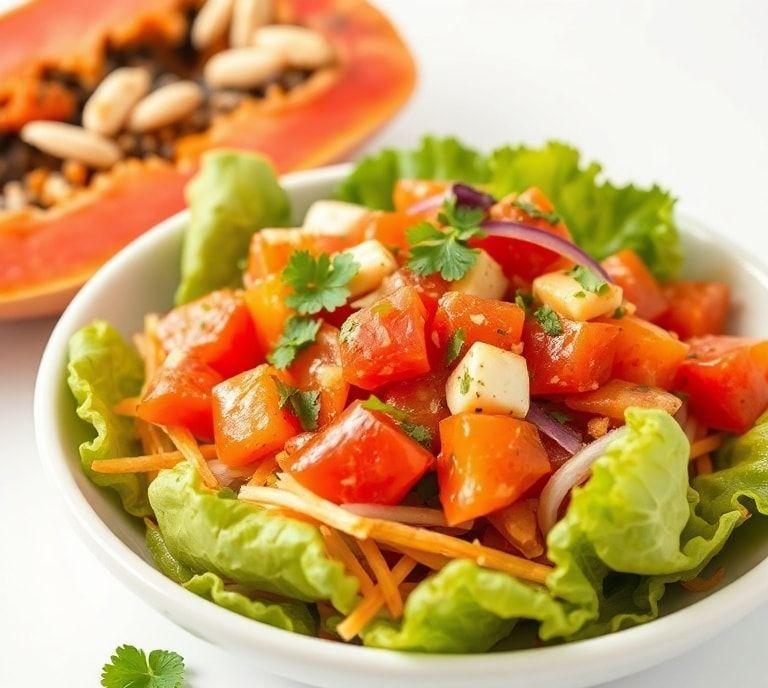
Papaya salad is such a beautiful example of how simple ingredients can come together to create something extraordinary. The crunchy texture of the green papaya, the briny depth of soy sauce, the heat from chili peppers, and the zing of lime juice all play together in a harmonious, unforgettable way. This vegetarian take on the dish retains all the authenticity, while making a few small tweaks to keep it accessible and plant-friendly.
Ingredients Needed
To recreate that classic Thai flavor, you’ll need a few key ingredients that pack a punch. Here’s the lineup:
- Green papaya: The star of the show. It’s crunchy, mildly sweet, and just unripe enough to provide that perfect texture.
- Carrot: Adds color and a little sweetness, complementing the papaya without overwhelming it.
- Tomatoes: Choose some plump, juicy ones. They add juiciness and a slight tang to balance out the dish.
- Thai bird’s eye chilies: These little fiery peppers are what give the salad its signature heat. You can adjust the amount depending on how spicy you want your salad.
- Garlic: Fresh and pungent, garlic provides a backbone flavor that enhances all the other ingredients.
- Lime: The zesty punch that brings everything to life.
- Soy sauce: A vegetarian substitute for fish sauce, adding that deep umami flavor.
- Palm sugar: A touch of sweetness to balance the tartness and heat.
- Peanuts: For that satisfying crunch and a nutty contrast to the softer textures.
- Green beans: Optional, but they bring a little crispiness and bite to the dish.
- Fresh herbs: Thai basil or cilantro work well, but you can experiment with what you have.
If you’re not familiar with some of these ingredients (looking at you, palm sugar), don’t worry. You can usually find them in an Asian grocery store, or even at larger supermarkets. Just make sure you’re getting the green papaya-ripe papayas will make the dish too sweet, and you’ll lose the textural magic.
Cooking Instructions
- Prep the vegetables: Start by peeling and shredding your green papaya. If you have a julienne peeler or a mandoline slicer, use that to get those fine, crunchy strips. Peel and grate the carrot too. Halve your tomatoes and chop them into bite-sized pieces. Trim the ends of your green beans and cut them into 1-inch pieces.
- Pound the garlic and chilies: Grab your mortar and pestle, or if you don’t have one, use the side of a knife to crush the garlic and chilies into a rough paste. Add the chilies one at a time, depending on your heat tolerance. You want this paste to release the full force of those garlic and chili flavors, so don’t hold back.
- Combine the dressing: Into the mortar, add the lime juice, soy sauce, and palm sugar. Give it a good mix to dissolve the sugar and blend the flavors together. If you’re using a large bowl for this, just stir everything together thoroughly.
- Toss the ingredients: Add the shredded papaya, carrots, and green beans to the bowl with the dressing. Give everything a good toss using tongs or your hands (a little mess is part of the fun!). Make sure every strand of papaya is coated in that delicious, tangy sauce.
- Top with peanuts and tomatoes: Gently fold in the peanuts and tomatoes last. You don’t want to crush the peanuts or tomatoes, just mix them in so they’re evenly distributed. Sprinkle a few extra peanuts on top for garnish.
- Serve immediately: Thai papaya salad is best enjoyed fresh. The longer it sits, the soggier the vegetables become. So once it’s all mixed up, serve it right away and enjoy the vibrant flavors.
Ingredient Science Spotlight
Let’s take a moment to appreciate the science behind some of the ingredients in this salad. The green papaya is full of an enzyme called papain, which is similar to the enzyme found in pineapple (bromelain). This enzyme breaks down proteins and helps with digestion. But more importantly, it also gives green papaya its firm texture, which is key to the salad’s satisfying crunch. The papaya also has a subtle flavor that absorbs the other ingredients, making each bite a perfect balance.
Lime juice is more than just a tart addition. The acidity helps to break down the vegetables slightly, making them softer without losing their crunch. Plus, lime is packed with vitamin C, which acts as a natural antioxidant, boosting your immune system while adding that zesty, refreshing taste.
And soy sauce-as a plant-based replacement for fish sauce-offers all the umami depth you could want. It contains amino acids that provide savory flavors, but it’s also rich in isoflavones, which have been linked to heart health. So, while the dish is a delight for your senses, it’s also a bit of a health booster!
Expert Tips
- Texture is key: Shredding the papaya and carrots finely ensures that each bite has that perfect mix of crunch and juiciness. If you’re finding it hard to shred the papaya, don’t hesitate to ask for help at the store or find a pre-shredded option-just keep it fresh!
- Taste as you go: This dish is all about balance. If you like it spicier, add more chili paste. If it’s too salty, add more lime. Adjust the palm sugar to get the right sweetness-it should be just enough to balance out the sourness without overpowering it.
- Use a pestle: The traditional mortar and pestle method isn’t just for show. The pounding helps release the flavors from the garlic, chili, and lime, infusing them into the salad. If you don’t have one, you can lightly smash the ingredients in a bowl, but a mortar really does make a difference.
Recipe Variations
- Fruity twist: Some people like to add a bit of sweetness with fruit. Consider adding mango, pineapple, or even watermelon to bring a juicy element to the salad.
- Vegan option: If you’re fully vegan and want to keep it plant-based, substitute the soy sauce with tamari or coconut aminos, which have a similar depth without any gluten.
- Noodle version: Turn this salad into a more filling meal by adding cooked rice noodles or soba noodles. It transforms it into a full meal while still keeping the fresh, crunchy vibe intact.
- Grilled tofu: For a protein-packed version, add grilled tofu cubes. They’ll absorb the flavors from the salad and give it a satisfying bite.
Final Words
This vegetarian Thai papaya salad is more than just a dish; it’s a celebration of fresh, vibrant ingredients and bold, unexpected flavors. With every bite, you’ll feel the heat from the chilies, the brightness from the lime, the sweetness of the palm sugar, and that unforgettable crunch of green papaya. And the best part? It’s simple to make and can be customized to suit your tastes.
FAQs
What Are The Main Ingredients In A Vegetarian Thai Papaya Salad?
The main ingredients in a vegetarian Thai papaya salad include shredded green papaya, carrots, tomatoes, green beans, and fresh herbs such as cilantro and basil. The dressing is made from lime juice, soy sauce (or tamari for gluten-free), garlic, chilies, and a sweetener like palm sugar or agave syrup. To garnish, peanuts and dried tofu are commonly used for added texture and flavor.
Can I Make A Vegetarian Thai Papaya Salad Without Fish Sauce?
Yes, you can make a vegetarian Thai papaya salad without fish sauce by substituting it with soy sauce or tamari for a gluten-free version. Another alternative is to use mushroom-based soy sauce or coconut aminos, which replicate the umami flavor of fish sauce while keeping the dish vegan-friendly.
How Can I Adjust The Spiciness Of Vegetarian Thai Papaya Salad?
To adjust the spiciness of your vegetarian Thai papaya salad, you can modify the amount of fresh chilies used in the dressing. For a milder flavor, reduce the number of chilies or opt for a less spicy variety, like red bell pepper. Alternatively, for more heat, add extra chilies or use chili flakes. You can also balance the spiciness with a bit more sugar or lime juice to taste.