There’s something uniquely satisfying about a simple pasta dish, especially when it’s as comforting and timeless as a vegetarian tomato pasta. Growing up, my kitchen often filled with the aroma of tomato sauce simmering on the stove. Whether it was for a quick dinner after school or a weekend meal with friends, tomato-based pasta dishes were always a favorite in our house. I’m not exactly sure what it is-maybe it’s the combination of fresh herbs and ripe tomatoes, or how the sauce envelops the pasta just right-but there’s a kind of magic in it.
What I love most about this vegetarian tomato pasta recipe is how it brings together familiar ingredients in a way that feels both homey and elevated. And, the best part? It’s so flexible-you can make it as simple or as elaborate as you like. It’s perfect for a weeknight meal but can also impress guests with just a little extra attention to detail. If you’re a tomato lover like me, this recipe might just become your go-to dish.
Vegetarian Tomato Pasta Recipe
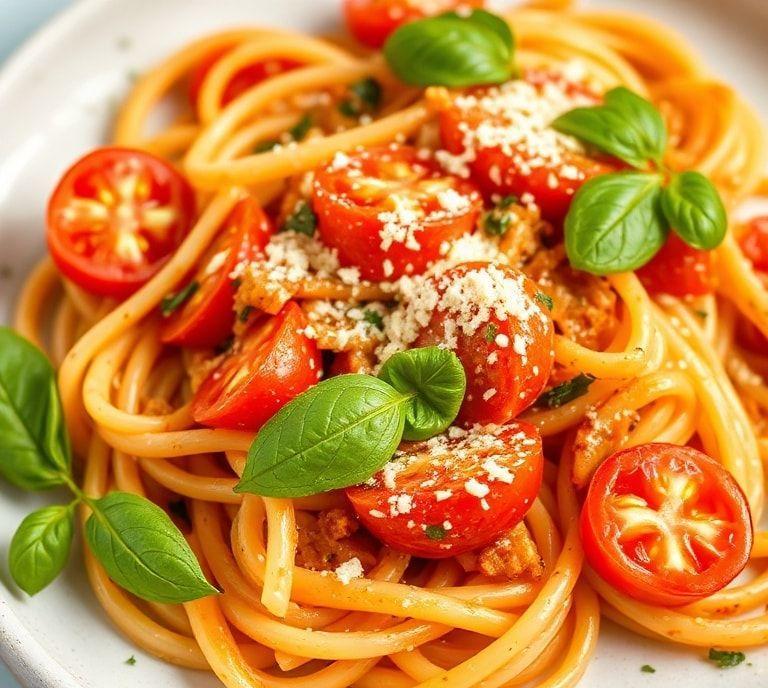
This vegetarian tomato pasta is vibrant, flavorful, and a true celebration of tomatoes in their prime. Whether you use fresh tomatoes in the summer or canned tomatoes in the colder months, this recipe is easy to adapt to whatever you have on hand. The beauty of this dish lies in the simplicity of its ingredients: a rich tomato sauce infused with garlic, basil, and a dash of red pepper flakes, tossed with your favorite pasta. It’s an ode to the Mediterranean, bringing together the freshness of garden-grown produce and the comforting nature of pasta.
Ingredients Needed
- Pasta: The kind of pasta you choose can make a difference. I tend to go for something hearty like rigatoni or penne, as they really capture the sauce in every bite. But spaghetti, fusilli, or farfalle work just as well.
- Olive Oil: Extra virgin, of course. It’s essential for sautéing the garlic and creating a rich base for the sauce. I always feel like I can taste the difference when I use good olive oil.
- Garlic: A few cloves, sliced thin. Garlic is such a game-changer in this dish, adding depth to the sauce. Don’t skimp on it!
- Crushed Tomatoes: You can use fresh tomatoes, but in my opinion, crushed canned tomatoes give this sauce a wonderful, velvety texture and intense flavor. They’re the backbone of the sauce.
- Tomato Paste: A tablespoon adds a concentrated, umami-packed punch that intensifies the tomato flavor.
- Dried Oregano: A sprinkle of oregano adds that earthy Mediterranean vibe, balancing the sweetness of the tomatoes.
- Fresh Basil: Torn into pieces just before serving, basil brings a refreshing burst of flavor that brightens the sauce.
- Red Pepper Flakes: A pinch, or more if you like some heat. It’s all about personal preference here!
- Salt and Pepper: Season to taste, of course. The salt really brings out the sweetness of the tomatoes.
- Parmesan or Vegan Cheese (optional): A sprinkle of cheese right before serving is always a nice touch, but feel free to leave it off for a vegan option.
Cooking Instructions
- Boil the Pasta: Start by bringing a large pot of salted water to a boil. Add your pasta and cook according to the package instructions. I tend to undercook mine by about 1-2 minutes, so it finishes cooking in the sauce. That little extra step ensures the pasta absorbs some of the sauce flavor and blends better with it. Once the pasta is done, drain and set aside.
- Sauté the Garlic: In a large skillet, heat about 2 tablespoons of olive oil over medium heat. Add the sliced garlic and sauté until it’s fragrant and golden, about 1 minute. Be careful not to let it burn-garlic can turn bitter fast.
- Make the Sauce: Add the crushed tomatoes, tomato paste, and a pinch of red pepper flakes to the pan. Stir everything together, and let it simmer for about 10-15 minutes, allowing the flavors to meld. I love the way the kitchen smells while this is happening.
- Season the Sauce: Add oregano, salt, and pepper to taste. I also like to tear in a few basil leaves at this point. Let the sauce simmer a little longer while you prep the pasta.
- Combine Pasta and Sauce: Toss the drained pasta into the sauce and stir until every piece is coated with that rich, red sauce. Let it cook together for another 1-2 minutes so the pasta can absorb some of the sauce.
- Serve: Plate your pasta and sprinkle with more fresh basil and parmesan, if using. I always feel like a master chef when I finish a dish that’s this simple yet delicious.
Ingredient Science Spotlight
Tomatoes are the star of this dish, and they deserve a little extra attention. Did you know that tomatoes, when cooked, release more of their antioxidant properties? Lycopene, a powerful antioxidant in tomatoes, is more readily absorbed by your body after the tomatoes have been cooked, especially in the presence of a little fat like olive oil. This is why tomato sauce made with olive oil is not only tastier but also healthier. It’s a perfect synergy between flavor and nutrition. The oil helps release the lycopene from the tomatoes, allowing your body to absorb it more effectively.
Garlic, another essential in this recipe, is packed with allicin, a compound that has been linked to a variety of health benefits, including anti-inflammatory and immune-boosting effects. There’s a reason garlic has been revered in traditional medicine for centuries. The fresh basil is full of essential oils, which are not just aromatic, but also have antibacterial properties. So, this dish isn’t just a treat for your taste buds-it’s good for you too!
Expert Tips
- Quality Olive Oil: Don’t settle for low-quality olive oil. The oil is integral to the flavor of the sauce. A fruity, peppery extra virgin olive oil will make a noticeable difference.
- Simmer the Sauce Low and Slow: The longer you let the tomato sauce simmer, the more concentrated the flavors will be. Aim for at least 15 minutes, but if you have the time, you could let it go for 30 minutes or more on a low flame.
- Reserve Pasta Water: If you find your sauce is a bit thick, add a splash of the pasta water you saved. The starch helps the sauce cling to the noodles, making every bite better.
- Try Fresh Tomatoes: When tomatoes are in season, use fresh tomatoes in place of the canned ones. Just be sure to blanch and peel them first, then chop. Fresh tomatoes offer a lighter, brighter taste to the sauce.
- Adjust to Your Taste: The beauty of this recipe is that it’s endlessly customizable. If you like a spicy kick, increase the red pepper flakes. If you prefer a sweeter sauce, add a touch of sugar or even a grated carrot. Don’t be afraid to play around with the ingredients until it tastes just right to you.
Recipe Variations
- Roasted Vegetables: For an added layer of flavor, try roasting vegetables like zucchini, eggplant, or bell peppers and tossing them into the pasta. Roasting caramelizes the veggies, bringing out their natural sweetness.
- Add a Protein: If you want to turn this into a heartier meal, add some plant-based protein like sautéed tempeh, chickpeas, or lentils. You can even add some cooked quinoa for a unique twist.
- Creamy Tomato Pasta: If you prefer a creamier texture, stir in a bit of cream or a non-dairy alternative toward the end of cooking. It adds a rich, velvety finish to the sauce that is truly indulgent.
- Pesto Variation: Mix in a little homemade or store-bought pesto into the pasta right before serving. The vibrant, herby flavors of pesto give the dish a whole new dimension.
- Mushroom Sauce: For a meaty, savory depth, sauté some mushrooms with the garlic before adding the tomatoes. Mushrooms bring a lovely umami flavor to the dish.
Final Words
At its core, this vegetarian tomato pasta is all about simplicity-letting fresh, wholesome ingredients shine through. It’s the kind of dish that brings people together. Whether it’s a quiet evening at home or a gathering with friends, this recipe never fails to deliver. I’ve made it countless times, tweaking it here and there based on what’s in my kitchen, and it always tastes like home.
FAQs
What Ingredients Are Needed For A Vegetarian Tomato Pasta Recipe?
A basic vegetarian tomato pasta recipe typically requires pasta (such as spaghetti, penne, or fusilli), ripe tomatoes or canned tomato puree, olive oil, garlic, onions, fresh basil, salt, pepper, and optional ingredients like chili flakes, grated Parmesan or a vegetarian cheese alternative, and vegetables such as bell peppers, zucchini, or mushrooms for added flavor and nutrition.
How Can I Make The Tomato Sauce Rich And Flavorful Without Meat?
To enhance the flavor of a vegetarian tomato sauce, start by sautéing garlic and onions in olive oil until golden. Add finely chopped or pureed tomatoes and simmer to reduce excess water. Incorporate herbs like basil, oregano, thyme, or parsley, and season with salt, pepper, and a pinch of sugar to balance acidity. You can also add roasted vegetables, sun-dried tomatoes, or a splash of vegetable broth for depth. Finishing with a drizzle of olive oil or a sprinkle of Parmesan enhances richness without using meat.
Can I Make This Recipe Gluten-free Or Vegan?
Yes, you can adapt a vegetarian tomato pasta recipe to be gluten-free by using gluten-free pasta made from rice, corn, or legumes. For a vegan version, ensure no cheese or dairy is used; instead, use plant-based cheese alternatives or nutritional yeast for a cheesy flavor. The tomato sauce and vegetables are naturally vegan, making it easy to adjust for dietary preferences without compromising taste.