I’ve always loved a good homemade tomato sauce. There’s something incredibly satisfying about cooking up a batch of sauce from scratch, especially when the aroma fills the kitchen and you know it’s going to bring out the best in whatever dish you’re making-whether it’s pasta, pizza, or just dipping warm, crusty bread. But as someone who doesn’t eat meat, I’ve learned over the years how to make a rich, flavorful vegetarian tomato sauce that doesn’t leave anything to be desired. No meat needed for that deep umami flavor. You’ll see what I mean once you give this a try.
Tomato sauce is so much more than just tomatoes; it’s a balance of herbs, spices, and the right cooking techniques. A good sauce is like a canvas, offering endless possibilities depending on what flavors you want to highlight. I remember one day in my tiny apartment kitchen-no fancy equipment, just a cast-iron skillet and a spatula-deciding to tweak the classic marinara recipe. That first batch of tomato sauce without meat was so good, I had to write it down. It’s the recipe I’m sharing with you now.
Vegetarian Tomato Sauce Recipe
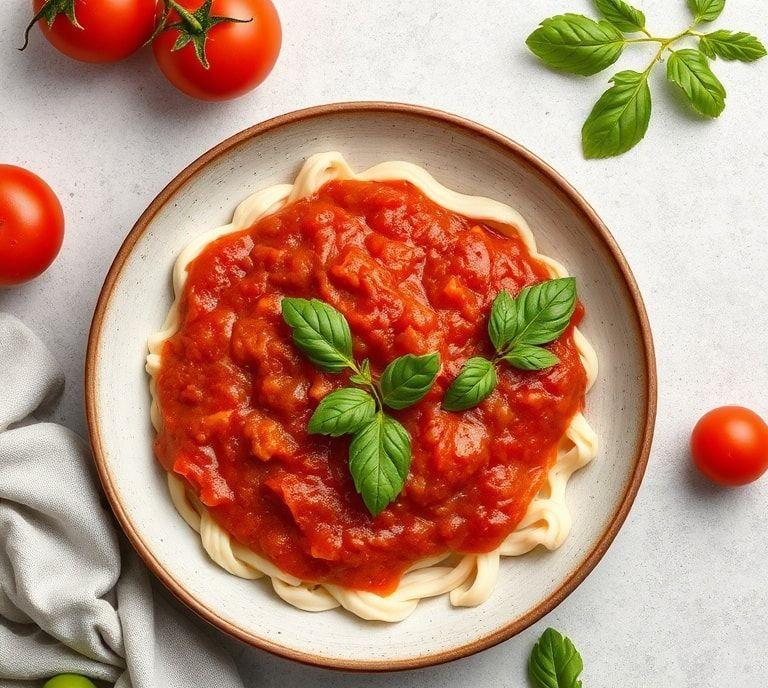
This vegetarian tomato sauce is hearty, tangy, and full of flavor. The secret to its richness lies not just in the quality of tomatoes you use but in the careful layering of flavors. You don’t need meat to get that satisfying umami. A combination of fresh vegetables, herbs, and a little bit of patience while simmering will give you a sauce that’s perfect for all your favorite dishes.
Ingredients Needed
The ingredients for this sauce are pretty simple, and you likely already have most of them in your pantry or fridge. Here’s what you’ll need:
- 4 medium tomatoes (or 1 can of whole peeled tomatoes if fresh isn’t available)
- 2 tablespoons of olive oil (extra virgin, of course)
- 1 small onion (finely chopped)
- 3 cloves of garlic (minced)
- 1 carrot (peeled and grated)
- 1 celery stalk (finely chopped)
- 1 teaspoon of dried oregano
- 1 teaspoon of dried basil
- 1/2 teaspoon of sugar (to balance acidity)
- Salt and pepper (to taste)
- Fresh basil or parsley (optional, for garnish)
- 1 tablespoon of balsamic vinegar (adds depth)
Some might think of tomato sauce as a one-dimensional dish, but when you start layering these simple ingredients, the magic happens.
Cooking Instructions
- Prep your vegetables: First, chop your onion, garlic, celery, and grate the carrot. You can use a box grater for the carrot, or if you want a smoother sauce, feel free to pulse it in a food processor.
- Sauté the aromatics: Heat the olive oil in a large pan over medium heat. Add the onions and sauté until they become soft and translucent-about 5 minutes. Once they’re soft, toss in the garlic, grated carrot, and celery. Stir everything together for another 2-3 minutes until the mixture is fragrant and everything has softened.
- Add the tomatoes: If you’re using fresh tomatoes, chop them into chunks and add them to the pan. Let them cook down for about 10 minutes, stirring occasionally, until they start to break apart. If you’re using canned tomatoes, just crush them with your hands before adding them to the pan.
- Season and simmer: Sprinkle in the dried oregano, basil, salt, pepper, and sugar. Stir everything to combine, and let the sauce simmer gently for 30 minutes, stirring occasionally. You’ll want the tomatoes to break down into a rich, thick sauce. You can mash them with the back of your spoon to speed up the process.
- Finish it off: When the sauce has thickened and is nicely seasoned, add the balsamic vinegar for that sweet and tangy depth. Taste and adjust the seasoning if needed-sometimes a pinch more salt or a dash of sugar can do wonders. If you like, you can blend the sauce with an immersion blender for a smoother consistency, but I like mine a little chunky.
- Serve: Garnish with fresh basil or parsley for a pop of color and freshness. Serve it over pasta, as a pizza sauce, or even as a dip with bread. The possibilities are endless.
Ingredient Science Spotlight
Let’s dive into the science behind some of the key ingredients in this recipe-tomatoes, olive oil, and balsamic vinegar.
- Tomatoes: The star of the show! Tomatoes are naturally acidic, which is why adding a pinch of sugar helps balance out that tartness. The umami in tomatoes comes from a compound called glutamate. When tomatoes cook down, the glutamate gets concentrated, creating that deep, savory flavor we crave.
- Olive oil: A good-quality extra virgin olive oil isn’t just for drizzling over salads-it’s the foundation for building layers of flavor in a sauce. Olive oil contains monounsaturated fats, which help extract the flavor from the tomatoes and other vegetables. Plus, it adds richness to the sauce.
- Balsamic vinegar: Balsamic vinegar might seem like an odd ingredient in tomato sauce, but it adds a wonderful depth of flavor. It’s naturally sweet and tangy, which complements the acidic tomatoes beautifully. The complex compounds in balsamic vinegar-particularly the polyphenols-help elevate the sauce’s flavor without overwhelming it.
Expert Tips
Here are a few tips I’ve learned over the years to make your sauce truly stand out:
- Use the best tomatoes you can find: If you’re using fresh tomatoes, Roma or plum tomatoes are your best bet-they’re meaty with fewer seeds. But if you’re using canned tomatoes, opt for whole peeled tomatoes. They tend to have a richer flavor than diced ones.
- Let it simmer low and slow: The longer you let the sauce simmer, the richer the flavor will become. Don’t rush it. This is a dish that benefits from patience.
- Herb blending: While dried oregano and basil are the classics, don’t be afraid to experiment with other herbs like thyme, rosemary, or even a bit of bay leaf. Fresh herbs can also be a game-changer.
- Add a splash of red wine: If you want to take it to the next level, a splash of red wine while the sauce simmers can add depth and complexity.
Recipe Variations
One of the beautiful things about tomato sauce is how versatile it is. Here are a few ways you can make this recipe your own:
- Spicy Tomato Sauce: If you like a little heat, add a pinch of crushed red pepper flakes along with the garlic. It’ll give the sauce a nice kick without overpowering the flavor.
- Creamy Tomato Sauce: For a creamy twist, stir in a little heavy cream or a dollop of mascarpone cheese toward the end of cooking. It’ll add a velvety smoothness.
- Herb-Heavy Sauce: Instead of relying only on dried herbs, try adding fresh rosemary, thyme, or even a bay leaf while the sauce simmers. Just remember to remove the bay leaf before serving.
Final Words
Making your own tomato sauce is one of those kitchen rituals that’s both comforting and rewarding. You don’t need a lot of fancy ingredients or equipment-just good tomatoes, a little olive oil, and time. The end result is a deeply flavorful, aromatic sauce that can transform even the simplest dish into something special. It’s something you can feel proud of-especially when you know exactly what went into it.
Whether you’re preparing a weeknight dinner for the family or a homemade pizza for a group of friends, this sauce is a winner. And trust me, once you taste it, store-bought will never quite measure up again.
FAQs
What Ingredients Are Needed For A Basic Vegetarian Tomato Sauce?
A basic vegetarian tomato sauce typically requires fresh tomatoes (or canned tomatoes), olive oil, garlic, onion, basil, oregano, salt, pepper, and a pinch of sugar. Some recipes may also include red pepper flakes for added heat or a splash of balsamic vinegar for a deeper flavor.
Can I Use Canned Tomatoes Instead Of Fresh Tomatoes For Making Vegetarian Tomato Sauce?
Yes, canned tomatoes are an excellent alternative to fresh tomatoes, especially when fresh tomatoes are out of season. Opt for high-quality canned tomatoes such as whole peeled tomatoes or crushed tomatoes for the best flavor. Just be sure to adjust the cooking time to achieve the desired consistency.
How Can I Make A Vegetarian Tomato Sauce Spicier?
To add spice to your vegetarian tomato sauce, you can incorporate ingredients like red pepper flakes, chopped fresh chilies, or even a dash of hot sauce. Start with small amounts and adjust based on your heat preference. Additionally, sautéing garlic and chili in olive oil before adding the tomatoes can infuse the sauce with a deeper, spicier flavor.