Vindaloo is one of those dishes that packs a punch-vibrant, fiery, and full of complexity. If you’ve ever walked into a bustling curry house, you’ve probably noticed the signature deep red hue and spicy scent of the Vindaloo that lures you in like an aromatic siren call. It’s the kind of dish that’s known for being bold and unapologetic, and it’s earned a rightful place as one of the most beloved curries across the globe.
But here’s the thing: despite its popularity, the true art of a vindaloo often gets lost in translation, especially in many Westernized versions that dial down the heat and complexity. Now, what if you could recreate the intense flavors of a traditional vegetarian vindaloo right in your own kitchen, minus the meat, but still brimming with all the flavor and spice?
I’ve been experimenting with this vegetarian spin for years, and each time I make it, I’m reminded of a travel memory I have from when I visited Goa. There, I had my first authentic vindaloo. The combination of sharp vinegar, earthy spices, and deep heat was so different from anything I’d tasted before. That experience sparked my love for this curry, and I’ve spent a long time perfecting a vegetarian version that I can confidently serve to anyone, from die-hard curry lovers to folks just dipping their toes into the world of spice.
So, whether you’re already a fan of this fiery dish or are looking to spice up your vegetarian repertoire, this recipe is sure to impress.
Vegetarian Vindaloo Recipe
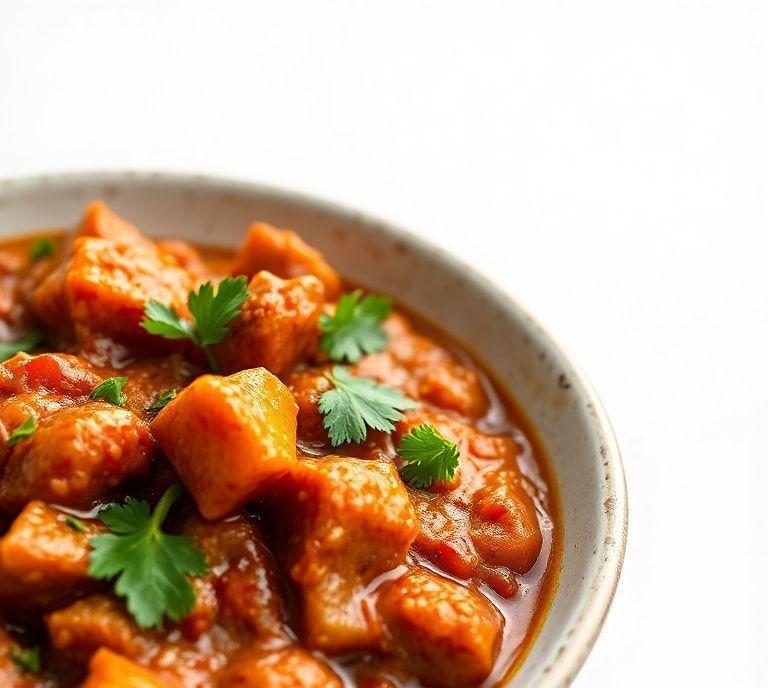
Now, let’s dive into the heart of it. Here’s a vegetarian vindaloo recipe that’s as vibrant as it is flavorful. It might seem like there’s a lot of ingredients, but don’t be intimidated. Most of them are pantry staples and are part of what creates that complex, layered flavor profile that vindaloo is known for.
Ingredients Needed
- Vegetables of choice (500g total) – Traditionally, vindaloo is made with pork, but you can substitute it with a hearty mix of vegetables. Potatoes, cauliflower, carrots, and green beans work wonderfully. They soak up all the flavors beautifully.
- Onion (1 large, finely chopped) – The base of the curry. You’ll want this to caramelize, as it adds a natural sweetness that balances out the spices.
- Garlic (4-5 cloves, minced) – Essential for depth. Don’t skip this part-it’s the backbone of the curry.
- Ginger (1-inch piece, grated) – This adds a little warmth and pungency to the dish.
- Tomatoes (2, chopped) – Fresh tomatoes balance out the vinegar and spices with their slight sweetness.
- Vinegar (2 tablespoons) – The tanginess of vinegar is what makes vindaloo shine. If you want to go more authentic, use malt vinegar, but white or apple cider vinegar also works great.
- Vegetable oil (2 tablespoons) – For sautéing the spices and vegetables.
-
Spices
- Ground turmeric (1 teaspoon)
- Ground cumin (1 teaspoon)
- Ground coriander (1 teaspoon)
- Garam masala (1 teaspoon)
- Red chili powder (2 teaspoons or to taste)
- Mustard seeds (1 teaspoon)
- Ground cinnamon (½ teaspoon)
- Cloves (2 whole)
- Bay leaves (1-2)
- Black pepper (½ teaspoon)
- Salt – Adjust to taste.
- Coconut milk (1 cup) – For a rich and creamy consistency to balance the heat.
- Fresh cilantro (for garnish) – It adds a fresh, herbal finish that cuts through the richness.
Cooking Instructions
- Prepare the vegetables: Chop your chosen vegetables into bite-sized pieces. If you’re using potatoes, peel and cube them. Cauliflower should be cut into florets, and carrots into rounds. The goal is to have all the veggies cook evenly, so keep the pieces roughly the same size.
- Sauté the spices: In a large pan or dutch oven, heat the oil over medium heat. Add the mustard seeds, cloves, and bay leaves. Let them pop and sizzle for about 30 seconds. Then, add the finely chopped onions, garlic, and ginger. Stir until the onions become golden brown-this is your flavor base.
- Build the curry: Stir in the turmeric, cumin, coriander, cinnamon, and red chili powder. Let the spices toast for a minute or two, which will bring out their natural oils and deep flavors. The scent will be incredible at this point.
- Add the vegetables: Toss in your chopped vegetables, followed by the chopped tomatoes. Stir to combine everything, allowing the tomatoes to soften and release their juices.
- Simmer: Pour in the vinegar and coconut milk. Stir everything together, cover the pan, and let it simmer for 20-30 minutes, until the vegetables are tender and the flavors have melded together. You can add a splash of water if it looks too dry.
- Adjust seasoning: Taste the curry and add salt as needed. If you like a more pronounced vinegar tang, add a little more vinegar to taste. The spices should be bold but not overwhelming, with a good balance of heat and tanginess.
- Garnish and serve: Remove the curry from heat. Discard the bay leaves and sprinkle fresh cilantro over the top. Serve it hot with rice or naan. I personally love it with a side of simple basmati rice-it lets the curry shine.
Ingredient Science Spotlight
One of the key things that makes a vindaloo so irresistible is its balance of spicy, tangy, and savory elements. Let’s break down some of the magic behind a few of the key ingredients:
- Vinegar: Vinegar is the soul of a true vindaloo. It’s what gives the dish its signature tang and helps cut through the rich spices and oils. It also tenderizes the vegetables and helps bring all the flavors together. The acidity in vinegar balances the heat from the chili powder and the earthiness of the cumin and coriander.
- Mustard Seeds: They’re not just for tangy dressings! Mustard seeds add a sharp, slightly bitter heat when fried, and they’re often used in Indian cooking to give dishes a distinctive flavor. They also help bring depth to the dish without overpowering the other spices.
- Coconut Milk: This ingredient might seem more tropical than traditional, but it adds a silky richness that tames the heat of the dish. It’s also a great way to add creaminess without resorting to dairy, which makes it perfect for vegan and vegetarian diets.
Expert Tips
- Make it ahead: Vindaloo always tastes better the next day. The flavors have time to meld and deepen, so don’t hesitate to cook it in advance and let it sit in the fridge overnight. The longer it sits, the better it gets!
- Control the heat: If you like things mild, reduce the amount of chili powder, or opt for a mild variety. If you want it to have some serious heat, keep the amount of red chili powder as is, or throw in a chopped fresh green chili when cooking the onions.
- Toast your spices: Don’t rush the toasting process when cooking your spices. This is where the magic happens-by releasing the essential oils, you unlock the full depth of flavor in each one. Be sure to watch them carefully, though, as spices can burn quickly.
Recipe Variations
- Add legumes: If you want a protein boost, adding chickpeas or lentils can make the dish heartier without compromising the flavor. Just cook them until tender and add them in at the same time as the vegetables.
- Spicy Potato Vindaloo: If you’re a fan of the classic potato curry, stick with potatoes as your base and amp up the spices for a more intense flavor profile.
- Tropical Twist: For a slightly different flavor, add some pineapple chunks or mango to your curry in the last few minutes of cooking. The sweetness complements the heat and acidity beautifully.
Final Words
This vegetarian vindaloo recipe is a beautiful combination of spice, tang, and richness. It’s a reminder that vegetarian cooking doesn’t need to be boring or one-dimensional-it can be vibrant, complex, and packed with flavor. Whether you’re looking to recreate the flavors of Goa or simply want to try something new in the kitchen, this recipe gives you everything you need to impress.
FAQs
What Vegetables Are Best Suited For A Vegetarian Vindaloo?
A variety of vegetables can be used in a vegetarian vindaloo, depending on your preference and seasonal availability. Common choices include potatoes, cauliflower, carrots, bell peppers, peas, and green beans. Root vegetables such as sweet potatoes or turnips add additional texture and absorb the rich flavors of the vindaloo sauce well.
How Can I Make A Vegetarian Vindaloo Spicy Without Overpowering The Dish?
Vindaloo is traditionally a spicy curry, but the heat can be controlled by adjusting the type and quantity of chili used. Start with mild chili powder or paprika for flavor and color, and add green chilies or red chili powder gradually. Additionally, including ingredients like ginger, garlic, and vinegar enhances the tangy and aromatic profile without making the dish overwhelmingly hot.
Can I Prepare A Vegetarian Vindaloo Ahead Of Time And Store It?
Yes, vegetarian vindaloo can be prepared in advance. It often tastes even better the next day as the flavors deepen. Allow the curry to cool completely, then store it in an airtight container in the refrigerator for up to 3-4 days. For longer storage, it can be frozen for up to 2 months. Reheat gently on the stove, adding a splash of water if needed to restore the sauce’s consistency.