Wonton soup has always been one of those dishes that feels like a warm embrace in a bowl. For years, I’ve had a soft spot for it-not just because of its comforting flavors, but because of the way it brings people together. I remember making it with my grandmother on cold afternoons, the steam rising from the pot as we sat together in her kitchen. It was a simple meal, yet one that seemed to carry so much love and history with every bite. But not everyone eats meat, and that’s where a vegetarian version comes in. Trust me, you won’t miss the pork or shrimp at all in this hearty, flavorful vegetarian wonton soup.
This vegetarian wonton soup is just as satisfying as the traditional kind, and it’s loaded with fresh, healthy ingredients that make each spoonful feel like a cozy hug. You can easily swap out the meat and still create a soup that’s packed with layers of umami and texture. And the best part? It’s just as easy to make-whether you’re a seasoned home cook or a kitchen newbie, this recipe can be your go-to when you need something nourishing and flavorful.
Wonton Soup Vegetarian Recipe
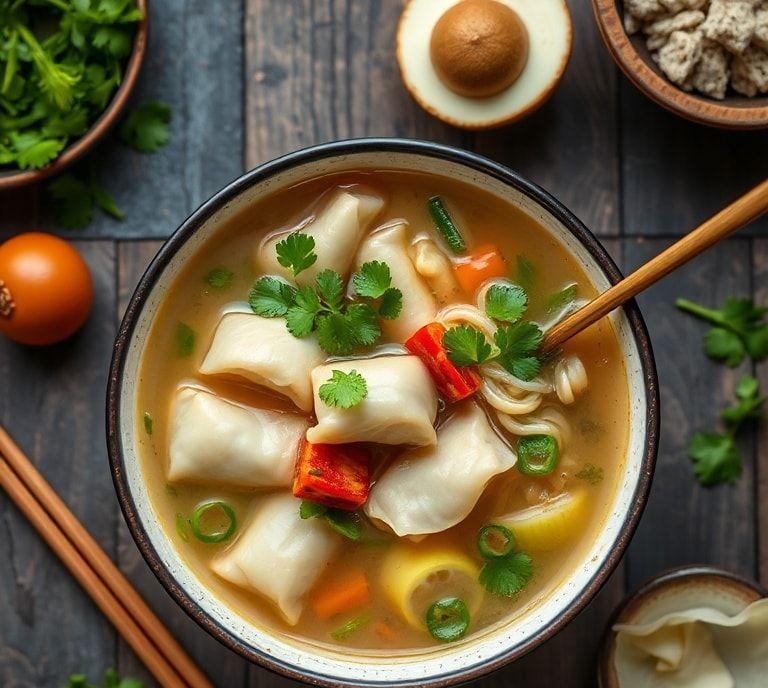
This vegetarian wonton soup is a fusion of textures and flavors, with delicate dumplings filled with a mixture of savory vegetables and mushrooms. The broth, which is the heart of any good wonton soup, is rich and fragrant, yet light enough to let the dumplings shine. It’s an ideal dish for both chilly nights and casual weeknight dinners. Whether you’re vegetarian, vegan, or just looking for a lighter version of your favorite soup, this recipe offers all the warmth and comfort you could ever want.
Ingredients Needed
Here’s what you’ll need to make this comforting, flavorful soup:
For The Wontons
- 1 cup of finely chopped cabbage
- 1 cup of shiitake or button mushrooms, finely chopped
- 1/2 cup of firm tofu, crumbled
- 1/4 cup of green onions, finely chopped
- 2 cloves garlic, minced
- 1 tablespoon soy sauce
- 1 teaspoon sesame oil
- 1 teaspoon grated ginger
- 1 package of wonton wrappers (you can find these in most grocery stores in the refrigerated or frozen section)
For The Broth
- 4 cups vegetable broth
- 1 tablespoon soy sauce
- 1 teaspoon miso paste (for depth of flavor)
- 1/2 teaspoon toasted sesame oil
- 2 cloves garlic, minced
- 1-inch piece of ginger, sliced thin
- 1/4 cup green onions, sliced
- Salt and pepper, to taste
- A handful of baby spinach (optional, for added greens)
Cooking Instructions
Making this vegetarian wonton soup is a fun and straightforward process. Here’s how you’ll pull it all together:
-
Prepare The Wontons
- In a mixing bowl, combine the chopped cabbage, mushrooms, crumbled tofu, green onions, garlic, soy sauce, sesame oil, and ginger. Mix everything until it’s evenly distributed.
- Place a wonton wrapper on a clean, flat surface. Spoon about a teaspoon of the filling into the center of the wrapper. Moisten the edges with a little water and fold the wrapper into a triangle, pinching the edges tightly to seal. If you’re feeling fancy, you can shape them into traditional wonton shapes by folding the edges towards the center and pinching them together.
- Repeat until all the filling is used up. You should have around 20 to 30 wontons, depending on the size of your wrappers.
-
Make The Broth
- In a large pot, heat a bit of sesame oil over medium heat. Add the garlic and ginger and sauté for 1-2 minutes, just until fragrant.
- Add the vegetable broth, soy sauce, miso paste, and green onions. Stir everything together and bring to a gentle simmer. Let the broth cook for about 10 minutes to meld the flavors.
-
Cook The Wontons
- Gently drop the wontons into the simmering broth. Be careful not to overcrowd the pot, as the wontons can stick together.
- Cook the wontons for about 5-7 minutes or until they float to the top and the wrappers are tender.
- Optional: If you want a heartier soup, throw in some spinach or other greens to cook in the broth.
-
Serve
- Once the wontons are cooked through, ladle the soup into bowls. You can garnish with extra green onions, chili flakes, or a dash of soy sauce, depending on your preference.
Ingredient Science Spotlight
Let’s take a moment to dive into the science of a few key ingredients in this vegetarian wonton soup and why they matter:
- Tofu: Tofu often gets a bad rap for being bland, but it’s a fantastic ingredient when cooked right. In wontons, tofu provides a creamy, slightly firm texture that mimics the richness of meat. Plus, it’s packed with protein and helps balance the dish’s flavors. Tofu also absorbs the flavors around it, meaning your soy sauce, sesame oil, and ginger give it all the umami it needs.
- Shiitake Mushrooms: These mushrooms are not just for flavor, they’re loaded with savory compounds known as glutamates, which contribute to the umami taste. Shiitakes also have a rich, meaty texture, making them perfect for adding depth to the filling.
- Miso Paste: This fermented soybean paste is a powerhouse of flavor. A little goes a long way in enhancing the broth. It’s also rich in probiotics, which is a nice bonus for gut health. The fermentation process breaks down proteins into amino acids, which enhances the soup’s savory taste.
- Ginger & Garlic: These two aromatics are powerhouses of flavor. Ginger, with its spicy-sweet bite, adds warmth, while garlic brings its signature pungency to round out the soup. Together, they form the backbone of the broth’s flavor profile.
Expert Tips
- Don’t Overfill Your Wontons: One mistake I’ve made in the past (more times than I’d like to admit) is overstuffing the wontons. It’s tempting, but if you pack them too full, they might burst when they cook. Keep it light, and you’ll get perfectly sealed wontons every time.
- Making the Broth Your Own: If you’re after a richer broth, consider adding a splash of soy sauce or more miso paste. You can also play around with adding some kombu (seaweed) or shiitake mushrooms to give the broth an even deeper umami flavor.
- Freezing Wontons: If you make too many wontons, freeze them! Lay the uncooked wontons on a baking sheet, freeze them for an hour, and then store them in a freezer bag. You can pop them straight into a pot of simmering broth whenever you want a quick meal.
Recipe Variations
- Vegan Version: If you want to make the soup entirely plant-based, swap the soy sauce for tamari, which is gluten-free, and double-check that your wonton wrappers don’t contain any egg. Many Asian grocery stores sell vegan-friendly wrappers.
- Add Extra Veggies: You can load up the soup with any veggies you like. Try adding shredded carrots, bok choy, or even thinly sliced zucchini to give the soup more crunch and flavor.
- Spicy Wonton Soup: If you like a little heat, add a few slices of fresh chili peppers to the broth, or drizzle some chili oil over the top before serving. It’s an easy way to take the soup to the next level.
Final Words
This vegetarian wonton soup isn’t just a dish; it’s an experience. It’s about creating something from scratch, nurturing your body with wholesome ingredients, and sharing a warm bowl with loved ones. Whether you’re making it for a quiet evening alone or for a family gathering, this recipe will not disappoint. The balance of flavors, the comfort of the broth, and the delicate, savory wontons all come together to create something truly special.
FAQs
Can I Make Vegetarian Wonton Soup Without Using Tofu?
Yes. Instead of tofu, you can use finely chopped vegetables such as mushrooms, cabbage, carrots, and scallions as the wonton filling. Another option is using mashed chickpeas or cooked lentils for a heartier texture.
What Broth Works Best For A Vegetarian Wonton Soup?
A clear vegetable broth is the most common base. For a richer flavor, you can build the broth with ginger, garlic, soy sauce, and a small amount of sesame oil. Adding dried mushrooms or kombu during simmering can enhance the umami depth.
Can I Freeze Vegetarian Wontons For Later Use?
Yes. After forming the wontons, place them on a parchment-lined tray and freeze until firm. Then transfer them to a sealed container or freezer bag. They can be cooked directly from frozen by adding a few extra minutes to the simmering time.