The beauty of antipasto lies in its versatility. While the name might evoke images of an Italian feast with cured meats, cheeses, and pickled vegetables, the vegetarian version offers a fresh, vibrant twist on this classic dish. Perfect as an appetizer or a light meal, vegetarian antipasto brings together a colorful medley of flavors and textures-from crisp, tangy olives to creamy mozzarella and the bite of marinated vegetables.
When I first learned how to make antipasto, it was from my grandmother, who had a way of turning every dish into an event. We spent hours in the kitchen, her hands expertly slicing through vegetables and arranging them into a stunning display. It wasn’t just about the food; it was about the conversation, the laughter, and the shared experience of creating something together. That’s what I want this recipe to be for you-more than just a dish, but an experience to share, to savor, and to enjoy.
Vegetarian Antipasto Recipe
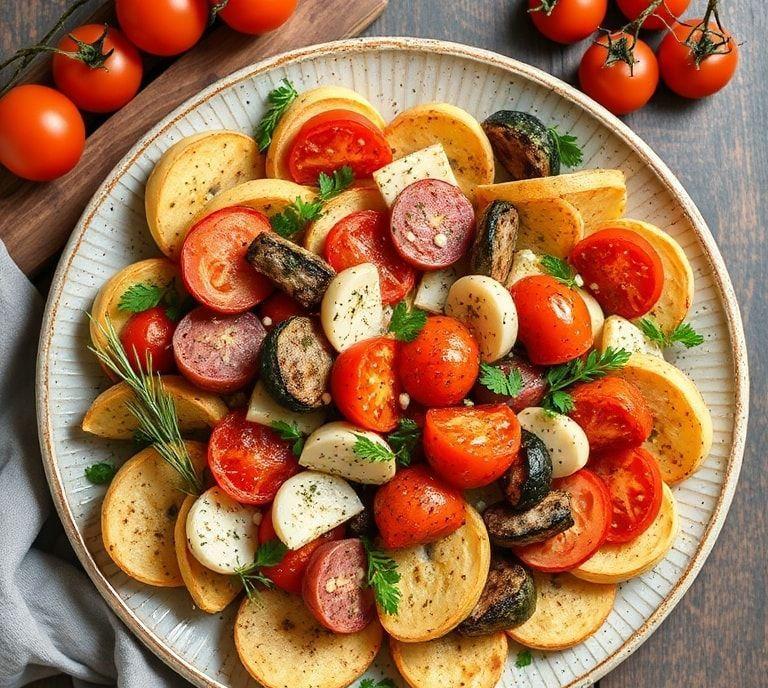
This vegetarian antipasto recipe stays true to its Italian roots while swapping out meats for hearty, flavorful vegetables and cheeses. It’s a celebration of textures, from the crunch of marinated artichokes to the smoothness of a well-aged gouda. The trick to a great antipasto platter is balance-salty, savory, tangy, and creamy all in one.
Ingredients Needed
- Olives: A mix of Kalamata and green olives gives that perfect salty bite. You can use your favorite type or explore the variety at your local market.
- Artichoke hearts: Marinated artichoke hearts bring both tanginess and depth.
- Roasted red peppers: Sweet, smoky, and slightly charred, they’re a must-have for adding color and richness.
- Cherry tomatoes: Halved and tossed with olive oil, these offer a juicy burst of freshness.
- Fresh mozzarella: Soft, creamy, and mild, it contrasts beautifully with the other more intense flavors.
- Pickled onions: A little bite and tang add a zesty contrast to the creamy cheese and olives.
- Grilled zucchini: Thinly sliced and lightly charred, this vegetable adds a smoky, savory note.
- Marinated mushrooms: Marinate in olive oil, garlic, and herbs for a deep, earthy flavor.
- Fresh basil leaves: For garnish and a fresh, herbal aroma.
- Balsamic glaze: Drizzle this sweet, syrupy balsamic reduction over the platter for a beautiful finishing touch.
Cooking Instructions
- Prep the vegetables: Start by slicing your vegetables. For the zucchini, cut into thin rounds or half-moons. Roast or grill them for a few minutes until just tender. If you’re using jarred artichokes or mushrooms, give them a quick rinse to remove excess brine or oil.
- Assemble the platter: Once all your components are ready, begin assembling the antipasto on a large platter or a cutting board. Layer the olives, roasted peppers, artichokes, mushrooms, and zucchini in an aesthetically pleasing way. Don’t just dump everything in a pile-think of it like painting with food.
- Cheese and garnishes: Add the fresh mozzarella in little balls or torn into pieces, scattered among the vegetables. Place the halved cherry tomatoes here and there. Sprinkle fresh basil leaves across the platter for an herbal note and pop of green.
- Drizzle and serve: Finish with a drizzle of balsamic glaze and a pinch of sea salt. You can also add a few cracks of black pepper, but don’t overdo it-each ingredient should shine on its own.
- Let it sit: If you have time, let the antipasto sit for about 30 minutes before serving. This allows the flavors to meld together and deepen.
Ingredient Science Spotlight
There’s a science behind every ingredient in an antipasto platter, especially when it comes to vegetables and their preservation. Take, for example, the artichokes and mushrooms. Both are often marinated in oil, vinegar, or brine. This process isn’t just for flavor-it helps preserve the vegetables while also breaking down their fibrous texture, making them more tender and able to absorb the accompanying herbs and spices.
Olives, too, undergo a lengthy curing process, whether it’s brining or dry curing. The process removes bitterness, allowing their natural flavors to emerge. And then, there’s the mozzarella-fresh mozzarella is all about the protein structure in the milk. When curd is stretched in hot water (the traditional method), the proteins become more elastic, giving it that delightful chew and smooth texture.
Understanding these processes adds a layer of appreciation for each bite, making it clear why these ingredients are the stars of the dish. It’s a celebration of both nature and the art of preserving it.
Expert Tips
- Don’t overcomplicate the platter: A great antipasto doesn’t need every ingredient in the store. Focus on a few high-quality elements. For example, the balance between salty olives, creamy mozzarella, and tangy pickles is what makes the platter pop.
- Temperature matters: Serve your antipasto at room temperature, not cold. Cold vegetables and cheeses often lose their full flavor profile, so let everything sit out for a bit before serving.
- Play with textures: If you want a bit of crunch, add nuts like almonds or pistachios. They’ll add contrast to the softer textures of cheeses and roasted vegetables.
- Make it ahead: One of the best things about antipasto is that it can be prepped in advance. In fact, it often tastes better after marinating for a few hours or even overnight.
- Don’t forget the bread: Offer a crusty baguette or some focaccia alongside. It helps scoop up those delightful olive oils and balsamic glaze.
Recipe Variations
Antipasto is incredibly adaptable to your taste preferences or dietary needs. Here are a few variations you can try:
- Vegan antipasto: Swap the mozzarella for cashew cheese or a dairy-free mozzarella alternative. You can also use more roasted vegetables, like eggplant or bell peppers, to add substance.
- Mediterranean twist: Add some hummus or baba ghanoush to the platter for extra texture and a dip option. Feta cheese or a few slices of goat cheese would add some tang.
- Spicy version: If you love heat, throw in some spicy marinated peppers or drizzle the platter with chili oil. A few fresh red chili flakes would also work wonders.
- Grilled variation: Grill all your vegetables. The charred flavor from grilling brings out natural sweetness, and it complements the creamy mozzarella perfectly.
Final Words
When you sit down to enjoy your antipasto, it’s not just about filling your stomach; it’s about engaging with the food, appreciating the way each element comes together to create a balanced, flavorful experience. This platter is perfect for sharing-whether it’s with family, friends, or a special someone. It’s meant to be picked at, tasted, and enjoyed slowly, with each bite telling its own story.
FAQs
What Are The Key Ingredients In A Vegetarian Antipasto Recipe?
A vegetarian antipasto typically includes a variety of fresh and pickled vegetables, olives, artichoke hearts, roasted peppers, cherry tomatoes, and mushrooms. It may also feature cheeses like mozzarella or feta, along with nuts like almonds or walnuts. Marinated olives, sun-dried tomatoes, and a selection of crusty bread or crackers are common accompaniments.
Can I Prepare Vegetarian Antipasto In Advance?
Yes, vegetarian antipasto can be prepared in advance. In fact, many ingredients, especially pickled vegetables and marinated items, benefit from being made a day or two ahead to allow the flavors to meld. Just store the ingredients in airtight containers in the refrigerator until ready to serve. If using fresh vegetables, consider assembling the antipasto just before serving to maintain their crispness.
Is It Possible To Make A Gluten-free Vegetarian Antipasto?
Yes, a gluten-free vegetarian antipasto can be easily made by ensuring that all components are free of gluten. Focus on fresh vegetables, marinated olives, cheeses, and gluten-free crackers or bread. Be cautious with certain pre-packaged items, such as marinades or store-bought spreads, which may contain gluten. Always check the labels or prepare homemade versions to guarantee they meet gluten-free requirements.