Let me take you back to one of those late afternoons when you’re craving something hearty but also light enough to keep you feeling energized. I was sitting in my kitchen, staring into the fridge, trying to figure out what to make for dinner. I had a bit of everything-some leftover vegetables, a jar of black bean paste I’d been meaning to use, and noodles that had been hanging around for a while. It hit me: Black bean noodles. The idea felt so simple, but the flavors would be anything but.
It’s a dish that perfectly balances rich, savory umami with the freshness of vegetables, all while being surprisingly versatile. And the best part? It’s vegetarian. Whether you’re a seasoned plant-based eater or just looking for a quick and satisfying dinner, this recipe is a winner. Plus, black bean noodles have that irresistible chewiness and flavor depth that can make any meal feel special, even when it’s thrown together in under an hour.
Let’s dive in and I’ll show you how to recreate this simple, delicious dish.
Black Bean Noodles Vegetarian Recipe
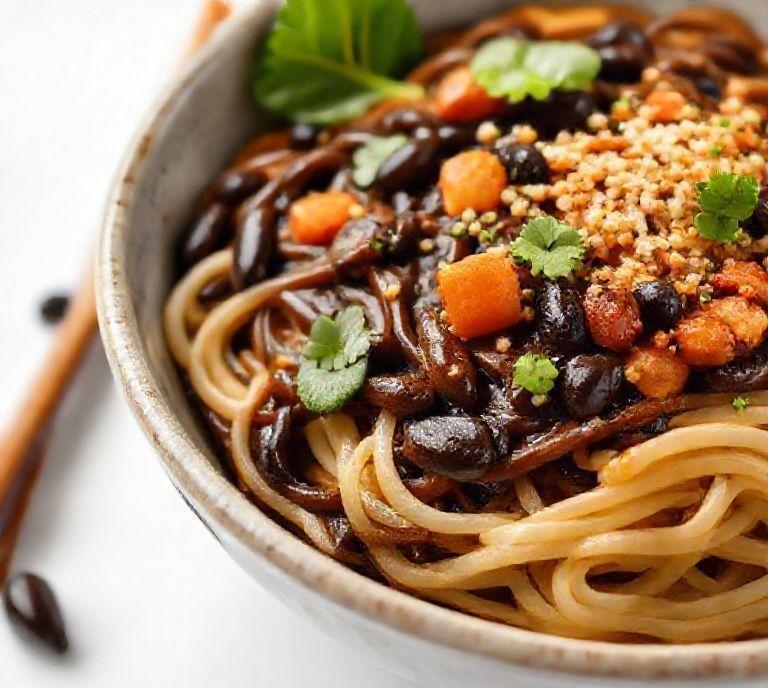
This recipe is a play on the classic Korean dish jjajangmyeon, but with a vegetarian twist. Instead of meat, we rely on the earthy richness of black bean paste and a mix of vibrant veggies to create a filling, savory meal. The noodles themselves are the canvas-thick, chewy, and perfect for soaking up the sauce. Trust me, once you try it, you’ll wonder why you haven’t made it sooner.
Ingredients Needed
For this recipe, I always try to go for ingredients that you can find easily in any grocery store, but still give the dish that authentic depth. Here’s what you’ll need:
- 200g of thick wheat noodles (jjajangmyeon noodles if you can find them, or any other kind of chewy noodle will work)
- 2 tablespoons black bean paste (chunjang) – this is the star ingredient, giving the dish its signature color and flavor.
- 1 tablespoon sesame oil – to bring in that nutty, smooth finish.
- 1 tablespoon soy sauce – for that salty depth.
- 1 medium onion – finely chopped, adding sweetness and structure.
- 1 medium zucchini – cut into half-moons for some texture and subtle sweetness.
- 1 large carrot – julienned to add a fresh, slightly crunchy element.
- 1/2 cup cabbage – sliced thinly, for a little extra bite.
- 2 cloves garlic – minced, for a touch of fragrant sharpness.
- 1 tablespoon sugar – just a touch to balance the savory flavors and round out the sauce.
- 2 tablespoons vegetable broth or water – to loosen up the sauce and make it more luxurious.
- Sesame seeds (optional) – for garnish, adding a final nutty touch.
Cooking Instructions
- Prepare the noodles: Start by boiling a pot of water with a pinch of salt. Add the noodles and cook according to the package instructions, usually around 5-7 minutes for thick noodles. Drain and set them aside, tossing them with a bit of sesame oil to keep them from sticking.
- Sauté the vegetables: In a large pan or wok, heat up a tablespoon of sesame oil over medium heat. Add the garlic and onion, stirring them until the garlic becomes fragrant and the onion starts to soften-about 2 minutes. Next, toss in the carrot, zucchini, and cabbage. Sauté the vegetables until they begin to soften but still retain some crunch, about 3-4 minutes.
- Create the sauce: Now comes the fun part. Add the black bean paste to the pan, stirring it in with the vegetables. Let it cook for about 2 minutes, letting the paste release its flavors and start to brown a little. Then add the sugar, soy sauce, and vegetable broth (or water), stirring everything together until the sauce becomes smooth and slightly thickened.
- Combine everything: Add your cooked noodles into the pan, tossing them in the sauce and vegetables until everything is well-coated. If the sauce looks too thick, add a little more broth or water to get it to your desired consistency.
- Serve and garnish: Transfer the noodles to a bowl, sprinkle with sesame seeds (if using), and you’re done! The noodles should have a glossy, rich sauce with chunks of vegetables throughout.
Ingredient Science Spotlight
The black bean paste (chunjang) deserves a special mention here. It’s made from fermented black soybeans and wheat flour, giving it a deep, savory umami flavor. The fermentation process creates complex layers of taste that can be described as slightly bitter, but also earthy and rich-think of it as a natural seasoning powerhouse. The longer the paste cooks, the deeper those flavors get, which is why it makes such a fantastic base for the sauce.
Sesame oil is another key player here. It’s made from toasted sesame seeds, and while it’s technically an oil, its flavor is more like a seasoning than a cooking fat. The rich, nutty taste brings a warmth to the dish that is unmistakable. Don’t skimp on the sesame oil, it’s what ties everything together and makes this dish feel luxurious despite its simplicity.
Expert Tips
- Use a wok or a wide pan: A wok is perfect for this dish because it allows you to toss the ingredients around easily and gives you space to stir-fry the vegetables and sauce without overcrowding. If you don’t have a wok, just make sure you use a wide pan for even cooking.
- Balance the sauce: Taste your sauce as you go. If you like it a bit sweeter, add a little more sugar. If it’s too salty, a splash of water or vegetable broth will help mellow it out.
- Don’t skip the garnish: Sesame seeds add not only a crunch but also a hint of extra flavor that enhances the overall dish. You can even sprinkle a little green onion on top for some freshness.
- Make it ahead: If you’re meal-prepping or just want leftovers for the next day, this dish stores wonderfully in the fridge for 2-3 days. The flavors even deepen overnight.
Recipe Variations
While this black bean noodle dish is pretty perfect as it is, it’s also super adaptable. Here are a few variations you can try:
- Add tofu or tempeh: If you want a bit more protein, cubed tofu or tempeh works great in this dish. Pan-fry them first until crispy and toss them in with the noodles for added texture.
- Swap in different veggies: While zucchini, carrots, and cabbage are the traditional vegetables, you can get creative with what you have on hand. Try adding mushrooms, bell peppers, or even leafy greens like spinach or bok choy.
- Spice it up: If you like a bit of heat, stir in some gochujang (Korean chili paste) or a pinch of chili flakes. The combination of spicy and savory is addictive.
- Make it gluten-free: For a gluten-free version, swap out the regular noodles for gluten-free ones and check that your soy sauce is gluten-free too (tamari is a great option).
Final Words
This black bean noodle recipe is one of those dishes that hits every note you’re looking for-satisfying, savory, and just the right amount of comforting. It’s a perfect example of how a few simple ingredients, when combined in the right way, can create something special. Whether you’re a seasoned cook or someone who just wants to make a quick, hearty meal, this vegetarian black bean noodle dish will quickly become a go-to in your recipe rotation.
FAQs
What Are The Key Ingredients For A Vegetarian Black Bean Noodles Recipe?
The key ingredients for a vegetarian black bean noodles recipe typically include black bean noodles, vegetables such as carrots, bell peppers, and spinach, garlic, ginger, soy sauce, sesame oil, and a variety of seasonings. Optional ingredients might include tofu or mushrooms for added texture and protein.
Can I Substitute Black Bean Noodles With Other Types Of Noodles?
Yes, you can substitute black bean noodles with other types of noodles such as soba, rice noodles, or even spaghetti if you’re looking for a similar texture. However, the unique flavor of black bean noodles, which are made from ground black beans, will be missing. For a more authentic taste, it’s best to use black bean noodles if possible.
Is The Black Bean Noodles Vegetarian Recipe Gluten-free?
Yes, black bean noodles are typically made from black beans and water, which makes them naturally gluten-free. However, it’s important to check the labels of any additional ingredients, such as soy sauce, to ensure they are gluten-free, as some may contain wheat or gluten-based additives. You can substitute regular soy sauce with tamari or gluten-free soy sauce for a fully gluten-free dish.