You know, there’s something uniquely satisfying about a good stir-fry. It’s a dish that brings together bold flavors, vibrant colors, and a variety of textures all in one quick, simple meal. I think stir-fries, at their best, embody the perfect balance of convenience and creativity. You can really let your imagination run wild with whatever vegetables and seasonings you have at hand. I’m a firm believer that a stir-fry can be as varied as the cook, and that’s what makes it so wonderfully adaptable.
What makes this vegetarian stir-fry sauce recipe stand out for me is how you can truly tailor it to your own preferences. It’s rich, savory, and just the right amount of tangy – but without being overly complicated. The beauty of this sauce lies in how it elevates the vegetables, tofu, or any protein substitute you choose, turning a simple meal into something that feels like a special treat.
When I make this sauce at home, it’s one of those recipes where I find myself dipping a spoon in again and again, tasting it, tweaking it, and getting that satisfying ’ahh, that’s perfect’ moment. I’ve found it’s the kind of sauce that just brings everything together-whether you’re using it for stir-fried veggies, noodles, or even as a marinade for something like tempeh or seitan.
Stir-fry Sauce Vegetarian Recipe
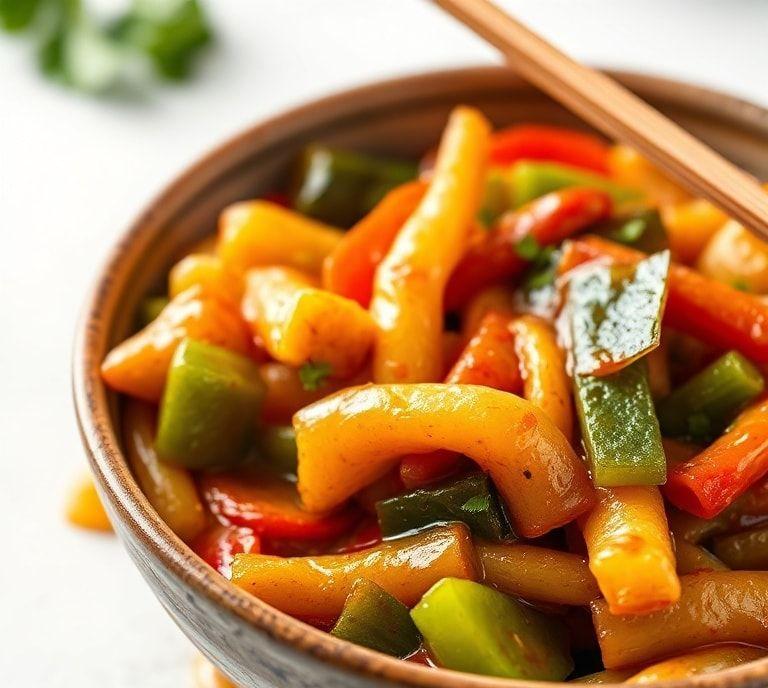
Let me share my go-to vegetarian stir-fry sauce recipe with you. It’s one of those pantry-staple sauces that you can keep on hand and whip out whenever you’re craving something flavorful but don’t want to spend hours in the kitchen.
The sauce itself is incredibly versatile, rich in umami from soy sauce and miso, with a little sweet-and-sour balance from rice vinegar and maple syrup. You can easily adjust the flavor to your liking, whether you want it tangier, sweeter, or more savory. If you’re a fan of garlic and ginger, this sauce is your perfect match. It’s the kind of thing that’ll make you want to toss it over any vegetable or protein you’ve got on hand.
Ingredients Needed
Here’s what you’ll need for this easy, vegetarian stir-fry sauce:
- Soy Sauce (or Tamari for gluten-free option) – The base of your sauce, bringing that deep umami flavor that’s at the heart of any good stir-fry sauce. If you’re avoiding soy, coconut aminos is a great alternative.
- Maple Syrup or Agave Syrup – A touch of sweetness to balance the saltiness of the soy sauce. You could also experiment with brown sugar, but I prefer maple syrup for a more complex flavor.
- Rice Vinegar – It adds the tangy note that cuts through the richness and ties all the flavors together. It’s the kind of acidity that brightens the dish without being overpowering.
- Sesame Oil – A little sesame oil goes a long way in stir-fry sauces, lending a toasty, nutty fragrance. It’s the secret weapon that gives the sauce its unique depth of flavor.
- Fresh Garlic and Ginger – These two ingredients add a fragrant punch of flavor that instantly elevates the sauce. You could use garlic powder and ginger powder in a pinch, but fresh is always better.
- Cornstarch or Arrowroot Powder – This is the thickening agent. It helps the sauce cling to the vegetables and tofu, giving it a nice, glossy finish.
- Water – To thin the sauce to the right consistency. You can adjust it based on how thick or thin you like your stir-fry sauce to be.
Cooking Instructions
Now, making this stir-fry sauce is ridiculously easy, and trust me, you’ll be amazed at how much flavor it brings to the table. Here’s how I do it:
-
Prepare The Ingredients
Start by mincing your garlic and grating or finely chopping your ginger. This is the perfect time to prep the veggies or protein you’re planning to stir-fry because once your sauce is ready, the cooking will happen fast.
-
Mix The Sauce
In a bowl, whisk together the soy sauce, maple syrup, rice vinegar, sesame oil, garlic, and ginger. Make sure everything is well combined.
-
Thicken The Sauce
In a small bowl, mix the cornstarch with about 2 tablespoons of water to create a slurry (a smooth mixture). Slowly pour this into your sauce mixture while whisking continuously. This helps prevent clumps from forming.
-
Heat It Up
In a small saucepan, bring the sauce to a gentle simmer over medium heat. As it heats up, the sauce will begin to thicken. Stir occasionally to prevent any burning. Let it simmer for about 3-4 minutes until the sauce is glossy and thickened to your desired consistency.
-
Taste And Adjust
Here’s where the magic happens. Give the sauce a quick taste and adjust according to your preferences. Need it sweeter? Add a bit more maple syrup. Too salty? A splash of rice vinegar can brighten it right up. More garlic? Go ahead, toss in a little extra. It’s all about finding the right balance for your palate.
-
Pour Over Your Stir-Fry
Once your sauce is done, pour it over your stir-fried vegetables, tofu, or protein. Toss everything together so the sauce coats every bit of the stir-fry.
Ingredient Science Spotlight
Let’s pause for a moment and take a deeper dive into the magic behind a few of these ingredients, because there’s some fascinating science behind them.
- Soy Sauce: It’s not just salty! Soy sauce is the result of a fermentation process that breaks down the soybeans, resulting in a complex combination of amino acids, including glutamate, which gives the sauce its rich umami flavor. This makes it an essential ingredient in any dish that wants to evoke savory depth.
- Maple Syrup: The sweetness of maple syrup comes from its high sugar content, specifically sucrose. But it’s the trace minerals, like calcium and potassium, that make it stand out from your average sweetener. It also has a slightly smoky, caramel-like flavor that pairs beautifully with the other ingredients.
- Sesame Oil: The rich, nutty aroma of sesame oil is due to the presence of sesamol, a compound that gives it its distinct flavor profile. The oil itself is also loaded with polyunsaturated fats, which are great for heart health when used in moderation.
- Ginger: Ginger isn’t just for flavor; it also has anti-inflammatory properties thanks to compounds like gingerol, which contribute to its slightly spicy, warming sensation. It’s known to help with digestion and can even ease nausea.
Expert Tips
- Make it Ahead: This sauce can be made in bulk and stored in the fridge for up to a week. In fact, I’d argue it tastes even better the next day, as the flavors have more time to meld together. You can also freeze it for later use – just let it cool completely and store it in an airtight container.
- Customize Your Sweetness: Everyone’s taste for sweetness is different, so play around with the amount of maple syrup. I like to go a little light on the sweetness, but if you’re someone who loves a touch of honeyed flavor in your stir-fry, add a little more.
- Add Heat: If you like things spicy, toss in a pinch of red pepper flakes or a splash of sriracha. The spicy-sweet combo can be addicting.
- Use it as a Marinade: This stir-fry sauce doesn’t just work in stir-fries. You can use it as a marinade for tofu, tempeh, or even mushrooms. Just let it sit in the fridge for an hour or two before cooking to let the flavors really soak in.
Recipe Variations
The beauty of this sauce is how adaptable it is to whatever you’ve got in your pantry. Here are a few ways you can switch things up:
- For a Spicy Kick: Add a chopped fresh chili or a tablespoon of chili paste to the sauce for an extra layer of heat.
- For Sweet & Savory: Try substituting the maple syrup with hoisin sauce for a slightly different sweet-savory balance. Hoisin brings its own unique flavor, which I find particularly delicious with mushrooms.
- For Depth: Experiment with adding a little miso paste to the sauce. Miso adds a deep, fermented flavor that pairs beautifully with the soy sauce and ginger. You can even use a white miso for a milder taste, or go darker for a more robust flavor.
Final Words
This stir-fry sauce is all about flexibility and customization. The beauty of it is that you can make it your own-add more garlic, increase the heat, or add a touch of sweetness. But the base of soy sauce, sesame oil, ginger, and vinegar creates a flavor profile that’s rich and satisfying every time.
FAQs
What Are The Key Ingredients For A Basic Vegetarian Stir-fry Sauce?
A basic vegetarian stir-fry sauce typically includes soy sauce, sesame oil, rice vinegar, and a sweetener like maple syrup or brown sugar. You can also add garlic, ginger, and cornstarch to thicken the sauce, and chili flakes or hot sauce for a spicy kick.
Can I Make A Gluten-free Stir-fry Sauce For A Vegetarian Dish?
Yes, you can make a gluten-free stir-fry sauce by substituting regular soy sauce with tamari or coconut aminos, which are gluten-free alternatives. Ensure that any other condiments or sauces you use, such as hoisin or oyster sauce, are also labeled gluten-free.
How Can I Customize A Stir-fry Sauce To Suit Different Vegetables And Proteins?
To customize your stir-fry sauce, adjust the balance of salty, sweet, sour, and umami flavors. For lighter vegetables like broccoli or snap peas, you might want a tangier sauce with a bit of lemon juice or rice vinegar. For heartier vegetables, such as mushrooms or eggplant, consider adding a richer flavor, such as hoisin sauce or a bit of miso paste. If you’re including plant-based proteins like tofu or tempeh, marinating them in the sauce for extra flavor before stir-frying can help enhance the dish.