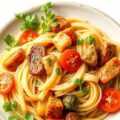
There’s something about a dish that brings together simple, fresh ingredients and creates an explosion of flavors that feels both comforting and exciting. That’s exactly what Mediterranean pasta is all about. It’s the kind of meal that can make you feel like you’re sitting at a sun-drenched terrace in Greece, with the sea breeze gently brushing your face as you take in the beauty of the moment. I remember the first time I had a similar dish while traveling through the Mediterranean. The combination of ripe tomatoes, briny olives, and fresh herbs was like nothing I’d ever tasted before. The flavors felt alive, vibrant, and effortlessly delicious.
When I got home, I was determined to recreate that experience. And after many trials (and a few too many overcooked noodles), I finally nailed it with this Mediterranean pasta vegetarian recipe. It’s light, fresh, and full of that Mediterranean magic-minus the long flight and the jet lag. The best part? It’s made entirely with plant-based ingredients, so everyone can enjoy it, whether you’re a vegetarian, vegan, or just someone who enjoys a lighter meal.
So, let’s dive in, shall we? You’re going to love how easy and satisfying this recipe is.
Mediterranean Pasta Vegetarian Recipe
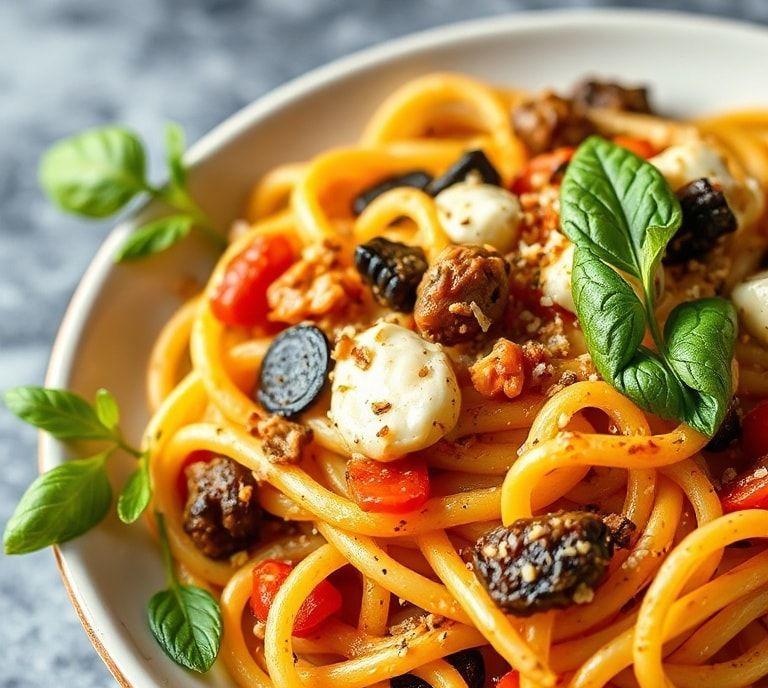
This Mediterranean pasta is a celebration of fresh vegetables, herbs, and bold Mediterranean flavors. It’s perfect for any time of year, but there’s something about it that feels especially wonderful in the summer, when tomatoes are at their peak and herbs are growing wild in the garden. Whether you’re having it for a weeknight dinner or bringing it to a gathering, it’s a dish that’s sure to be loved by all.
I’ve kept the recipe simple, but the key to getting that Mediterranean punch of flavor is in how you layer the ingredients. Fresh garlic, tangy olives, sun-dried tomatoes, and a squeeze of lemon juice all play their parts, while the pasta serves as the perfect backdrop for these vibrant tastes.
Ingredients Needed
- Pasta: 12 oz (about 3/4 of a pound) of any type of pasta you like. I usually go for spaghetti or penne, but really anything works here-so feel free to get creative.
- Olive oil: 2 tablespoons. For the most authentic flavor, use extra virgin olive oil, which has a richer taste and is packed with those heart-healthy fats.
- Garlic: 3 cloves, minced. Garlic is the foundation of so many Mediterranean dishes. It adds depth and warmth to the sauce.
- Cherry tomatoes: 1 ½ cups, halved. They burst with sweetness when cooked and give the dish its fresh, juicy base.
- Sun-dried tomatoes: ¼ cup, chopped. These bring a concentrated, tangy punch that really kicks up the flavor.
- Olives: ½ cup, pitted and sliced (green or Kalamata). Olives are key to giving the dish that authentic Mediterranean flavor.
- Spinach: 2 cups. This adds color, nutrition, and a lovely, earthy taste.
- Lemon: 1, zested and juiced. The acidity brightens up the whole dish.
- Fresh basil: ¼ cup, chopped. This herb is iconic in Mediterranean cuisine and gives a nice, aromatic lift to the dish.
- Parmesan (optional): For topping, if you’re not vegan. It adds a creamy, savory finish.
- Salt & pepper: To taste.
Cooking Instructions
- Boil the pasta: Bring a large pot of salted water to a boil. Add the pasta and cook according to package instructions until al dente. Once done, reserve about a cup of pasta water before draining. Set it aside. (This starchy water is your secret weapon for making the sauce creamy without adding any cream.)
- Sauté garlic and tomatoes: While the pasta is cooking, heat the olive oil over medium heat in a large pan. Add the minced garlic and sauté for about 30 seconds until fragrant. Toss in the cherry tomatoes and sun-dried tomatoes, cooking for 5-7 minutes until the tomatoes soften and release their juices.
- Add the spinach and olives: Stir in the spinach and olives, letting them wilt and warm through. This should only take 2-3 minutes.
- Combine pasta and sauce: Add the cooked pasta to the pan with the tomato-spinach mixture. Toss everything together, adding a little reserved pasta water if you need to loosen things up.
- Season and serve: Stir in the lemon juice, zest, salt, and pepper to taste. Add fresh basil and toss again. If you like, sprinkle some Parmesan cheese on top, but the dish is just as delicious without it.
- Plate and enjoy: Serve immediately with a drizzle of extra virgin olive oil and a few extra basil leaves for garnish.
Ingredient Science Spotlight
Now, let’s dive into some of the science behind the ingredients that make this dish sing. It’s not just about flavor; there are a few reasons why Mediterranean ingredients are so revered.
- Olive oil: Packed with monounsaturated fats, olive oil is great for heart health. It’s also rich in antioxidants, which help reduce inflammation. So, not only does it taste good, but it’s also good for you.
- Tomatoes: Cherry tomatoes, especially when they’re cooked down, release lycopene-a powerful antioxidant. Lycopene is thought to have numerous health benefits, including supporting skin health and potentially reducing the risk of certain cancers.
- Garlic: Aside from its wonderful aroma, garlic contains allicin, a compound that is believed to have antibacterial and antiviral properties. It’s been used for centuries to boost immunity and support heart health.
- Spinach: This leafy green is packed with iron, fiber, and vitamins A and C, all of which contribute to good digestion and overall vitality. Plus, its deep green color is a sign that it’s packed with nutrients.
Expert Tips
- Choose your pasta carefully: While you can use any pasta for this dish, I recommend using something with a bit of texture, like penne or fusilli. They hold onto the sauce better, making every bite more flavorful.
- Use the pasta water wisely: Don’t skip the step of reserving pasta water! A small splash of it helps bring the sauce together, making it silky and cohesive.
- Balance the flavors: Mediterranean cuisine is all about balance. The lemon juice adds acidity, while the olives bring saltiness, and the sun-dried tomatoes provide a tangy sweetness. Taste as you go and adjust the flavors accordingly.
- Make it ahead: This dish is great for meal prepping! The flavors meld even more after a few hours, so it’s perfect for making ahead and enjoying later in the day or week.
Recipe Variations
- Add roasted vegetables: Toss in some roasted eggplant, zucchini, or bell peppers to make the dish even heartier and to bring in more roasted flavors.
- Switch up the greens: If you don’t have spinach, arugula or kale would be great alternatives. Arugula will add a peppery kick, while kale will bring some extra heartiness to the dish.
- Make it creamy: If you want a creamier version, stir in a little bit of plant-based cream or cashew cream towards the end of cooking.
- Top with nuts: For a little crunch, sprinkle some toasted pine nuts or slivered almonds over the top before serving.
Final Words
Mediterranean pasta has a timeless appeal. It’s simple, flavorful, and nutritious, making it perfect for busy weeknights or when you want to impress without too much effort. The beauty of this recipe is in its versatility-you can switch out ingredients based on what you have on hand, or tweak it to suit your taste preferences. I’ve made this dish countless times, and it’s always a winner. There’s something about how the ingredients come together that feels truly magical.
FAQs
What Are The Key Ingredients In A Mediterranean Pasta Vegetarian Recipe?
A Mediterranean pasta vegetarian recipe typically includes ingredients such as pasta (spaghetti, penne, or fusilli), olive oil, garlic, tomatoes, olives (often Kalamata), feta cheese, bell peppers, zucchini, fresh herbs (like basil, oregano, or parsley), and sometimes artichokes or capers. The combination of these ingredients reflects the flavors of the Mediterranean diet, which emphasizes fresh, seasonal vegetables and simple yet flavorful seasoning.
Can I Make A Mediterranean Pasta Vegetarian Recipe Gluten-free?
Yes, you can make a Mediterranean pasta vegetarian recipe gluten-free by using gluten-free pasta alternatives. These are widely available in supermarkets and come in various types such as rice pasta, quinoa pasta, or lentil pasta. Additionally, ensure that any other ingredients you use, like condiments or packaged items (e.g., feta or olives), are gluten-free. This way, the recipe can maintain its flavor and Mediterranean essence while being suitable for those with gluten sensitivities.
How Can I Add Protein To A Mediterranean Pasta Vegetarian Recipe?
To boost the protein content in a Mediterranean pasta vegetarian recipe, you can add plant-based protein sources like chickpeas, white beans, or lentils. Another great option is to include tofu or tempeh, either grilled or sautéed, for an added texture and protein. Additionally, roasted nuts like almonds or pine nuts can offer some protein and a crunchy texture. For a dairy option, you can increase the amount of feta cheese or add a sprinkle of parmesan.