Sometimes, the simplest dishes have the most soul, and there’s nothing like a hearty, comforting meal that feels like a warm hug. This vegetarian ragout recipe isn’t just a dish; it’s a journey through flavors and textures that transform humble ingredients into something extraordinary. If you’re anything like me, you’ll appreciate a meal that is both nourishing and satisfying, without needing a ton of effort.
I remember the first time I tried a ragout-it was at a cozy little bistro tucked away on a side street in Paris. I had wandered in, seeking refuge from a drizzly afternoon, and the moment that ragout hit my table, the rich aroma almost made me forget the weather entirely. There was something about how the vegetables melded together so beautifully, the flavors deeply intensified by the slow simmering. It stuck with me, and over the years, I’ve experimented with creating my own vegetarian versions of this comforting dish, each time capturing a little bit more of that initial magic.
This vegetarian ragout recipe is perfect for any occasion: a weeknight dinner when you need something quick but filling, or a Sunday dinner where you want something that’ll make your kitchen smell like heaven for hours. Either way, you’re in for something special.
Ragout Vegetarian Recipe
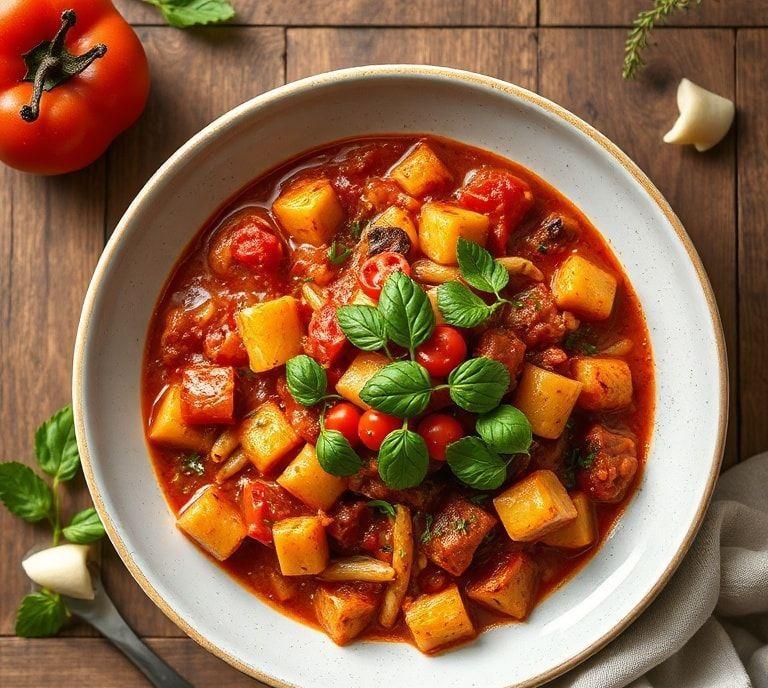
A traditional ragout is a rich, slow-cooked stew, often filled with meat. But as a lover of all things plant-based, I decided to tweak the classic and create a version that brings out the earthiness of vegetables while still delivering that deep, complex flavor that ragouts are known for. In this recipe, a medley of seasonal vegetables like mushrooms, carrots, and zucchini are paired with aromatic herbs and a touch of tomato paste for that umami punch. It’s all simmered to perfection in a rich vegetable broth that thickens and intensifies over time, leaving you with a deep, flavorful stew that can hold its own even without the meat.
Ingredients Needed
For a vegetarian ragout that’s both satisfying and bursting with flavor, you’ll need a mix of fresh, seasonal vegetables and pantry staples. Here’s the breakdown:
- 1 tablespoon olive oil – This will be the base of your cooking, helping to sauté the vegetables and get them golden.
- 1 medium onion – Diced, this brings in a sweet, savory foundation.
- 2 cloves garlic – Minced, because garlic makes everything better.
- 2 medium carrots – Peeled and diced for a touch of sweetness and crunch.
- 2 zucchinis – Diced, they add a subtle flavor and texture to balance the dish.
- 200g mushrooms – Chopped; these create that meaty, umami texture and deep flavor.
- 1 bell pepper – A red one, for a pop of color and sweetness.
- 1 tablespoon tomato paste – For a rich, tangy depth of flavor.
- 400g can diced tomatoes – They form the base of the ragout, with a bright acidity.
- 2 cups vegetable broth – For that savory, simmering essence.
- 2 teaspoons dried thyme – This herb adds an earthy, aromatic note.
- 1 teaspoon dried rosemary – Rosemary brings a woodsy flavor that works beautifully with vegetables.
- 1 bay leaf – Adds a subtle complexity to the broth.
- Salt and pepper – To taste, but don’t skimp on this; they elevate the dish.
- Fresh parsley – For garnish, adding a refreshing finish and a burst of color.
Cooking Instructions
The beauty of a ragout is how you can let it all simmer together, with the ingredients melding into something greater than the sum of their parts. Here’s how you do it:
- Prepare the vegetables: Start by dicing your onions, garlic, carrots, zucchinis, and bell peppers. Slice the mushrooms, too. The key to a great ragout is uniformity in the cuts-this way, everything cooks evenly and gives a balanced texture throughout.
- Sauté the aromatics: Heat the olive oil in a large pot over medium heat. Add the onions and cook for about 3-4 minutes, until they soften. Toss in the garlic, carrots, and bell pepper, cooking for another 5 minutes, stirring occasionally. The vegetables should start to soften and mingle their flavors.
- Add the mushrooms: Add the mushrooms to the pot, stirring them into the mix. They’ll begin to release their moisture and shrink. This is where the ragout starts to take shape, so don’t rush this step-let the mushrooms sweat out their flavor.
- Incorporate the tomato paste and tomatoes: Once the mushrooms have softened, stir in the tomato paste. Let it cook for about a minute to caramelize slightly, which will deepen the flavor. Then add the diced tomatoes and vegetable broth. Give it a good stir.
- Season and simmer: Add the dried thyme, rosemary, and bay leaf. Season generously with salt and pepper. Once everything is combined, bring the mixture to a simmer. Reduce the heat to low and let it cook for about 40 minutes, stirring occasionally. The ragout will thicken and develop that rich, savory flavor. If it gets too thick, you can add a splash of broth or water to reach your desired consistency.
- Finishing touches: Taste and adjust the seasoning, adding more salt, pepper, or herbs as needed. Remove the bay leaf and discard it.
- Serve: Spoon the ragout into bowls and sprinkle with fresh parsley. Pair it with a warm crusty bread or over a bed of quinoa or rice for a complete meal.
Ingredient Science Spotlight
When you break down the ingredients, there’s a lot of science that goes into creating that rich, comforting flavor profile in a ragout. Let’s take a moment to highlight a few:
- Mushrooms: Mushrooms are the unsung heroes in this dish. Not only do they have a naturally meaty texture, but they’re also packed with glutamates-natural compounds that give them that savory umami flavor. When you sauté mushrooms, the heat releases their natural sugars and amino acids, intensifying the flavor. That’s why they’re often used as a substitute for meat in vegetarian cooking.
- Tomato Paste and Tomatoes: The tomato paste in the recipe serves a dual purpose. It brings both acidity and depth. When you cook it, the sugars in the paste caramelize, making it more intense and savory. Tomatoes themselves are rich in glutamates, and when combined with the broth, they contribute to the ragout’s deep flavor.
- Herbs: Thyme and rosemary are both potent in their flavor, but they also help release essential oils during the cooking process. These oils are what give the ragout its aromatic complexity. Additionally, dried herbs, especially rosemary, tend to release their oils more slowly, making them ideal for slow-cooked dishes.
Expert Tips
- Let it simmer: The longer the ragout simmers, the more the flavors meld. Don’t rush it! If you have time, let it cook for an hour or even longer, adding more broth as needed. The vegetables will break down into a luscious, rich stew.
- Make it ahead: Like most stews and ragouts, this dish only gets better after a night in the fridge. The flavors intensify, and the texture thickens beautifully. If you’re meal prepping, make a big batch and store it for the week ahead.
- Layer your flavors: If you’re craving a little more depth, feel free to deglaze the pan with a splash of red wine after sautéing your veggies. This adds a rich, complex layer of flavor that pairs beautifully with the earthiness of the vegetables.
Recipe Variations
- Add beans: For a bit of extra protein, consider adding a can of white beans (like cannellini or great northern beans) during the last 15 minutes of cooking. They’ll absorb the flavors and add a creamy texture to the dish.
- Spicy kick: If you like heat, add some crushed red pepper flakes to the dish as it simmers, or stir in a chopped fresh chili pepper for a more vibrant, spicy touch.
- Herbaceous twist: Swap the thyme and rosemary for other herbs like sage, oregano, or basil for a slightly different flavor profile. Fresh herbs are especially great if you’ve got a garden in the backyard.
Final Words
There’s something incredibly satisfying about sitting down to a bowl of ragout, knowing that every ingredient was carefully chosen and slow-cooked to perfection. Whether you’re cooking for yourself, your family, or a group of friends, this dish is one of those that brings everyone together, both around the table and through the shared experience of enjoying a simple, hearty meal.
FAQs
What Is A Vegetarian Ragout?
A vegetarian ragout is a hearty, stew-like dish made without meat, using vegetables, legumes, and sometimes tofu or seitan as the primary protein sources. The dish is typically cooked slowly to allow the flavors of the ingredients to meld together. Common vegetables used in a vegetarian ragout include mushrooms, carrots, onions, and tomatoes, and it is often flavored with herbs such as thyme, rosemary, and bay leaves.
How Do You Make A Vegetarian Ragout From Scratch?
To make a vegetarian ragout from scratch, start by sautéing onions, garlic, and other vegetables like carrots, celery, and mushrooms in olive oil until they are soft. Add diced tomatoes (fresh or canned), vegetable broth, and seasonings such as thyme, rosemary, and bay leaves. Simmer the mixture for at least 30 minutes to allow the flavors to develop. For added texture and protein, you can include beans, lentils, or chunks of tofu or tempeh. The ragout can be served with bread, pasta, or rice, depending on your preference.
Can I Freeze A Vegetarian Ragout?
Yes, vegetarian ragout can be frozen for later use. To freeze, let the ragout cool completely before transferring it to an airtight container or freezer-safe bag. It can be stored in the freezer for up to 3 months. When ready to eat, simply thaw the ragout in the refrigerator overnight and reheat on the stove or in the microwave. Some vegetables may lose texture after freezing, but the overall flavor remains excellent.