One of the things that always gets me thinking about the deep comfort of food is how we all have certain dishes that pull us back to memories, places, or even just moments when everything felt a little warmer. For me, it’s the Filipino dish sinigang, a tangy, savory soup that I’ve had countless times growing up. It’s a dish that transcends seasons-it’s perfect for rainy days when the weather calls for something cozy, but also refreshing when it’s scorching hot outside.
Most people associate sinigang with pork or shrimp, but there’s something equally comforting about a vegetarian version of the dish. The vegetables really shine here, absorbing all the sourness and richness of the broth. I’m particularly fond of the way every spoonful of this hearty dish can taste like home, no matter where you are. In this recipe, I’ll guide you through how to make an unforgettable vegetarian sinigang that’s as satisfying as it is healthy.
Sinigang Vegetarian Recipe
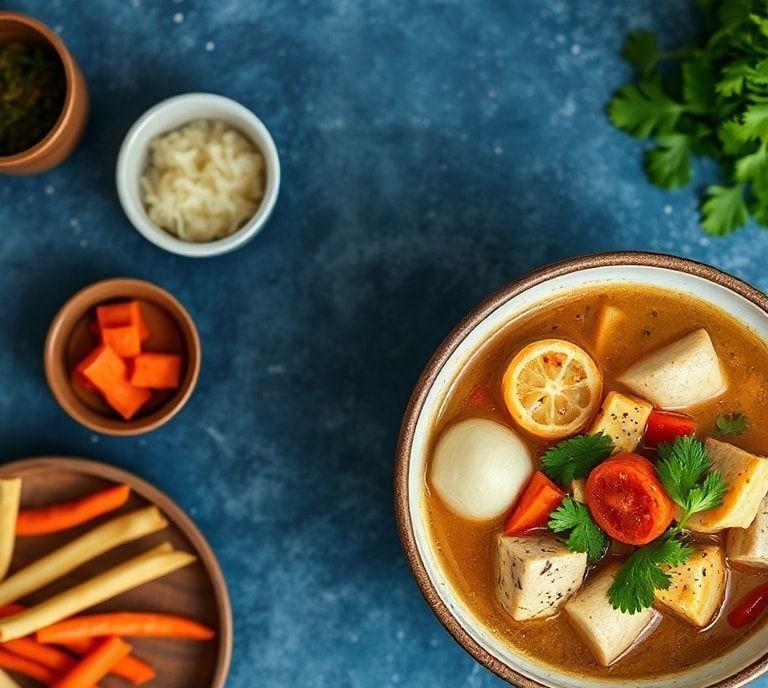
This vegetarian sinigang is vibrant, comforting, and packed with flavor. What’s amazing is how well the vegetables absorb the sourness of the broth, so each bite feels like a little burst of sunshine. You don’t need to sacrifice any depth or heartiness in this version, because the key is the perfect balance of ingredients. The best part? You’ll be surprised by how easily it comes together. The trick is knowing what to add and when to bring them into the pot. Here’s how you can make this beloved dish from start to finish.
Ingredients Needed
- 1 large onion, quartered
- 2 tomatoes, quartered
- 1 medium-sized eggplant, sliced into thick rounds
- 2 medium potatoes, peeled and cut into chunks
- 1 daikon radish (or white radish), sliced into half-moons
- 1 bunch of kangkong (water spinach), chopped
- 1 medium-sized taro root (gabi), peeled and sliced (optional for extra creaminess)
- 1 small bunch of string beans (sitaw), cut into 2-inch pieces
- 1 cup of baby corn (optional, but adds great texture)
- 1 packet of sinigang mix (or fresh tamarind paste)
- 1 tablespoon fish sauce (for a vegetarian version, you can use soy sauce or miso for umami depth)
- 2 tablespoons of salt (to taste)
- 6 cups of water
- 2-3 long green chilies (optional, for spice)
- 1 teaspoon of sugar (to balance the sourness)
- Freshly ground black pepper (to taste)
Cooking Instructions
- Prepare the Broth: In a large pot, combine the water, onion, and tomatoes. Bring this to a boil over medium-high heat. As it starts to simmer, the fragrance from the tomatoes and onions will fill your kitchen. At this point, I love to let it simmer for about 10-15 minutes-just enough to release those lovely flavors.
- Add the Root Vegetables: Now, throw in the potatoes, daikon radish, and taro root (if using). These vegetables are the heart of the dish; they absorb the tangy broth and provide a satisfying bite. Let them cook for about 15 minutes or until they’re tender.
- Incorporate the Eggplant and String Beans: Next, add the eggplant and string beans. These vegetables tend to cook faster, so we add them later in the process. Let everything cook together for about 5-7 minutes. By this time, the broth should start turning a light golden color, thanks to the vegetables releasing their natural flavors.
- Season the Broth: Add the sinigang mix (or tamarind paste) and the fish sauce (or miso/soy sauce). Stir to combine. Here’s where you want to taste test a little. If you need more sourness, you can add extra tamarind, or if it’s too tangy, a bit of sugar can help balance it out. Add salt, pepper, and a couple of green chilies for heat (if desired).
- Final Touches: Toss in the kangkong (water spinach) and baby corn, letting them soften and soak up the broth for another 5 minutes. The greens will wilt perfectly, and the corn will add a nice crunch to the soup.
- Serve: Taste one last time and adjust the seasoning if needed. Serve hot, and enjoy a comforting bowl of sinigang with steamed rice.
Ingredient Science Spotlight
The brilliance of sinigang lies in how the ingredients interact with each other in the pot. Take tamarind, for example, which is the soul of this dish. Tamarind is naturally acidic, and its sourness balances out the rich, savory components. It contains malic acid, which gives it that tart edge, but it also has a touch of sweetness. Pairing it with salt, soy sauce, or miso creates this perfect harmony of flavors-salty, sweet, sour, and umami.
Root vegetables like potatoes and daikon radish are perfect for this dish because they act like flavor sponges, absorbing the broth’s tangy depth. Eggplant, with its spongy texture, soaks in the broth’s flavors too, making each bite of it utterly satisfying. The water spinach, or kangkong, is a great addition because of its subtle flavor and the way it tenderizes beautifully in the broth, adding a green, slightly grassy note.
The magic of sinigang also has a lot to do with balance. It’s this mix of sour, salty, sweet, and spicy that makes each spoonful something you crave, even when the weather’s not bad. The vegetables, though simple, take on new personalities when simmered in this powerful, yet comforting, broth.
Expert Tips
- Use Fresh Tamarind: If you want to take your sinigang to the next level, try using fresh tamarind or tamarind paste from an Asian market. It’s the authentic sour base, and it makes a huge difference in flavor compared to pre-packaged sinigang mixes.
- Slow and Low Cooking: Don’t rush it! Simmering the vegetables at a medium-low heat allows them to really absorb the broth. If you cook on too high of a heat, they won’t have the time to fully absorb all the flavors.
- Season in Layers: When making the broth, always taste along the way. Sometimes a pinch of sugar can really balance out the sourness of the tamarind, or a little extra fish sauce will deepen the umami flavor.
- Experiment with Veggies: The great thing about sinigang is that you can really play around with the vegetables you have on hand. If you like more variety, try adding bok choy, okra, or even squash.
Recipe Variations
- Sinigang sa Miso: If you like the idea of a deeper, richer broth, you can add a couple of tablespoons of miso paste in addition to the tamarind. It adds an extra layer of umami and a touch of earthiness to the dish.
- Spicy Sinigang: For those who love a little more heat, you can toss in a few extra long green chilies, or even slice up some fresh red chili peppers. This variation brings out a great balance between the tanginess and spice.
- Sinigang with a Twist: Try experimenting with fruits like guava or green mango for a fruitier version of sinigang. These fruits will add a natural sweetness and elevate the sourness in a fun, tropical way.
- Vegan Sinigang: Skip the fish sauce and use soy sauce or miso paste for the umami. You could also add tofu for a bit of protein.
Final Words
Sinigang is more than just a meal-it’s a feeling. It’s the kind of dish you make on a lazy afternoon when you want something comforting yet refreshing. It brings people together, whether you’re sharing it with family or friends. And with this vegetarian version, you don’t have to miss out on any of that iconic flavor. It’s hearty, it’s warm, it’s everything you want from a bowl of soup, and then some.
FAQs
What Vegetables Can I Use In A Vegetarian Sinigang?
In a vegetarian sinigang, you can use a variety of vegetables such as eggplant, kangkong (water spinach), sitaw (string beans), labanos (radish), tomato, okra, and gabi (taro root). You can also include mushrooms like shiitake or oyster mushrooms to add a meaty texture, and green beans or sweet potatoes for added flavor and heartiness.
Can I Substitute The Tamarind Base In A Vegetarian Sinigang?
Yes, while traditional sinigang uses fresh tamarind to create its tangy broth, you can substitute it with tamarind paste, powdered tamarind mix, or other souring agents like green mango, calamansi, or even lemon or lime if tamarind is not available. Each of these alternatives will give a unique sour profile, but still maintain the essence of the dish.
How Can I Make Vegetarian Sinigang More Flavorful Without Using Meat Or Fish?
To enhance the flavor of vegetarian sinigang without using meat or fish, focus on umami-rich ingredients like miso paste, soy sauce, or vegetable broth. Adding a variety of herbs like lemongrass or bay leaves can also deepen the flavor. You can also add roasted garlic and onions for a richer base. For extra depth, incorporate a few slices of ginger or chili peppers to balance the sourness with heat and spice.