Stuffed grape leaves, or dolmas as they’re often called, have been a beloved dish in various cultures for centuries. There’s something magical about these small, neatly wrapped packages, brimming with a flavorful filling of rice, herbs, and spices. I’ll be the first to admit, making stuffed grape leaves can seem like a daunting task at first glance-after all, there’s that art of perfectly wrapping each leaf, ensuring the stuffing doesn’t spill out. But, once you get into the rhythm of it, it becomes almost meditative, a satisfying process where the ingredients come together, bite by bite, until you’ve created something that feels like a cozy hug in food form.
There’s an almost universal appeal to these little parcels of flavor. Whether you’re sitting down to a Mediterranean feast with friends or sharing a quiet dinner at home, stuffed grape leaves manage to transport you to a place where food isn’t just nourishment-it’s a reflection of tradition, patience, and love. And while there are many variations of stuffed grape leaves, today we’re going to talk about a vegetarian version that’s light, fresh, and full of rich flavors, making it perfect for a variety of occasions.
Stuffed Grape Leaves Vegetarian Recipe
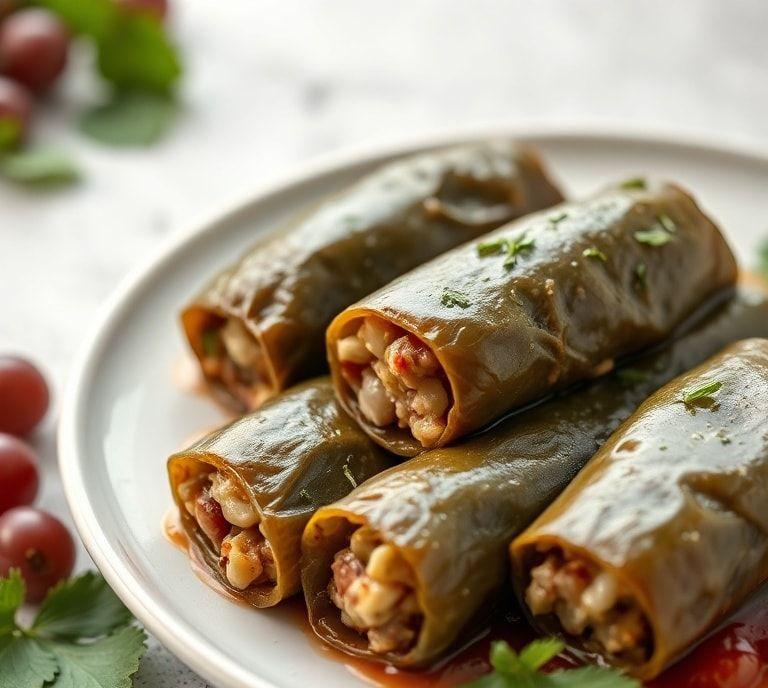
I remember the first time I tried making stuffed grape leaves at home. I was a little intimidated, to be honest. The process seemed intricate, and I wasn’t sure if I had the patience for it. But as soon as I tasted the first bite, I knew it was all worth it. The crispness of the grape leaves, combined with the earthy flavors of rice and vegetables, created a harmony that was just too good to ignore.
So, here’s the vegetarian recipe I’ve come to love. It’s light yet satisfying and gives you a full flavor profile without any of the heaviness that sometimes comes with meat-based versions.
Ingredients Needed
To make this recipe, you’ll need a handful of simple, fresh ingredients. No hard-to-find spices here, just the basics that come together beautifully.
For The Filling
- 1 cup long-grain rice (or basmati rice if you prefer)
- 2 tablespoons olive oil (I’m a big fan of extra virgin-it adds such depth)
- 1 large onion, finely chopped
- 2 cloves garlic, minced
- 1 medium tomato, diced (a firm one, so it holds up during cooking)
- 1 teaspoon dried dill (dill and grape leaves go together like peas in a pod)
- 1 teaspoon dried mint (it’ll bring a fresh, bright note)
- 1 teaspoon ground cumin (for a touch of warmth)
- 1/2 cup fresh parsley, chopped (for that green, herbaceous freshness)
- 1/2 cup pine nuts, lightly toasted (adds richness and crunch)
- Salt and pepper to taste
- 2 tablespoons lemon juice (the acidity is crucial for balancing the dish)
- 1 jar of grape leaves (look for ones that are brined, they’re perfect for rolling)
- 2 cups vegetable broth (for simmering)
For Cooking
- Olive oil (for drizzling)
- A few extra lemon wedges for serving (because everything’s better with a squeeze of fresh lemon)
Cooking Instructions
The process of making stuffed grape leaves might take a little time, but trust me, the reward is worth every minute.
- Prepare the Rice: Start by rinsing your rice under cold water until the water runs clear. This removes excess starch and helps the rice cook evenly. In a saucepan, heat 1 tablespoon of olive oil over medium heat, then sauté the rice for about 2-3 minutes until it’s lightly toasted. Add 1 ½ cups of water or vegetable broth and a pinch of salt, bring it to a boil, then cover and simmer for about 15 minutes, or until the rice is just cooked. Remove from heat and let it cool.
- Make the Filling: While the rice is cooling, heat the remaining tablespoon of olive oil in a large skillet over medium heat. Add the onion and garlic, sautéing until they’re soft and fragrant (about 5 minutes). Add the diced tomato, dill, mint, cumin, and a pinch of salt and pepper. Let this cook for another 5 minutes, allowing the tomatoes to break down a bit. Remove from heat.
- Combine the Rice and the Mixture: Once the rice has cooled, fluff it with a fork and add it to the skillet with the tomato-onion mixture. Stir in the parsley and pine nuts, and adjust the seasoning with more salt, pepper, and lemon juice as needed.
- Stuff the Grape Leaves: Here’s where the magic happens. Lay one grape leaf flat on a clean surface, with the shiny side down. Place about 1-2 tablespoons of the filling near the stem end. Carefully fold the sides of the leaf over the filling, then roll it up tightly, folding the top of the leaf over the filling as you go. You want the rolls to be snug but not so tight that they might burst when cooking.
- Simmer the Dolmas: Arrange your stuffed grape leaves tightly in a pot, seam side down. Once you’ve layered them, pour the vegetable broth over them, along with a drizzle of olive oil and a few wedges of lemon. Cover the pot and bring it to a gentle simmer. Cook for about 40-45 minutes, or until the grape leaves are tender and the filling is cooked through. You may want to check halfway through to make sure there’s enough liquid.
- Serve and Enjoy: Let the dolmas cool for a few minutes before serving. You can drizzle them with a little more lemon juice and olive oil for added flavor.
Ingredient Science Spotlight
What makes this dish so special isn’t just the flavors-it’s also how the ingredients work together to create the perfect balance of texture and taste. Let’s take a moment to appreciate some of the key players.
- Grape Leaves: The grape leaves themselves are brined to provide a delicate tartness that balances the richness of the rice and olive oil. They’re also packed with fiber, antioxidants, and vitamins, making them not just a flavor powerhouse, but a healthy addition to your meal.
- Rice: Rice acts as the perfect base for the filling. It absorbs all the fragrant herbs and spices, creating a deliciously aromatic stuffing that holds together well during cooking. The starchiness of rice helps to bind everything together and provide the right texture.
- Olive Oil: Olive oil is a cornerstone of Mediterranean cuisine for good reason. It adds depth of flavor, healthy fats, and richness, while also helping to cook and tenderize the rice and grape leaves. It’s like the glue that holds the whole dish together.
- Pine Nuts: Toasting the pine nuts brings out their natural oils and makes them fragrant, adding a subtle, nutty flavor to the filling. Their crunch gives the dish an unexpected texture that contrasts beautifully with the softness of the rice.
Expert Tips
- Fresh Grape Leaves: If you’re lucky enough to find fresh grape leaves in your local market, don’t hesitate to use them. Just be sure to blanch them before using to soften them up. Fresh leaves can sometimes be a bit tougher than their brined counterparts, so a quick dip in boiling water will do the trick.
- Don’t Overstuff: It’s tempting to stuff the grape leaves with a lot of filling, but the trick is to keep it modest. If you overstuff, the rolls can burst open while cooking. A little goes a long way.
- Simmer Gently: Once the dolmas are in the pot, keep the heat low and simmer gently. If you boil them too rapidly, they might fall apart. Slow and steady wins the race here.
- Let Them Rest: These taste even better the next day, so if you have the time, let them rest in the fridge for a few hours (or overnight) before serving. The flavors have time to meld and deepen.
Recipe Variations
One of the things I love about this recipe is how easy it is to customize. Here are a few variations you might want to try:
- Add vegetables: You can sneak in some extra veggies by adding finely chopped spinach, zucchini, or even mushrooms to the filling. The more, the merrier!
- Switch up the herbs: If dill and mint aren’t your thing, try using basil, oregano, or thyme for a different flavor profile.
- Spicy kick: Add a pinch of red pepper flakes or chopped jalapeños to give your dolmas a little heat. A dash of hot sauce in the filling could work wonders too.
- Stuff with quinoa or couscous: If you’re looking for something gluten-free or want to experiment with different textures, you can swap the rice for quinoa or couscous. Both will work beautifully in this recipe.
Final Words
Stuffed grape leaves are the kind of dish that brings people together. They’re perfect for gatherings, but also satisfying when you want something a little special for yourself. The process might seem involved, but once you get into the groove, it’s honestly pretty relaxing-and the outcome is always worth it.
Whether you’re a seasoned chef or just starting out, this recipe offers a timeless way to bring a bit of Mediterranean magic to your kitchen. And the best part? They’re just as delicious on their own as they are served alongside other dishes.
FAQs
What Ingredients Are Needed For A Vegetarian Stuffed Grape Leaves Recipe?
The key ingredients for a vegetarian stuffed grape leaves recipe typically include grape leaves, rice, olive oil, onions, garlic, fresh herbs such as dill, parsley, and mint, lemon juice, and spices like allspice, cinnamon, and black pepper. Some variations may also include pine nuts or currants for added texture and flavor.
How Do You Properly Roll Stuffed Grape Leaves To Ensure They Stay Intact While Cooking?
To properly roll stuffed grape leaves, first, place a grape leaf shiny side down on a flat surface. Add a spoonful of the filling (usually a mixture of rice, herbs, and seasonings) in the center, near the base of the leaf. Fold in the sides of the leaf, then carefully roll it up tightly from the bottom to the top, making sure it’s compact but not overstuffed. This ensures the grape leaves stay sealed during cooking.
Can Stuffed Grape Leaves Be Made Ahead Of Time And Frozen?
Yes, stuffed grape leaves can be made ahead of time and frozen. Once the rolls are prepared, arrange them in a single layer in a freezer-safe container or wrap them tightly in plastic wrap and foil. To reheat, thaw them in the refrigerator overnight and then cook them as you would fresh stuffed grape leaves, either by simmering or steaming.