Let’s talk about one of the most vibrant and comforting dishes I’ve come across: Thai vegetarian noodles. I’m a huge fan of food that feels like a journey-something that takes you somewhere new with each bite. Thai cuisine, with its layers of fresh herbs, bright spices, and mouthwatering textures, has this magical way of transporting you, even if you’re just in your own kitchen. This particular dish, with its medley of vegetables, subtle sweetness, and tangy depth, is an absolute favorite of mine.
I first encountered a version of these noodles during a trip to Chiang Mai years ago. After spending the day exploring local temples and wandering the bustling streets, I found myself sitting at a small, no-frills stall run by a kind woman named Som. She served up a dish that was so simple but packed with so much flavor that I had to ask for seconds (and thirds). Som told me it was a traditional vegetarian noodle dish, and the flavors-especially the contrast between sweet, salty, sour, and savory-stuck with me. When I returned home, I tried recreating that dish from memory, and what you’re about to read is my take on those unforgettable flavors.
Now, this version isn’t a one-size-fits-all recipe. I wanted to craft something that’s flexible enough for different tastes and preferences, but still true to the essence of what made that street-food dish so special. Let’s dive into the ingredients and instructions so you can create your own Thai noodle masterpiece at home.
Thai Vegetarian Noodles Recipe
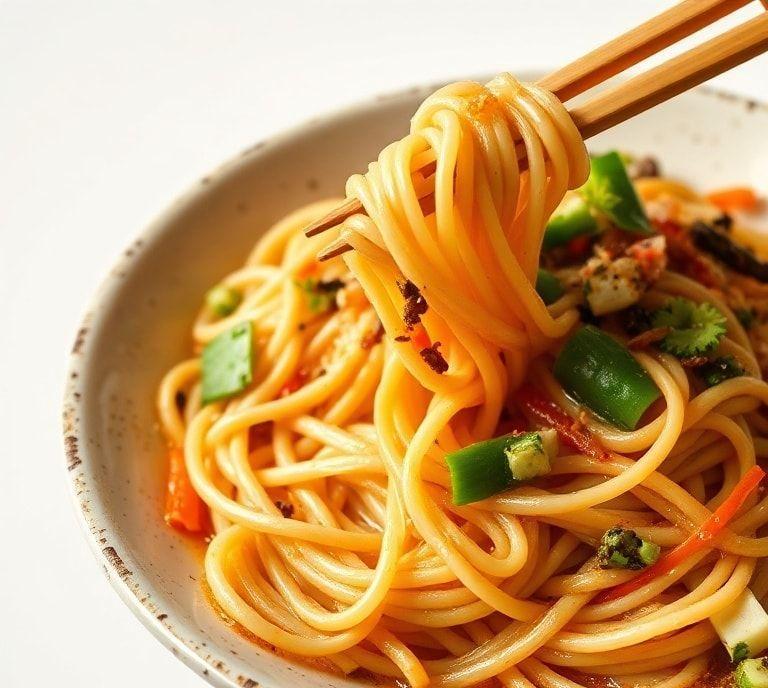
This is a light yet hearty dish, full of color and fresh vegetables, with just the right balance of spices. The noodles are silky, the sauce is tangy, and the toppings are crunchy and satisfying.
Ingredients Needed
- 200g rice noodles (you can use thin or thick rice noodles, depending on your preference)
- 1 tablespoon sesame oil (for the perfect depth of flavor)
- 1 cup bell peppers (sliced into thin strips, preferably a mix of colors)
- 1 cup carrots (julienned or thinly sliced)
- 1 small zucchini (sliced into thin half-moons)
- 1/2 cup cabbage (shredded)
- 1/4 cup green onions (chopped)
- 1/4 cup cilantro (chopped, for that fresh, herby finish)
- 2 tablespoons soy sauce (or tamari for a gluten-free version)
- 1 tablespoon lime juice (freshly squeezed is best)
- 1 tablespoon brown sugar (helps balance the tartness of the lime and the saltiness of the soy sauce)
- 2 tablespoons peanut butter (optional, but it gives the dish a rich, creamy texture)
- 1 teaspoon chili paste or chili flakes (adjust to your spice tolerance)
- 1/4 cup roasted peanuts (chopped, for that perfect crunch)
- 1 tablespoon toasted sesame seeds (for garnish)
Cooking Instructions
- Prep your noodles: Start by cooking the rice noodles according to the package instructions. This usually involves soaking them in hot water for a few minutes until they’re soft and pliable. Once done, drain the noodles and set them aside. A quick tip: rinse them with cold water after draining to prevent them from sticking together.
- Stir-fry the vegetables: In a large pan or wok, heat the sesame oil over medium heat. Add your sliced bell peppers, carrots, zucchini, and cabbage. Stir-fry for about 4-5 minutes, just until the vegetables start to soften but still have a little bite. You want them tender but not mushy. If you like a bit of char on your veggies, turn up the heat and let them crisp slightly in spots.
- Prepare the sauce: In a small bowl, whisk together the soy sauce, lime juice, brown sugar, peanut butter (if using), and chili paste. Taste and adjust. You want that perfect balance between salty, sweet, tangy, and a little bit of heat. If it’s too salty, add more lime juice. If it’s too tart, add a little more sugar.
- Combine noodles and veggies: Once your veggies are ready, toss the drained noodles into the pan. Pour the sauce over the noodles and vegetables, tossing everything together until it’s evenly coated. This is where the magic happens-the noodles soak up all those flavors.
- Finish and serve: Remove the pan from heat. Toss in the chopped green onions and cilantro, and give it one final mix. Serve the noodles topped with roasted peanuts and toasted sesame seeds for that crunchy texture. If you like it extra fresh, a squeeze of lime just before serving is always a good call.
Ingredient Science Spotlight
One of the coolest parts of cooking with fresh ingredients, especially when it comes to Thai dishes, is how certain ingredients bring both flavor and science to the table.
- Sesame oil: This oil is a staple in many Asian cuisines, and it’s used in this recipe to provide a rich, nutty aroma. Its unique flavor comes from the compounds in sesame seeds that have been toasted, which adds a complex depth to the dish. Plus, sesame oil contains both polyunsaturated and monounsaturated fats, which are heart-healthy.
- Rice noodles: These noodles are made from rice flour and water, and they absorb flavors wonderfully, which makes them perfect for a dish with a sauce as vibrant as this one. They’re gluten-free, too, making this dish suitable for those with gluten sensitivities.
- Peanut butter: The creamy peanut butter in this recipe isn’t just for texture; it adds a little richness that balances the acidity of the lime and the saltiness of the soy sauce. Peanuts are rich in protein and healthy fats, making this dish a bit more substantial, too.
- Lime: This is the secret weapon of Thai cuisine. The high acidity and refreshing citrus flavors of lime juice cut through the richness of the peanuts and sesame oil. Plus, limes are packed with vitamin C and antioxidants, which help support your immune system.
Expert Tips
- Don’t overcook your veggies: Thai stir-fry dishes rely on the freshness and crunch of the vegetables. Overcooking them can lead to a mushy texture, which dulls the dish. Aim for that perfect crisp-tender bite.
- Use fresh noodles: While dried rice noodles work just fine, fresh rice noodles are often available at Asian grocery stores and give the dish a superior texture. If you can find them, go for it.
- Experiment with your sauce: This sauce is versatile, so feel free to play around with it. If you love garlic, add a minced clove or two. If you prefer a more intense heat, try adding a dash of sriracha or Thai red curry paste.
- Make it ahead: This dish is perfect for meal prepping. You can cook the noodles and veggies in advance, store them in the fridge, and then just toss everything together when you’re ready to eat. The flavors even get better overnight!
Recipe Variations
- Add tofu: For extra protein, toss in some crispy tofu. Simply press and cube firm tofu, then sauté it in a hot pan until golden brown. Add it to the noodles at the end.
- Vegetable mix: Feel free to swap or add other vegetables. Baby corn, mushrooms, or bok choy would all be excellent choices.
- Change the noodles: If you’re not in the mood for rice noodles, try using soba noodles or even zucchini noodles for a low-carb twist.
- Spicy variation: Add more chili paste or top the dish with fresh red chili slices for an extra spicy kick.
Final Words
Cooking doesn’t have to be complicated to be delicious. Thai vegetarian noodles are proof of that. With a handful of fresh ingredients and just a few steps, you can bring the flavors of Thailand into your own kitchen. The beauty of this dish is in its simplicity and its ability to transform a few humble vegetables into something extraordinary.
FAQs
What Ingredients Are Typically Used In A Thai Vegetarian Noodles Recipe?
A traditional Thai vegetarian noodles recipe usually includes rice noodles or egg-free noodles, a variety of fresh vegetables such as bell peppers, carrots, broccoli, and bean sprouts, and protein options like tofu or tempeh. Common flavoring ingredients include garlic, ginger, soy sauce or tamari, lime juice, vegetable broth, and optional chili for heat. Fresh herbs like cilantro or Thai basil are often added for an authentic flavor.
How Can I Make Thai Vegetarian Noodles More Flavorful Without Using Fish Sauce?
To enhance flavor without fish sauce, use alternatives like soy sauce, tamari, or mushroom soy sauce for umami. Adding lime juice or rice vinegar provides acidity, while crushed peanuts or toasted sesame seeds add texture and richness. You can also include fermented black beans, miso paste, or a small amount of brown sugar to balance the taste, along with fresh herbs such as cilantro or Thai basil to give it a fresh aromatic profile.
Can Thai Vegetarian Noodles Be Made Gluten-free?
Yes, Thai vegetarian noodles can easily be made gluten-free. Use rice noodles or other gluten-free noodles instead of wheat-based noodles. Ensure that sauces like soy sauce or hoisin sauce are labeled gluten-free, or substitute with tamari, coconut aminos, or gluten-free alternatives. Additionally, check that any processed ingredients, such as pre-made curry pastes or tofu, do not contain gluten additives.