Greek cuisine has a way of weaving together simple ingredients and ancient traditions into dishes that feel like a warm hug. One of the most comforting and iconic recipes in Greek culture is Dolmades. These little bundles of joy, typically made by wrapping vine leaves around a savory filling, are a staple in many Mediterranean homes. They hold layers of flavor and history in each bite, bringing together the earthiness of grape leaves, the richness of olive oil, and the brightness of herbs like dill and mint.
While Dolmades are often associated with meat-based fillings, there’s a wonderful vegetarian version that shines just as brightly-light, fresh, and perfect for those who prefer a plant-based dish or simply want to enjoy something a bit lighter. The vegetarian version of Dolmades highlights the delicate balance of rice, vegetables, herbs, and olive oil, creating something that’s not just a side dish but a true flavor experience.
I first tried making these vegetarian Dolmades after a summer trip to Greece. I wandered through a bustling outdoor market, the scent of grilled meats wafting through the air, but it was the fresh vine leaves at a little stall that caught my attention. The vendor handed me a sample of vegetarian Dolmades, and I was hooked instantly. That taste stuck with me, and I couldn’t wait to recreate it back home.
So, if you’ve ever wondered how to make your own Dolmades at home, get ready to dive into a recipe that’s both simple and incredibly satisfying.
Vegetarian Dolmades Greek Recipe
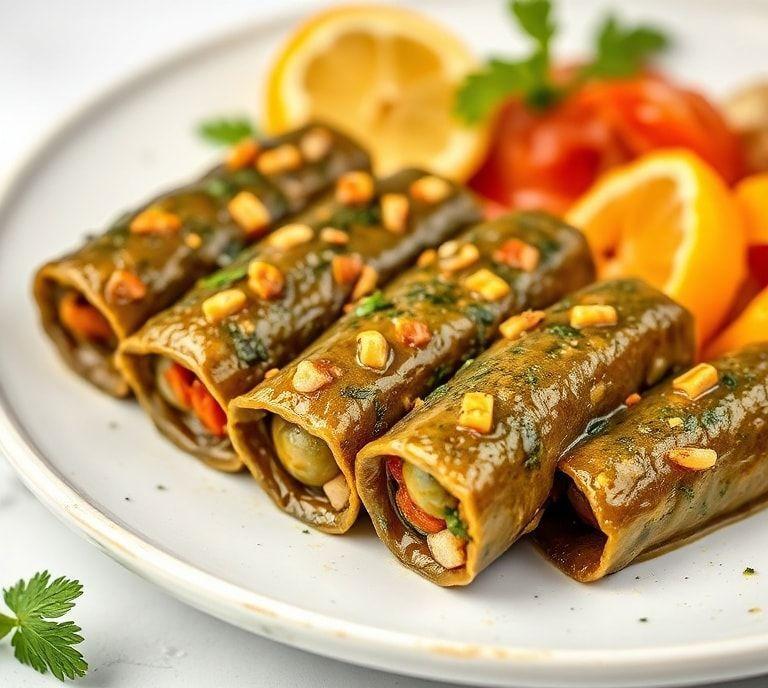
This vegetarian version of Dolmades is a delightful blend of ingredients that is sure to transport you straight to the heart of Greece. The grape leaves, typically sourced from a vine that thrives in the Mediterranean climate, are used to wrap a flavorful mixture of rice, fresh herbs, lemon, and olive oil. While it’s a relatively straightforward recipe, the beauty lies in the simplicity of the ingredients and the technique of rolling each dolma by hand.
Ingredients Needed
Here’s a list of what you’ll need to recreate this dish, with each ingredient contributing to the complexity of the flavors.
- Grape leaves: Fresh or jarred, these are essential. Fresh ones are best if you can find them, but jarred will work just fine too-just make sure to rinse them thoroughly to remove excess brine.
- Rice: Short-grain rice works best for its ability to absorb the flavors and keep the dolmades together. Basmati or jasmine can also be used for a lighter variation.
- Olive oil: Extra virgin, of course. Greek olive oil has a particular richness that makes it a key player in this recipe.
- Onion: A finely chopped onion will provide a bit of sweetness and depth.
- Herbs: Fresh dill and mint are the stars here, bringing a refreshing and aromatic quality to the filling.
- Lemon: The juice of one lemon for brightness, and a couple of slices for the cooking liquid.
- Pine nuts: These are optional but add a wonderful nutty richness.
- Currants or raisins: A small handful of these sweet dried fruits adds a hint of sweetness that balances the savory flavors.
- Salt & pepper: Season to taste.
- Water: To cook the dolmades.
Cooking Instructions
Making Dolmades is all about patience and precision, but it’s incredibly rewarding. The most time-consuming part is rolling the dolmades, but once you get the hang of it, it becomes second nature.
- Prepare the grape leaves: If you’re using fresh leaves, blanch them in boiling water for about 2 minutes, then rinse them under cold water. If you’re using jarred leaves, just rinse them to get rid of the brine and pat them dry.
- Prepare the filling: In a large pan, heat some olive oil over medium heat. Add the chopped onion and sauté until it becomes soft and translucent, about 5 minutes. Add the rice and toast it lightly for another minute, making sure it gets coated in the oil.
- Add the herbs and flavorings: Stir in the fresh dill, mint, currants or raisins, pine nuts (if using), salt, and pepper. Pour in about 1 ½ cups of water, bring it to a simmer, then cover and cook for about 10 minutes until the rice is partially cooked but still firm. Turn off the heat and let the filling cool to room temperature.
- Roll the dolmades: Lay a grape leaf on a flat surface, vein-side up. Place a spoonful of the rice mixture in the center of the leaf. Fold in the sides and roll it up tightly, like you would a burrito. Repeat this process with the remaining leaves and filling.
- Cook the dolmades: Arrange the rolled dolmades in a large pot, packing them closely together. Cover them with a plate to keep them in place, then pour enough water to cover the dolmades. Add a couple of lemon slices and a drizzle of olive oil. Bring the water to a simmer, cover the pot, and cook for about 45 minutes to an hour, or until the rice is tender and the flavors have melded together.
Ingredient Science Spotlight
The star of the dish, the grape leaves, is an ingredient that often gets overshadowed, but they’re actually fascinating from a culinary perspective. They’re packed with antioxidants, vitamin C, and dietary fiber, making them more than just a flavorful wrapper. They also play a crucial role in the texture of the dolmades, adding a slight bitterness that contrasts beautifully with the sweetness of the raisins and the herbal notes from the mint and dill.
The rice serves as a perfect base. Short-grain rice, often used in Greek and Mediterranean dishes, has a high starch content, which makes it sticky and tender. This ensures the dolmades stay intact and gives them a satisfying chew. Olive oil, too, is more than just a cooking medium-it’s a key element in Mediterranean diets known for its heart-healthy fats. The rich, slightly grassy flavor of olive oil is what really ties the dish together.
Expert Tips
- Don’t overfill the leaves: It’s tempting to stuff them with too much filling, but keep the portions small. The grape leaves need to be able to roll up tightly without bursting.
- Roll tightly: The tighter you roll the dolmades, the better they will hold together while cooking. But don’t overdo it-if they’re too tight, they won’t have room to expand as the rice cooks.
- Simmer gently: Dolmades should cook on a low simmer, not a rolling boil. This ensures that the grape leaves soften without breaking apart, and the filling cooks evenly.
- Lemon is key: For an authentic flavor, make sure to add plenty of lemon juice both in the filling and to the cooking liquid. The acidity brightens the dish and balances the richness of the olive oil.
Recipe Variations
While the traditional vegetarian Dolmades are a perfect balance of rice and herbs, you can mix things up with a few variations:
- Add vegetables: Chopped tomatoes, zucchini, or even spinach can be added to the rice filling for extra flavor and texture.
- Use quinoa: For a gluten-free alternative, quinoa can replace rice, giving the dolmades a slightly nuttier flavor and extra protein.
- Spicy twist: If you like heat, add a pinch of chili flakes to the rice mixture for a subtle kick.
- Stuffed with feta: Some people love to add crumbled feta cheese to the rice mixture, giving it a creamy, tangy element.
Final Words
Making vegetarian Dolmades is a bit of a labor of love, but it’s also a rewarding experience. The combination of textures-soft, tender rice, the crunch of the pine nuts, the sweetness of the currants-all wrapped in the slightly bitter, tender grape leaves-creates a dish that feels like a little piece of Greek heaven.
There’s something inherently satisfying about preparing a dish so closely tied to centuries of tradition, knowing that you’re engaging in a practice that has been passed down through generations. Whether you’re serving them at a family dinner or taking them to a picnic, these Dolmades are bound to impress.
FAQs
What Are Vegetarian Dolmades And How Are They Different From Traditional Dolmades?
Vegetarian dolmades are grape leaves stuffed with a filling that typically includes rice, herbs, and sometimes vegetables or nuts, instead of meat. The primary difference between vegetarian and traditional dolmades is the absence of meat in the filling. Traditional dolmades often contain a mixture of rice and ground lamb or beef, whereas the vegetarian version uses plant-based ingredients, making it suitable for vegetarians and vegans.
What Ingredients Are Typically Used In A Vegetarian Dolmades Greek Recipe?
A typical vegetarian dolmades Greek recipe includes grape leaves, rice, onion, garlic, dill, mint, olive oil, lemon juice, and sometimes pine nuts or currants. The rice is cooked and seasoned with fresh herbs like dill and mint, then wrapped in grape leaves and simmered in olive oil and lemon juice to infuse the flavors. The choice of herbs and spices can vary depending on personal preference and regional variations.
Can I Prepare Vegetarian Dolmades In Advance And Store Them?
Yes, vegetarian dolmades can be prepared in advance. Once the dolmades are assembled, they can be stored in an airtight container in the refrigerator for up to 2-3 days. To store them, place them in a shallow dish, cover with plastic wrap, and refrigerate. You can also freeze them by wrapping them tightly in plastic wrap and placing them in a freezer-safe bag. To reheat, you can steam them or warm them gently on the stove with a little water and olive oil.