Fried rice-there’s something so satisfying about a plate of warm, savory, perfectly seasoned rice, right? It’s comfort food, but it can also feel a little adventurous when you customize it with different ingredients. This vegetarian fried rice with egg recipe is one of those dishes that always feels like a secret weapon. It’s quick to prepare, requires minimal ingredients, and delivers big on flavor. Whether you’re making it for a quick lunch, a dinner side dish, or just using up leftovers in the fridge, this fried rice is reliable, versatile, and, best of all, delicious.
I’ve made this recipe countless times, and it’s always a winner. The beauty of it is that you can tweak it based on whatever you have on hand. It’s one of those recipes that makes you feel like a pro chef with minimal effort. Plus, I’ve added a little science to the mix, so you can understand why certain ingredients work so well together. That way, you’ll feel confident to make this your own.
So, if you’re ready for a fried rice that’s packed with flavor and a little bit of kitchen magic, let’s dive in!
Vegetarian Fried Rice With Egg Recipe
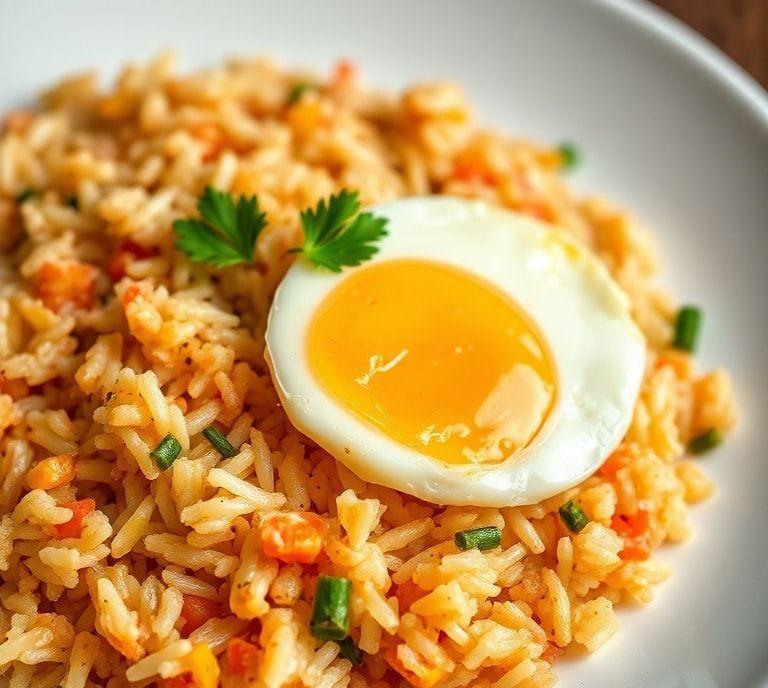
At its core, this dish is a mix of tender rice, scrambled egg, and a handful of vegetables, all brought together by soy sauce and a bit of sesame oil for that umami kick. The best part? You can customize it with any veggies you like. I often throw in whatever I have in the fridge-carrots, peas, bell peppers, even mushrooms. The possibilities are endless. The key is to keep things light and crisp, which is what makes the texture so good.
Let me break it down for you in simple steps.
Ingredients Needed
The ingredients are straightforward, yet each one plays a crucial role in creating the perfect fried rice.
- Cooked Rice (preferably cold) – This is the foundation of the dish. I always use leftover rice because cold rice has a firmer texture that doesn’t clump together when stir-fried.
- Eggs – Lightly beaten and scrambled into the rice. They add richness and a soft texture that complements the crunchiness of the veggies.
- Vegetable Oil or Sesame Oil – For stir-frying. I love sesame oil for its aromatic flavor, but vegetable oil works just fine if that’s what you have.
- Garlic – Fresh garlic adds an instant depth of flavor. It’s one of those ingredients that just makes everything taste better.
- Soy Sauce – You can’t go wrong here. It adds that salty, umami flavor that ties everything together. I always go for low-sodium soy sauce so I can control the saltiness.
- Vegetables – I usually go with peas, carrots, and green onions, but you can throw in anything you love. Broccoli, bell peppers, or even spinach work great!
- Ginger (optional) – Fresh ginger brings a warm, peppery zing that I find really elevates the dish.
- Sesame Seeds (optional) – A little sprinkle on top at the end adds a nice texture and a toasted flavor.
Cooking Instructions
The beauty of this dish is how fast it comes together, especially if you already have the rice cooked. Here’s how I do it:
- Prepare the Rice: Ideally, use rice that’s been cooked and cooled, preferably the night before. This helps the grains separate and ensures you don’t end up with clumpy fried rice. If you’re in a pinch, you can also spread freshly cooked rice on a baking sheet and pop it in the fridge for 15 minutes to cool.
- Heat the Oil: In a large wok or skillet, heat 1 tablespoon of vegetable oil (or sesame oil) over medium-high heat. Add the garlic and ginger (if using), and sauté for about 30 seconds until fragrant. This is where the magic starts.
- Scramble the Eggs: Push the garlic and ginger to the side of the pan, then pour the beaten eggs into the other side. Scramble until just set, then stir them into the garlic and ginger mixture.
- Stir-fry the Veggies: Add your chopped vegetables (I usually add peas and carrots). Cook for 2-3 minutes, stirring occasionally, until they’re tender but still crisp.
- Add the Rice: Stir in the cold rice, breaking up any clumps. Cook for 4-5 minutes, making sure the rice gets a little crispy in spots. This is where the wok or skillet gets its magic-those crispy bits are golden.
- Season: Drizzle in the soy sauce (I typically start with 2 tablespoons, then add more if needed), and season with a little salt and pepper to taste. Add the green onions and stir well.
- Finish: If you like, you can drizzle a bit more sesame oil on top for extra flavor. Sprinkle with sesame seeds for a bit of crunch, and you’re ready to serve!
Ingredient Science Spotlight
Let’s dive into the science behind why some of these ingredients work so well together. The most important ingredient in any fried rice is the rice itself. Cold, day-old rice is your best friend here. Why? Freshly cooked rice contains more moisture, which makes it sticky when stir-fried. Cold rice, on the other hand, has less moisture, allowing the grains to stay separate and get that desirable chewy texture.
Eggs are essential for richness, and they bring a softness that balances out the crispy rice and vegetables. They also provide protein and help create that ’comfort food’ feel. Plus, eggs have a high-fat content, which helps carry flavors like soy sauce and sesame oil.
Speaking of soy sauce, the fermented soybeans and wheat in it provide the dish with that umami depth. Umami is one of the five basic tastes, along with sweet, salty, sour, and bitter, and it’s responsible for making food taste "satisfying" and "complete."
Finally, the sesame oil is packed with antioxidants and healthy fats, which make it a great base for stir-frying. It also adds a distinctive toasted flavor, which is one of the defining characteristics of this fried rice.
Expert Tips
- Use a Wok if You Can: A wok is the perfect tool for stir-frying because it distributes heat evenly, and the sloped sides make it easy to toss the rice without making a mess. If you don’t have one, a large skillet will work, but a wok really does make a difference.
- Don’t Overcrowd the Pan: When stir-frying, make sure your pan isn’t overcrowded. The rice needs room to breathe so it can crisp up properly. If you’re making a large batch, fry the rice in batches.
- Control the Heat: Keep the heat high throughout the cooking process. High heat is key to achieving that crispy texture in the rice.
- Soy Sauce Variation: If you want to mix things up, try different varieties of soy sauce, such as tamari (for a gluten-free version) or dark soy sauce for a richer, deeper flavor.
Recipe Variations
- Add Tofu: For some extra protein, add cubes of firm tofu. Just sauté the tofu first until golden and crispy, then add it to the rice at the end.
- Add More Vegetables: Feel free to add any veggie you like! Bell peppers, mushrooms, corn, or even spinach are great additions.
- Spicy Fried Rice: If you like a bit of heat, toss in some chili flakes, sriracha, or fresh chopped chilies to spice things up.
- Nuts and Seeds: For added crunch and flavor, try adding roasted peanuts, cashews, or sunflower seeds.
- Substitute Rice: You can swap the rice for quinoa or cauliflower rice if you’re looking for a lower-carb alternative.
Final Words
This vegetarian fried rice with egg is more than just a quick meal; it’s a customizable, flavor-packed dish that’s ready in minutes and perfect for almost any occasion. Whether you’re making it from scratch or using up leftovers, it’s a great way to incorporate fresh vegetables and grains into your diet without sacrificing taste.
There’s something incredibly satisfying about taking basic pantry staples and transforming them into a meal that feels both comforting and exciting. This recipe is an invitation to experiment and make it your own. So the next time you’re craving something quick and delicious, remember this fried rice-it’s guaranteed to hit the spot.
FAQs
Can I Make Vegetarian Fried Rice With Egg Ahead Of Time?
Yes, you can prepare vegetarian fried rice with egg in advance. It is best to cook the rice and let it cool completely before storing it in an airtight container in the refrigerator for up to 2 days. When ready to serve, reheat the rice in a pan or wok over medium heat, adding a little oil to prevent sticking. Eggs can be cooked fresh while reheating to maintain their texture.
What Vegetables Work Best In Vegetarian Fried Rice With Egg?
A wide variety of vegetables can be used, depending on preference and seasonality. Common choices include carrots, peas, bell peppers, green beans, broccoli, and corn. For best results, cut the vegetables into small, uniform pieces so they cook evenly and retain a slight crunch. Leafy greens like spinach or bok choy can be added towards the end of cooking to preserve their color and nutrients.
How Can I Make Vegetarian Fried Rice With Egg Healthier?
To make this dish healthier, use brown rice or a mix of brown and white rice for added fiber. Use minimal oil for stir-frying, and choose heart-healthy oils such as olive or avocado oil. Increase the vegetable content to boost vitamins and minerals, and consider using low-sodium soy sauce or tamari to reduce sodium intake. Adding a small amount of tofu or tempeh can also enhance protein content without altering the vegetarian profile.