If you’ve ever been on the lookout for a meal that’s both light and satisfying, refreshing yet comforting, then zucchini spaghetti might just become your new go-to dish. Imagine a plate of tender, flavorful noodles that don’t leave you feeling weighed down afterward-almost like a culinary reset for the soul. That’s exactly what you get with this vegetarian zucchini spaghetti recipe. It’s like taking a bite of summer in a dish, and every ingredient works harmoniously to create something simple, fresh, and downright delicious.
But this isn’t just any zucchini spaghetti. It’s a celebration of how vegetables, in their purest form, can elevate a meal. There’s a kind of magic when you transform a humble zucchini into strands of spaghetti, offering a satisfying alternative to traditional pasta. And if you’re looking to cut down on carbs, or just add a bit of variety to your meals, this dish is a true game-changer.
So, let’s get into the nitty-gritty of how to make this dish, from the ingredients to the cooking process, and even some fun science behind why zucchini makes such a perfect stand-in for pasta. Whether you’re a seasoned home cook or someone just looking to try something new, this dish will bring a fresh twist to your repertoire.
Vegetarian Zucchini Spaghetti Recipe
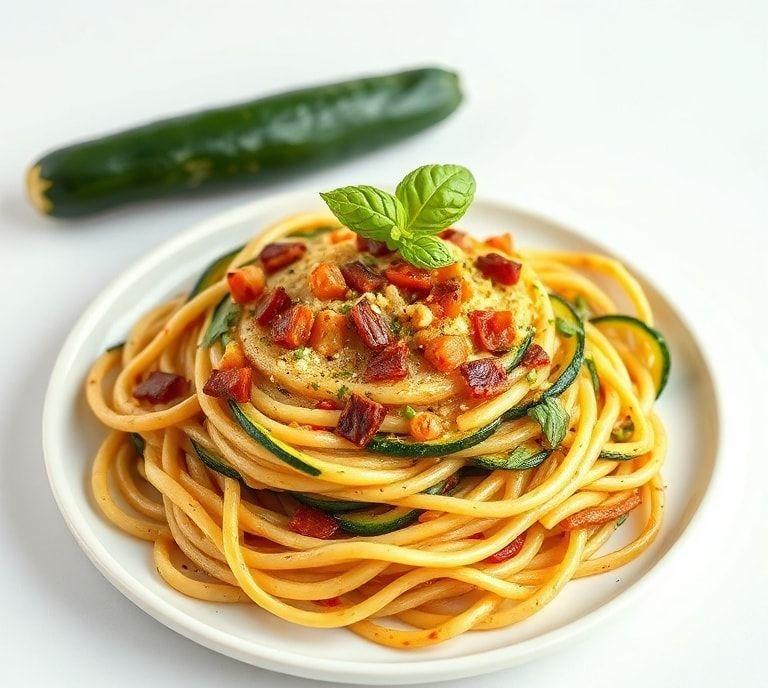
This recipe is all about simplicity and freshness. It highlights how just a few ingredients can come together to make something far more than the sum of its parts. It’s easy to make, doesn’t require fancy kitchen gadgets (though a spiralizer can help), and is flexible enough to adapt to whatever you have on hand.
Ingredients Needed
- 2 medium zucchinis: The star of the show. Choose firm, fresh zucchinis for the best texture and flavor.
- 2 tablespoons olive oil: For sautéing and adding richness to the dish.
- 2 cloves garlic: Because garlic just makes everything better.
- 1 cup cherry tomatoes: Sweet and juicy, they add a burst of color and flavor to the dish.
- 1 tablespoon fresh basil: A sprinkle of green that really ties everything together.
- 1 tablespoon grated Parmesan: Optional but recommended for a savory, umami boost.
- Salt and pepper to taste: To round out the flavors and bring everything into balance.
Cooking Instructions
- Spiralize the zucchini: If you’ve got a spiralizer, great! Use it to turn your zucchini into noodles. If not, you can slice the zucchini into thin strips with a sharp knife. The goal is to get long, spaghetti-like ribbons.
- Sauté garlic and tomatoes: In a large pan, heat the olive oil over medium heat. Add the garlic and cook for 1-2 minutes until fragrant, being careful not to burn it. Add the cherry tomatoes and cook until they start to burst, about 5 minutes.
- Cook the zucchini noodles: Add the zucchini noodles to the pan and sauté for another 3-4 minutes. The goal is to heat the zucchini through without letting it get too soggy-al dente texture is key here.
- Finish the dish: Once the zucchini noodles are tender but still have a bit of bite, season with salt and pepper to taste. Add the fresh basil and Parmesan, stirring to combine.
- Serve immediately: This dish is best enjoyed right away while the zucchini noodles still have some bite. Garnish with a few extra basil leaves or a little more grated cheese if you like.
Ingredient Science Spotlight
Zucchini is one of those vegetables that, when prepared correctly, can mimic the texture of pasta incredibly well. The key lies in the water content of zucchini. Zucchini is about 95% water, which makes it a great vehicle for absorbing the flavors around it, whether from garlic, olive oil, or the burst of sweetness from the tomatoes.
When you spiralize zucchini, you’re effectively turning it into thin strands that can hold sauces just as well as pasta, but with a much lighter, fresher feel. The beauty of zucchini spaghetti is that it cooks incredibly quickly-no need for boiling like traditional pasta. This makes it a fantastic option for weeknight dinners when time is short.
On a nutritional front, zucchini is a powerhouse. It’s rich in vitamins A and C, packed with antioxidants, and full of fiber. If you’re trying to reduce your carb intake or simply want to add more vegetables to your meals, zucchini spaghetti is a low-calorie, nutrient-dense option that delivers on taste without compromising your health goals.
Expert Tips
- Don’t Overcook the Zucchini: Zucchini releases a lot of water when cooked, so be careful not to overdo it. The goal is to heat it just enough to soften it slightly while still maintaining its structure. Overcooked zucchini can turn mushy and watery, which defeats the whole purpose of a pasta replacement.
- Use Fresh Herbs: Fresh basil brings a bright, aromatic flavor that complements the zucchini and tomatoes perfectly. If you have other herbs on hand, feel free to experiment with thyme, oregano, or parsley.
- Add a Protein: If you want to make the dish heartier, consider adding some plant-based protein. Tofu, chickpeas, or a sprinkle of nuts (like pine nuts or walnuts) can boost the protein content without sacrificing the dish’s lightness.
- Zucchini Prep: If you’re worried about excess moisture, you can salt the zucchini noodles and let them sit for about 10 minutes before cooking. This helps draw out some of the water, and you can blot them dry with a paper towel to ensure a firmer texture.
Recipe Variations
While this recipe is wonderful in its simplicity, there’s always room for creativity. Here are a few variations you can try:
- Pesto Zucchini Spaghetti: Swap out the olive oil and garlic for a rich, basil pesto. The fresh, herbaceous flavor will blend beautifully with the zucchini noodles.
- Zucchini Spaghetti with Roasted Vegetables: Add some roasted bell peppers, eggplant, or mushrooms to the dish for a more robust, savory twist. The caramelized flavors from roasting vegetables can add depth.
- Spicy Zucchini Spaghetti: If you like a bit of heat, sprinkle in some red pepper flakes while cooking the garlic and tomatoes. This will give the dish a nice kick.
- Zucchini Spaghetti with Lemon: For a tangy, refreshing twist, finish the dish with a squeeze of fresh lemon juice. The acidity cuts through the richness of the olive oil and Parmesan and brightens the flavors.
Final Words
Zucchini spaghetti is the perfect example of how simple ingredients can come together to make something extraordinary. It’s light yet satisfying, fresh but full of flavor, and most importantly, it’s a dish that can be enjoyed guilt-free. Whether you’re making it as a quick weeknight dinner or as a side dish to complement a more substantial meal, zucchini spaghetti offers versatility without compromising on taste.
And while this dish is already delicious on its own, it’s also an amazing foundation for experimentation. From adding different herbs to switching up the sauce, you can tweak this recipe to suit your taste buds and dietary preferences. Plus, it’s a great way to get more vegetables into your diet without feeling like you’re missing out on your favorite comfort foods.
FAQs
What Are The Main Ingredients For A Vegetarian Zucchini Spaghetti Recipe?
The main ingredients for a vegetarian zucchini spaghetti recipe include zucchini (usually spiralized into ’noodles’), olive oil, garlic, cherry tomatoes, fresh basil, Parmesan cheese (optional), salt, and pepper. Some variations may include other vegetables like bell peppers, mushrooms, or onions, depending on personal preference.
How Do I Spiralize Zucchini For Zucchini Spaghetti?
To spiralize zucchini for zucchini spaghetti, you will need a spiralizer, which is a kitchen tool designed to turn vegetables into thin, noodle-like strands. Simply trim the ends of the zucchini, secure it in the spiralizer, and twist to create long strands. If you don’t have a spiralizer, you can use a julienne peeler or a vegetable peeler to create thin strips of zucchini.
Can I Cook Zucchini Noodles Ahead Of Time For A Vegetarian Zucchini Spaghetti Recipe?
Zucchini noodles are best cooked right before serving to avoid them becoming soggy. However, if you need to prepare them ahead of time, you can spiralize the zucchini and store the raw noodles in an airtight container in the refrigerator for up to 2 days. To avoid excess moisture, you can salt the noodles lightly before storing them and let them sit for 15-20 minutes to draw out some water. When ready to use, just sauté them lightly in olive oil for a few minutes.