When I first tried Kung Pao Chicken, I was hooked. The combination of bold flavors, the spicy kick, and the delightful crunch from the peanuts was enough to make it my go-to comfort food. But, as a vegetarian, I found myself craving that same depth of flavor without the meat. That’s when I decided to craft a vegetarian version-one that still captured all the richness and warmth of the original but with a plant-based twist.
The solution? Tofu. It takes on the flavors of the sauce perfectly and provides that satisfying texture that we all love in Kung Pao dishes. This Vegetarian Kung Pao Tofu recipe has become a staple in my kitchen. It’s easy to make, packs a punch in the flavor department, and it’s a meal that never fails to impress-whether I’m hosting friends for dinner or just craving something filling after a long day.
Now, if you’re wondering how to make this recipe truly shine, I’ve broken everything down-from the ingredients you’ll need, to the science behind each choice, and even some expert tips on how to make your dish truly next-level. So, let’s get started!
Vegetarian Kung Pao Tofu Recipe
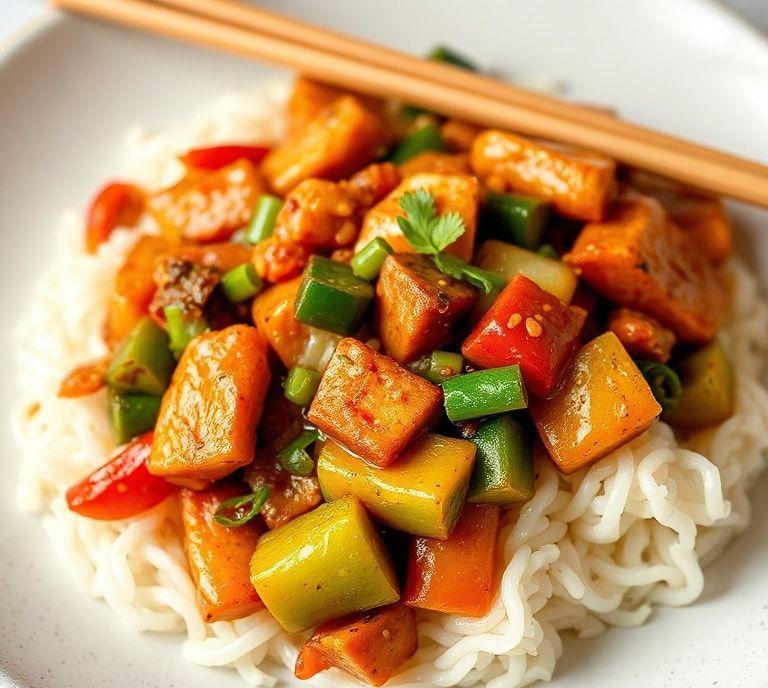
This recipe is a perfect balance of flavors-sweet, spicy, savory, and a little tangy. It’s packed with tofu, peanuts, vegetables, and an incredible sauce that coats every ingredient with a perfect balance of heat and umami. Plus, it’s versatile enough to cater to various dietary preferences, making it an easy choice for almost any occasion.
Ingredients Needed
Here’s everything you’ll need to pull off this delicious dish:
- Tofu (Firm or Extra Firm): The star of the dish. Tofu takes on whatever flavor you marinate or cook it with, so it’s ideal for this kind of recipe.
- Vegetable oil: A neutral oil that lets the flavors of the dish shine. I usually go for sunflower or canola oil here.
- Garlic: Fresh garlic adds a sharp, aromatic note to the sauce that you can’t skip.
- Ginger: A hint of ginger brings a subtle spice that elevates the whole dish.
- Green onions: These add a mild sweetness and a little crunch, enhancing the texture.
- Dried red chilies: Here’s where you get that signature spicy heat. You can adjust the amount depending on how much heat you can handle.
- Peanuts: Not just for garnish, the peanuts add crunch and a slight nuttiness that pairs perfectly with the savory sauce.
- Bell peppers and onions: These vegetables bring sweetness and texture to balance the richness of the tofu.
- Soy sauce: A crucial part of the base for your sauce. It brings the umami and saltiness that this dish needs.
- Rice vinegar: Adds a subtle tang to the sauce and helps balance the sweetness and saltiness.
- Sugar: Just a little to round out the flavors and give the sauce a hint of sweetness.
- Cornstarch: This is your thickener for the sauce, giving it that nice glossy finish.
- Sesame oil: For that touch of nuttiness and aroma that makes every bite unforgettable.
Cooking Instructions
- Prepare the tofu: Drain the tofu and press it for about 15 minutes to remove excess moisture. This step is crucial because it helps the tofu crisp up when you fry it. Once pressed, cut it into cubes about 1 inch in size.
- Fry the tofu: Heat some vegetable oil in a pan over medium-high heat. Once hot, add the tofu cubes in batches. Fry them until they’re golden and crispy on all sides. This usually takes about 5-7 minutes. Remove the tofu from the pan and set it aside.
- Make the sauce: In a small bowl, combine soy sauce, rice vinegar, sugar, and cornstarch. Stir until the cornstarch dissolves. This mixture will become the base of your sauce.
- Sauté the aromatics: In the same pan, add a bit more oil if necessary. Sauté the garlic, ginger, and dried chilies for about 1-2 minutes, or until fragrant. The key here is not to burn the garlic-just cook it until it’s fragrant and golden.
- Vegetables and peanuts: Add the bell peppers, onions, and green onions to the pan. Sauté for another 3-4 minutes until they begin to soften but still have some crunch. Toss in the peanuts and cook for another minute.
- Combine everything: Add the crispy tofu back into the pan, then pour in the sauce mixture. Stir everything together gently to coat the tofu and vegetables with the sauce. Cook for another 2-3 minutes until the sauce thickens and everything is heated through.
- Serve: Garnish with extra green onions or sesame seeds if you like, and serve hot over steamed rice or noodles.
Ingredient Science Spotlight
Tofu may seem simple, but it’s a powerhouse in the kitchen. It’s made from soybeans, water, and a coagulant, which gives it its firm texture. Tofu is incredibly versatile, which is why it’s perfect for dishes like Kung Pao. It soaks up flavors beautifully. But one important note: moisture matters. If your tofu is too wet, it won’t crisp up properly when fried. The pressing step helps remove that moisture and makes sure your tofu has the perfect texture.
Now, let’s talk about cornstarch. When you make a sauce, cornstarch acts as a thickening agent. It creates that glossy finish, coats everything evenly, and gives the sauce a smooth texture. Without it, the sauce might be thin or watery, and we definitely don’t want that.
And those dried red chilies? They’re not just for heat-they also infuse the oil with a smoky, deep flavor, elevating the dish to a whole new level. Plus, they’re a great visual touch. They give the dish an authentic look and show that it’s packed with flavor!
Expert Tips
- Press your tofu well: This cannot be overstated. If your tofu isn’t pressed enough, it will be soggy. You want that crisp, golden exterior to contrast with the soft, flavorful inside.
- Don’t overcook the vegetables: You want them to still have some bite. A little crunch is important for texture balance.
- Play with spice levels: If you’re not into a lot of heat, reduce the number of dried chilies. Or, if you like it fiery, feel free to add more!
- Use tamari for a gluten-free version: If you’re sensitive to gluten, tamari is a great substitute for soy sauce.
- Let the tofu rest after frying: If you can, let the fried tofu sit for a minute or two after it’s been cooked. This helps keep its crispy texture intact when added to the sauce.
Recipe Variations
If you’re looking to switch things up, here are a few variations to consider:
- Add more veggies: You could throw in mushrooms, baby corn, or zucchini for additional texture and flavor.
- Cashews instead of peanuts: If you’re allergic to peanuts or just want a different flavor, cashews work wonderfully here. They add a richer taste and a slightly softer texture.
- Spicy Garlic Sauce: If you want even more heat, create a spicy garlic sauce by adding chili garlic sauce or gochujang (Korean chili paste) to the mix. It will add layers of complexity to the dish.
Final Words
This Vegetarian Kung Pao Tofu recipe is one of those dishes that’s so satisfying, it’s hard to believe it’s plant-based. The balance of flavors is key-sweet, salty, spicy, and savory all come together in every bite. Whether you’re a long-time vegetarian or just looking to add more plant-based meals to your repertoire, this recipe has got you covered.
FAQs
What Type Of Tofu Works Best For A Vegetarian Kung Pao Tofu Recipe?
Extra-firm or firm tofu is ideal because it retains its shape during high-heat stir-frying. Pressing the tofu for 15-30 minutes before cooking removes excess moisture, allowing it to crisp more effectively and absorb the sauce without breaking apart.
How Can I Achieve A Balanced Spicy, Sweet, And Savory Flavor In Kung Pao Tofu?
The traditional flavor profile comes from a combination of soy sauce, rice vinegar, sugar or a mild sweetener, and a source of heat such as dried red chilies or chili paste. Toasting Sichuan peppercorns enhances the dish with a mild numbing sensation, while adding aromatics such as garlic and ginger rounds out the flavor. Adjust the proportions gradually to match your preferred heat and sweetness levels.
Can I Make Kung Pao Tofu Gluten-free Without Compromising The Taste?
Yes. Replace standard soy sauce with gluten-free tamari or coconut aminos and ensure that any chili paste or rice vinegar you use is certified gluten-free. The rest of the dish, including vegetables, tofu, peanuts, and spices, is naturally gluten-free, so the overall flavor profile remains authentic with minimal adjustments.